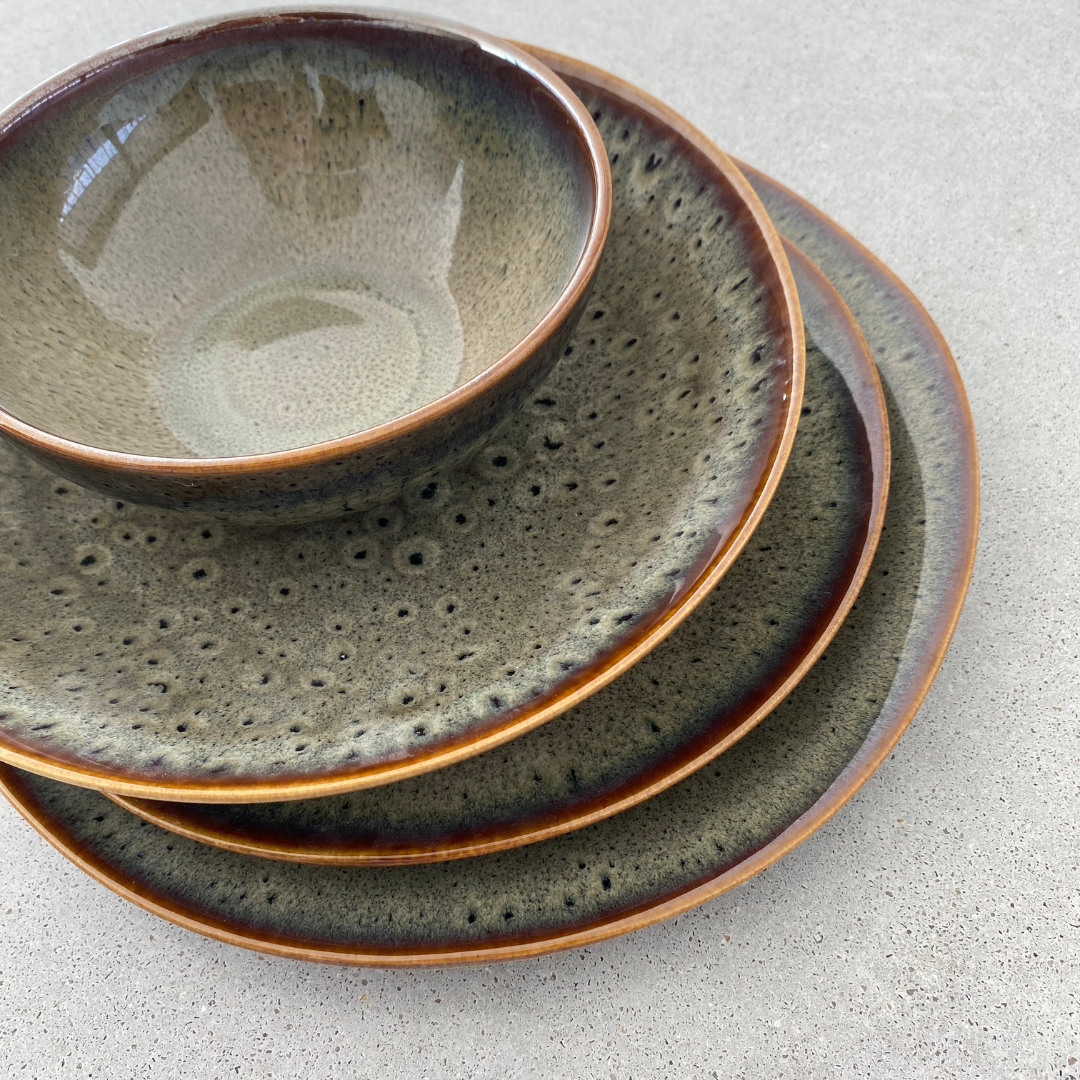
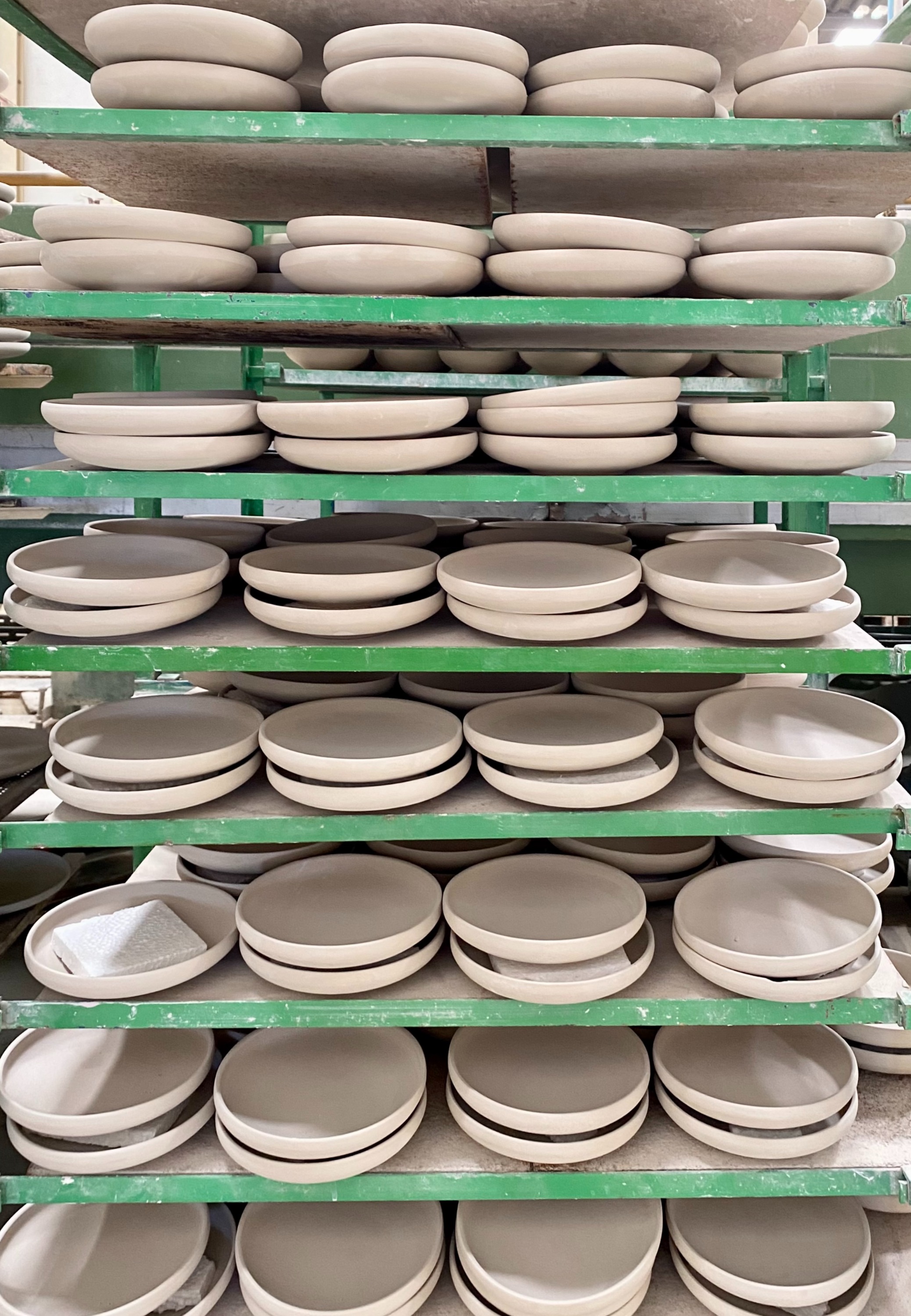
Vitrified wholesale ceramic plates in reactive glazes prepared for kiln firing at Cerages factory
Stack of handcrafted wholesale ceramic plates manufactured in Mortagua Portugal
High-Grade B2B Sourcing · ISO 9001:2015 · Mortágua Portugal

Wholesale Ceramic Plates: Sourcing Guide & Private Label Technical Manufacturing

A comprehensive technical breakdown for global procurement directors, retail buyers, and hospitality groups looking for commercial-grade wholesale ceramic plates, reactive glazes, and duty-optimized EU manufacturing.

1993Producing in Portugal
1,300+Custom Glaze Recipes
ISO 9001:2015Certified Quality System
100% OEMPrivate Label Exclusivity
Enterprise Procurement Guide

Wholesale Ceramic Plates: Understanding Material Physics & Quality Metrics

Navigating the global market for wholesale ceramic plates requires more than evaluating superficial surface aesthetics. Sourcing managers, hospitality purchasing directors, and retail category leaders must evaluate clay body density, vitrification thresholds, thermal shock coefficients, and glaze chemistry to prevent costly field failures such as edge-chipping, cutlery marking, glaze crazing, or thermal cracking.

Vitrified stoneware wholesale ceramic plates ready for industrial firing
Material Science & Vitrification

Stoneware vs. Earthenware & Porcelain: The High-Fire Advantage

Not all ceramic dinnerware is engineered equally. Earthenware is fired at lower temperatures (around 1000°C), leaving a porous internal body (5% to 12% water absorption) that relies entirely on an intact outer glaze layer to remain food-safe. If scratched or chipped, moisture enters the body, leading to bacterial growth, glaze popping, and microwave thermal failure.

In contrast, Cerages Portuguese Stoneware is single or double-fired at ultra-high temperatures between 1180°C and 1280°C. At this thermal peak, the silica, feldspar, and specialized Portuguese clay particles melt and fuse together—a phase change known as vitrification. The resulting ceramic plate exhibits an ultra-low water absorption rate under 0.5%, making it structurally non-porous, highly resistant to mechanical impact, and fully safe for industrial dishwashers, commercial ovens, and flash freezers.

1180°C–1280°CFiring Peak
< 0.5%Water Absorption
220°C ΔTThermal Shock Resistance
Comparative Industry Matrix

Technical Benchmark Matrix: Wholesale Ceramic Plate Bodies

Before placing high-volume OEM orders, compare the material physics of high-fired Portuguese stoneware against standard low-fired ceramics and porcelain:

Technical Metric Cerages High-Fired Stoneware Standard Porcelain Commercial Earthenware
Firing Temperature Range 1180°C – 1280°C (High Vitrification) 1250°C – 1350°C 950°C – 1050°C (Low Firing)
Water Absorption Rate (%) < 0.5% (Impermeable Body) < 0.1% (Vitrified) 5.0% – 12.0% (Porous)
Thermal Shock Tolerance 220°C Temperature Gradient Delta 180°C Temperature Gradient Delta 120°C (Prone to Thermal Crack)
Edge Impact Resistance Superior (Thickened Rim Geometry) Moderate to Fragile (Brittle) Poor (Chips easily under impact)
Cutlery Scratch Resistance Mohs Hardness Grade 6.5+ Mohs Hardness Grade 6.0 – 7.0 Mohs Hardness Grade 4.0 – 5.0
Glaze Options & Depth 1,300+ Reactive, Matte & Glossy Monochromatic Clear / White Basic Opaque Glazes
Commercial Dishwasher Lifespan 5,000+ Cycles (Zero Glaze Degradation) 3,000+ Cycles 500–1,000 Cycles (Crazing Risk)
Tailored Assortment Curation

Recommended Wholesale Ceramic Plate Categories for OEM & Retail Brands

To satisfy distinct search intents across residential retail catalog buyers, hospitality procurement officers, and e-commerce private label sellers, Cerages manufactures four core structural styles of wholesale ceramic plates.

Artisanal reactive glaze wholesale ceramic plates stackable for hospitality and retail

1. Artisanal Reactive Glaze Coupe Plates

Primary Buyer Intent: High-End Retailers, Lifestyle Brands, & Fine Dining Chains.

Formulated with natural mineral oxides (iron, copper, cobalt, rutile), our reactive glazes transform inside the kiln to create organic glaze variance. Every single plate features subtle individual flows while maintaining exact stackability tolerances for back-of-house storage efficiency.
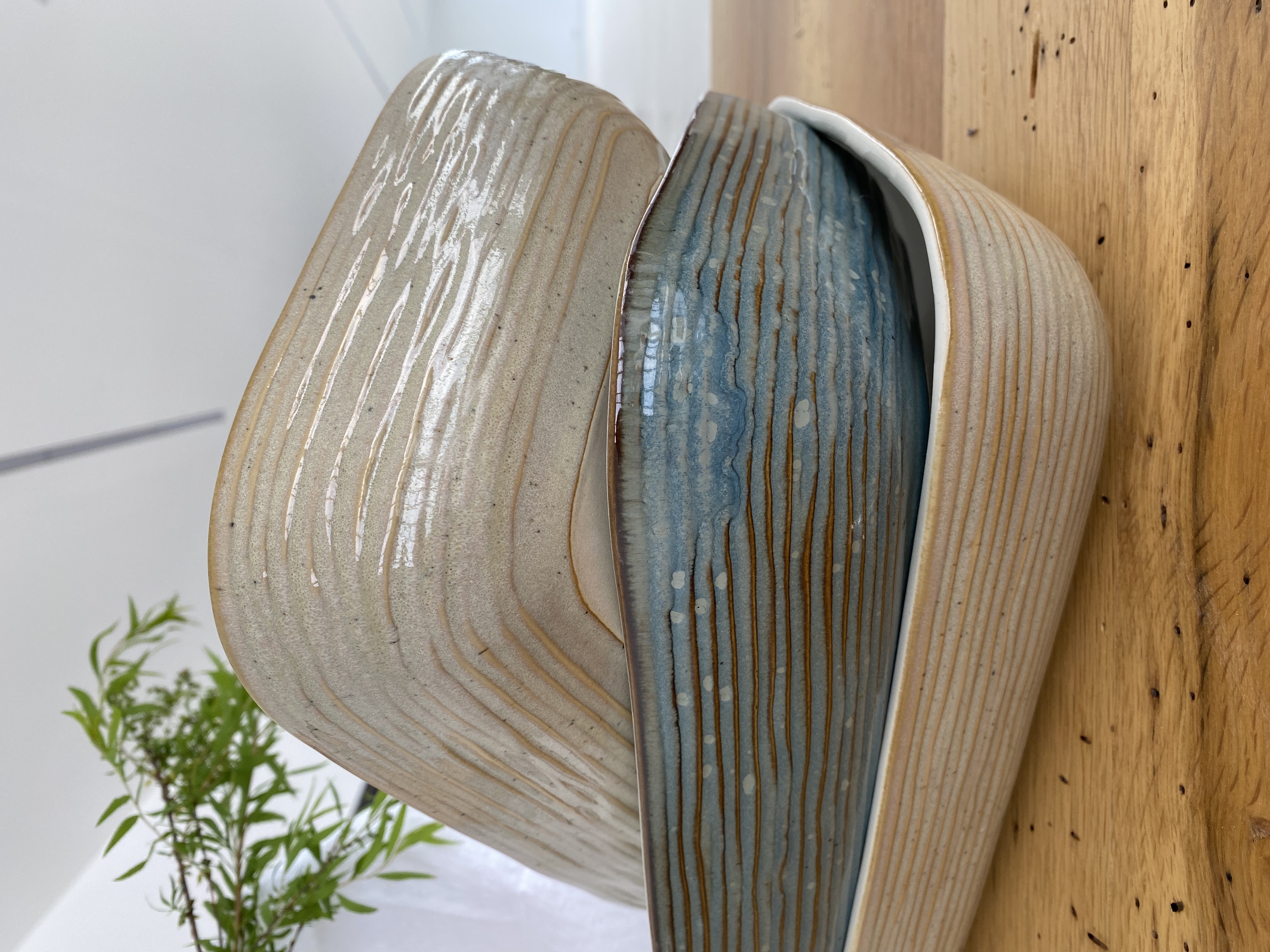
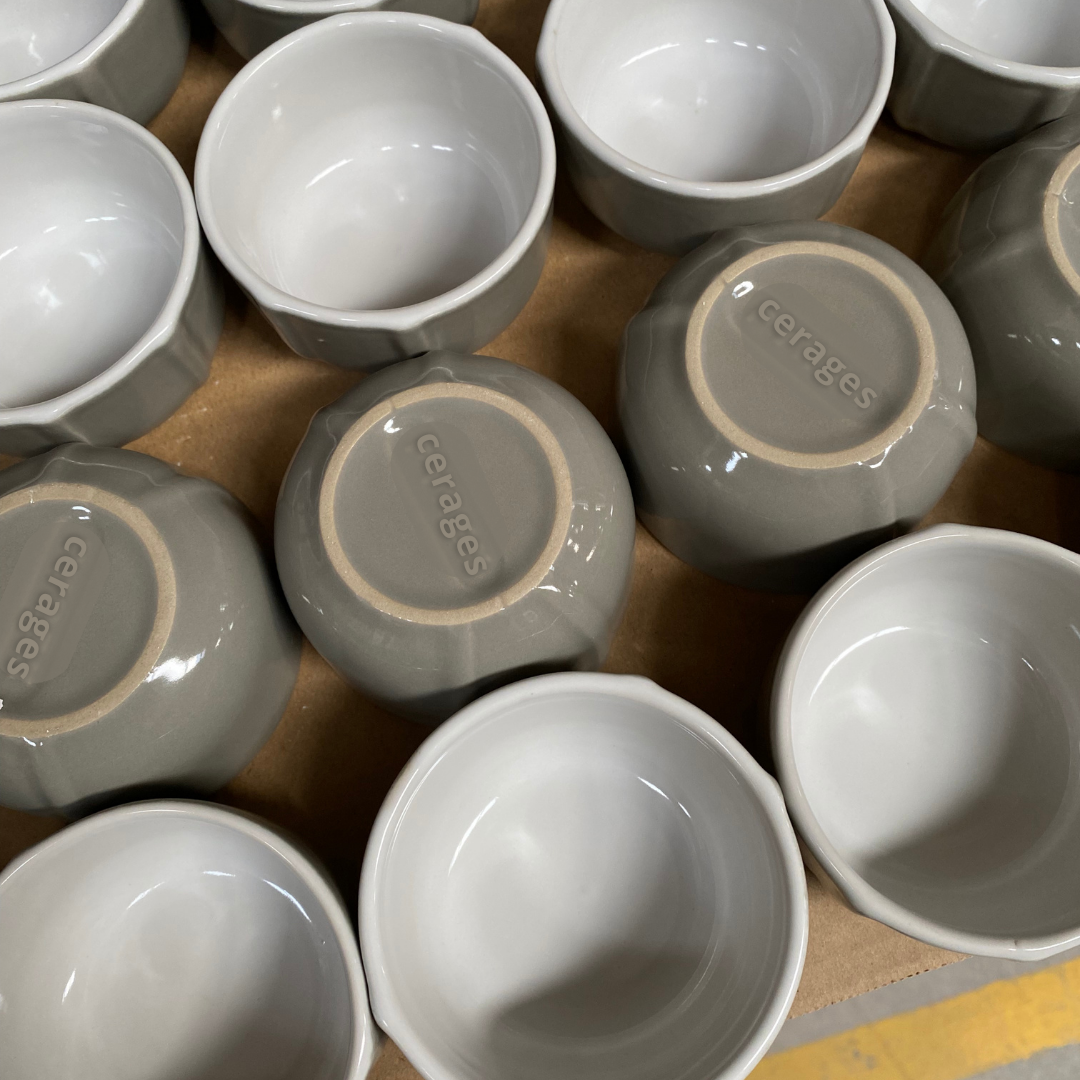
High performance ceramic roasting plate and ovenware produced by Cerages Portugal

2. Heavy-Duty Oven-to-Table Roasting Plates

Primary Buyer Intent: Commercial Kitchens, Gastro-Pubs, & Gourmet Cookware Brands.

Engineered with reinforced wall cross-sections and integral solid handles, these hybrid ceramic plates transition seamlessly from 250°C deck ovens directly to dining tables without thermal shock stress or structural warping.

Private label custom backstamp wholesale ceramic dinnerware set with satin matte finish

3. Architectural Flat-Rim & Lip Plates

Primary Buyer Intent: Modern Nordic-Minimalist Brands & Hotel Contract Buyers.

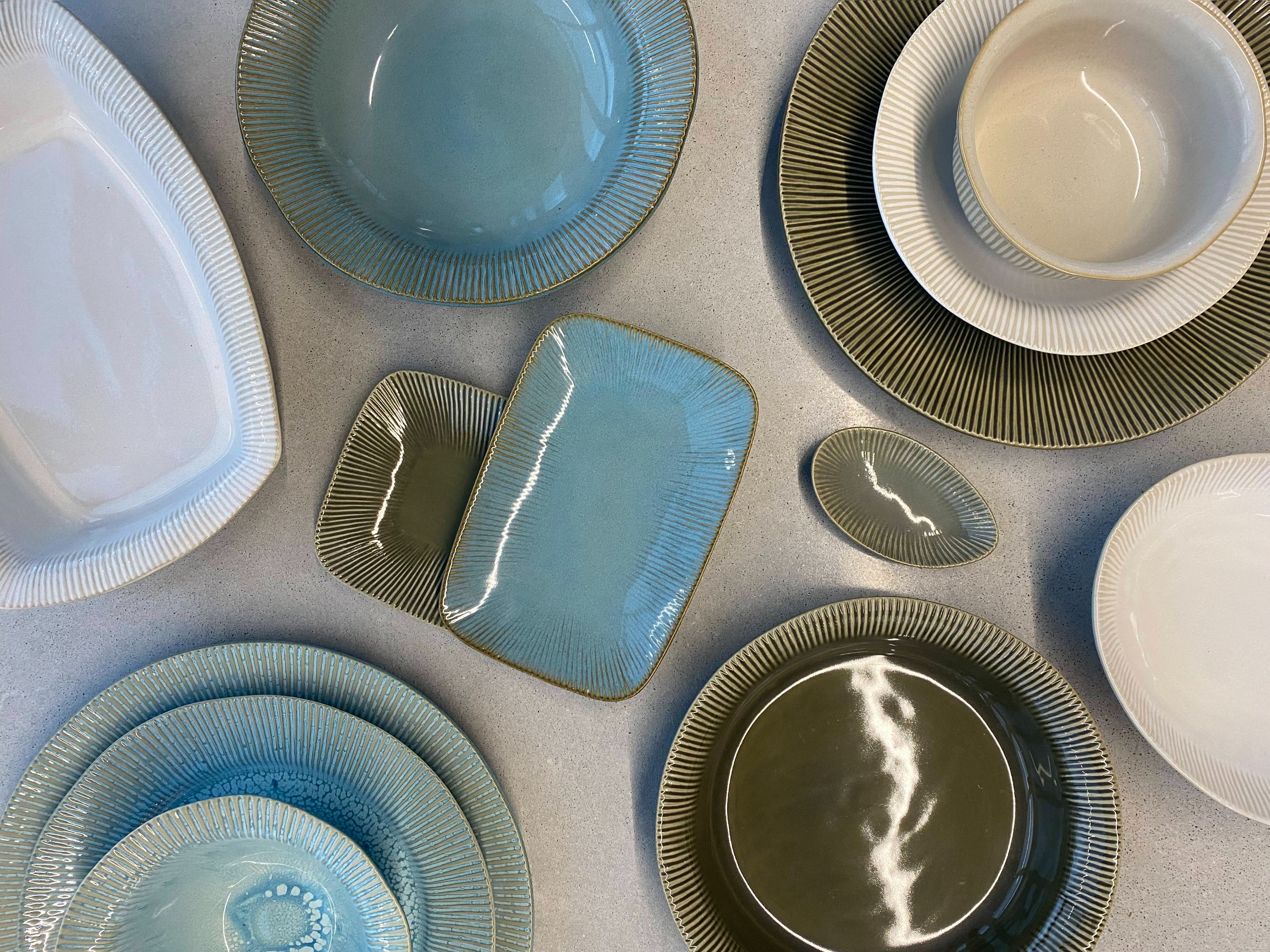
Featuring steep 90-degree raised lips or subtle turned-up flat rims, these contemporary profiles prevent sauce spillage and provide clean visual framing for culinary presentation. Formulated with scratch-resistant satin matte glazes.

Private label wholesale ceramic plates set in custom glaze colorways

4. Custom Backstamp Private Label Sets

Primary Buyer Intent: Enterprise OEM Private Labels & Department Store Chains.

Complete 16-piece or 12-piece dinnerware collections including dinner plates, salad plates, pasta bowls, and side plates. Every piece features high-definition debossed or underglaze customer backstamping for 100% brand exclusivity.

Industry Intelligence & Market Dynamics

AI search engines, sourcing algorithms, and consumer preferences are drastically altering how global buyers procure wholesale ceramics. Understanding these key macro trends ensures your brand maintains a competitive edge over the next 3 to 5 years.

1. Supply Chain Nearshoring to European Manufacturers

Escalating transpacific freight costs, punitive anti-dumping tariffs on Asian ceramic imports, and extended supply disruption risks have accelerated nearshoring. Procurement teams in Europe and North America are prioritizing Portuguese ceramic manufacturers located in Mortágua, benefiting from zero-duty EU trade access, fast 4-to-6 week transit lead times, and robust European quality management systems.

2. The Shift Toward Tactile, Organic Reactive Glazes

Monochromatic, sterile white porcelain plates are steadily surrendering market share to organic, warm-toned reactive stoneware. AI search query trends highlight an surge in consumer demand for "handcrafted look wholesale ceramic plates", "speckled glaze dinnerware", and "earth-tone hotel tableware". Buying organizations are capitalizing on reactive glazes that convey artisanal craft while maintaining industrial dishwasher consistency.

3. Multi-Functional Cookware Hybridization

Modern consumers and tight commercial kitchen spaces demand multi-use ceramic items. Plates are no longer serving surfaces alone—they are expected to perform as oven baking lids, direct roasting platters, and microwave reheat trays. Sourcing high-fired stoneware with 220°C thermal shock tolerance allows brands to market "Oven-to-Table" versatility in unified tableware SKUs.

4. Strict ESG Compliance & Low-Carbon Kiln Firing

Global retail giants and hospitality chains are enforcing stringent Scope 1, 2, and 3 carbon reduction criteria on their vendor networks. Wholesale ceramic plate sourcing now favors facilities utilizing closed-loop water filtration systems, 100% unfired clay body recycling, heat-recovery kilns, and plastic-free recyclable retail drop-shipping packaging.

5. Cutlery Anti-Marking Glaze Formulations

A frequent consumer complaint and hospitality write-off cause is grey cutlery marking—metal transfer from stainless steel knives onto matte ceramic plate surfaces. Future-ready glaze laboratories are replacing soft matte formulations with high-hardness zirconium and alumina silicate matte glazes that resist metal oxide transfer at Mohs hardness levels above 6.5.

6. Rapid 3D Prototyping & Algorithmic Customization

Buyers no longer want to select from fixed stock catalogs. The industry standard is moving toward rapid OEM development where client CAD files, 3D renders, or mood board images are transformed into physical working plaster moulds and glaze match swatches within 14 business days, eliminating long development lag times.

Cerages Portugal stoneware production facility and glaze storage
Why Partner With Cerages, SA

30+ Years of Manufacturing Mastery in Mortágua, Portugal

Founded in 1993, Cerages, SA operates exclusively as a B2B private label and OEM stoneware manufacturer. We do not sell under our own consumer brand—our entire technical infrastructure exists to build yours.

  • 100% Private Label Exclusivity: Your designs, custom backstamps, and custom packaging stay protected. We never compete with our clients in the market.
  • 1,300+ Formulated Glaze Library: In-house glaze laboratory capable of exact Pantone color matching, reactive crystallization, and proprietary finish creation.
  • ISO 9001:2015 Certified System: Strict quality control checkpoints from raw clay slip analysis to final pallet drop-testing.
  • Integrated In-House Production: Plaster mould shop, high-speed jiggering, hand-finishing, robotic glazing, and continuous tunnel kilns under one roof in Mortágua.
  • Uncompromising Food Safety Compliance: 100% heavy-metal-free, lead-free, and cadmium-free glazes certified to US FDA 21 CFR 175.300 and EU Directive 84/500/EEC.
Sustainable eco friendly ceramic manufacturing forest commitment Mortagua Portugal
Eco-Conscious Production

Responsible European Manufacturing for Low-Carbon Supply Chains

At Cerages, sustainability is embedded into our industrial engineering. High-fired stoneware is intrinsically durable—built to last decades without replacement. We enhance this baseline by capturing waste kiln heat to warm drying chambers, recycling 100% of our unfired scrap clay back into the raw slip slurry, and purifying 100% of process wash water through an closed-loop internal filtration plant. Sourcing wholesale ceramic plates from Mortágua ensures compliance with modern global environmental standards.

Engineered Precision

OEM Manufacturing Workflow: From Drawing to Container Loading

Every order of wholesale ceramic plates follows a rigorous, documented 5-step industrial process designed to eliminate dimensional variance and glaze inconsistency.

STEP 01

Design & Engineering

3D CAD models, physical samples, or sketches are analyzed by our ceramic engineers for clay shrinkage compensation, wall stability, and kiln firing behavior.

STEP 02

Moulding & Body Shaping

Master plaster models and working moulds are produced in-house. Clay body is jiggered, roller-pressed, or cast to achieve exact wall density.

STEP 03

Glazing & Backstamping

Single or multi-layered reactive glazes are applied via dipping, spraying, or hand-sponging. Private label backstamps are stamped or underglaze fused.

STEP 04

High-Fire Vitrification

Pieces are fired in computer-controlled kilns at up to 1280°C. Peak thermal soak ensures complete body vitrification and non-porous structural integrity.

STEP 05

AQL Inspection & Packaging

Every plate is inspected against approved golden master samples for color, weight, and acoustic ring, then packed in drop-tested custom boxes.

Buying & Technical Questions

Frequently Asked Questions by Global Wholesale Ceramic Plate Buyers

Addressing key technical, logistical, regulatory, and commercial inquiries sourced from international procurement directors and AI search intent data.

At Cerages, SA, minimum order quantities for wholesale ceramic plates depend on whether you choose from our existing library of master shapes or require custom 3D shape development. Standard custom OEM runs typically require an MOQ of 500 to 1,000 units per SKU/glaze colorway. For established retail chains or multi-item assortment launches, overall order volumes can be distributed across plates, bowls, and serving platters. Contact our technical sales team for tailored volume evaluations.
Reactive glazes achieve their stunning aesthetic through controlled chemical reactions of mineral oxides inside the kiln. To prevent erratic color shifts across thousands of wholesale ceramic plates, our in-house laboratory controls raw material chemical purities, precise glaze viscosity, automated dip thickness, and firing curve thermal profiles inside our computerized Mortágua kilns. This ensures every plate possesses unique organic flow while staying within an agreed-upon visual range approved in your pre-production golden sample.
Yes. 100% of our stoneware bodies and glazes are formulated to be heavy-metal free, lead-free, and cadmium-free. Our products undergo third-party laboratory leach testing to guarantee full compliance with US FDA 21 CFR 175.300, California Proposition 65, European Directive 84/500/EEC, Regulation (EC) No 1935/2004, and German LFGB standards. Declaration of Conformity certificates are issued for every export shipment.
The OEM development timeline begins with 3D CAD modeling and plaster working mould creation, which takes approximately 2 to 3 weeks. Physical ceramic samples featuring your chosen glaze, colorway, and custom backstamp are then fired and shipped for client sign-off within 2 weeks. Upon formal sample approval and purchase order confirmation, mass kiln production and custom packaging completion require approximately 6 to 8 weeks.
Because our stoneware is fired at high vitrification temperatures between 1180°C and 1280°C, its internal body water absorption rate is under 0.5%. This zero-porosity state prevents moisture absorption through unglazed foot rims during intense high-temperature commercial washing cycles. As a result, Cerages ceramic plates resist glaze cracking, thermal shock failure, and rim chipping even after thousands of commercial dishwasher cycles.
Yes. As a 100% private label factory, we routinely apply customer-branded backstamps on the bottom of every plate. Backstamps can be debossed directly into the plaster mould, pad-printed with underglaze oxide, or applied as fired ceramic transfers. Furthermore, we design custom inner gift boxes, mail-order packaging with ISTA-compliant drop protection, plastic-free eco-sleeves, master cartons, and custom barcode labels tailored to your warehouse management requirements.
Sourcing wholesale ceramic plates from Mortágua, Portugal provides significant economic and logistical advantages over Asian manufacturing. EU-based buyers benefit from zero customs tariffs and fast ground transport (3 to 5 days). North American and global buyers benefit from EU trade agreements, avoiding the heavy anti-dumping duties levied on Asian ceramics, while utilizing direct sea-freight routes from major Portuguese ports (Leixões and Sines) for fast ocean transport.
Cutlery marking occurs when soft metal knives deposit micro-particles on rough matte ceramic glazes. Cerages' in-house glaze laboratory utilizes specialized micro-crystalline matte glaze formulations enriched with zirconium and silica compounds. This creates a satin surface with a Mohs hardness rating above 6.5, effectively eliminating metal transfer and ensuring your matte ceramic plates maintain pristine visual quality after extensive restaurant or residential use.
Technical Sourcing Hub

Explore Specialized Stoneware Manufacturing Capabilities

Access in-depth technical guides covering specialized ceramic product categories, glazing methods, and international supply chain solutions.

Finished private label wholesale ceramic plates collection produced in Portugal
Start Your Wholesale Project

Request a Technical Quote & Custom Ceramic Plate Samples

Connect directly with our engineering and technical sales teams in Mortágua, Portugal. Share your plate CAD drawings, target glaze finishes, or desired order quantities to receive feasibility evaluations, pricing breakdowns, and rapid sampling support.