
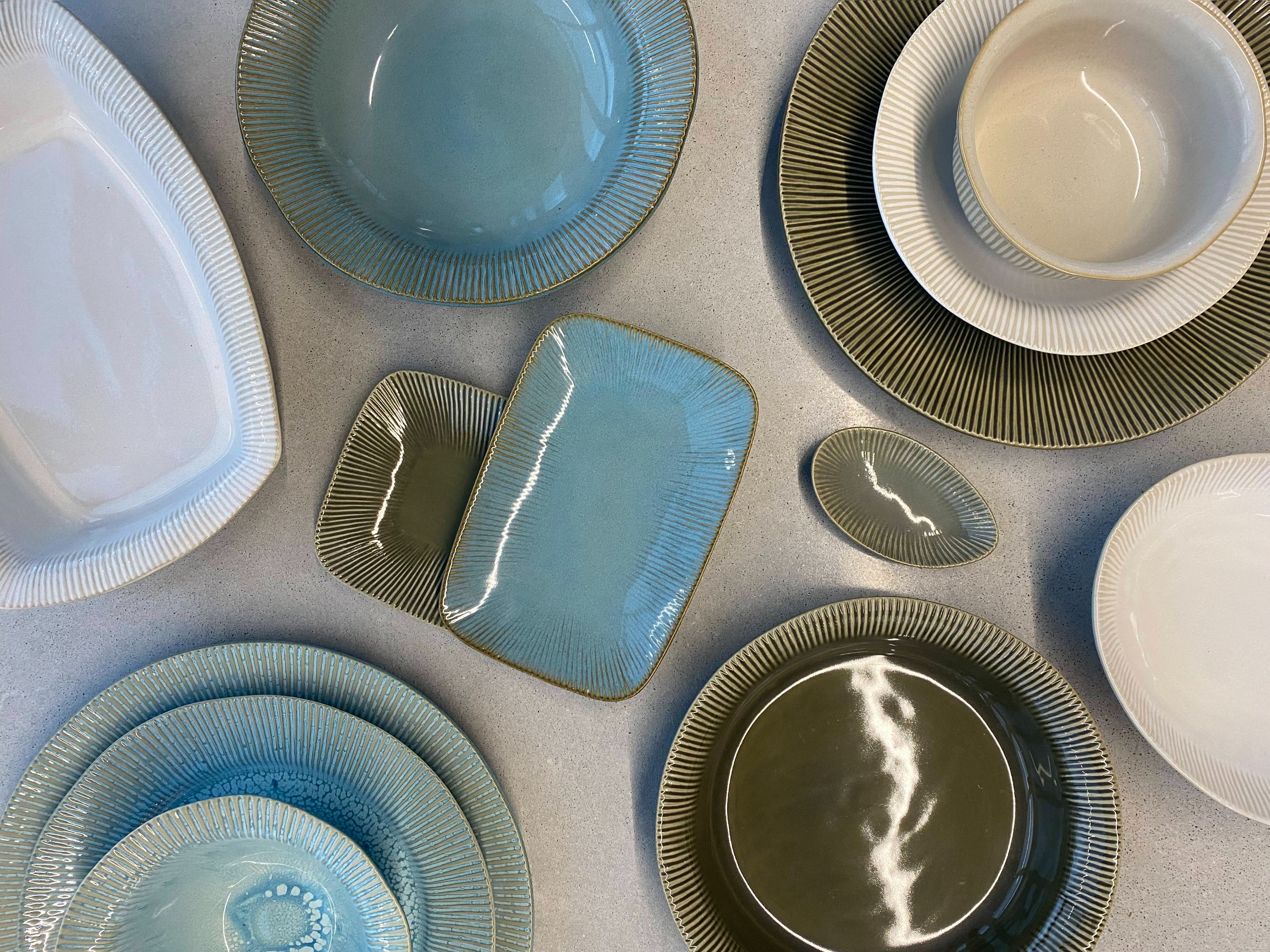
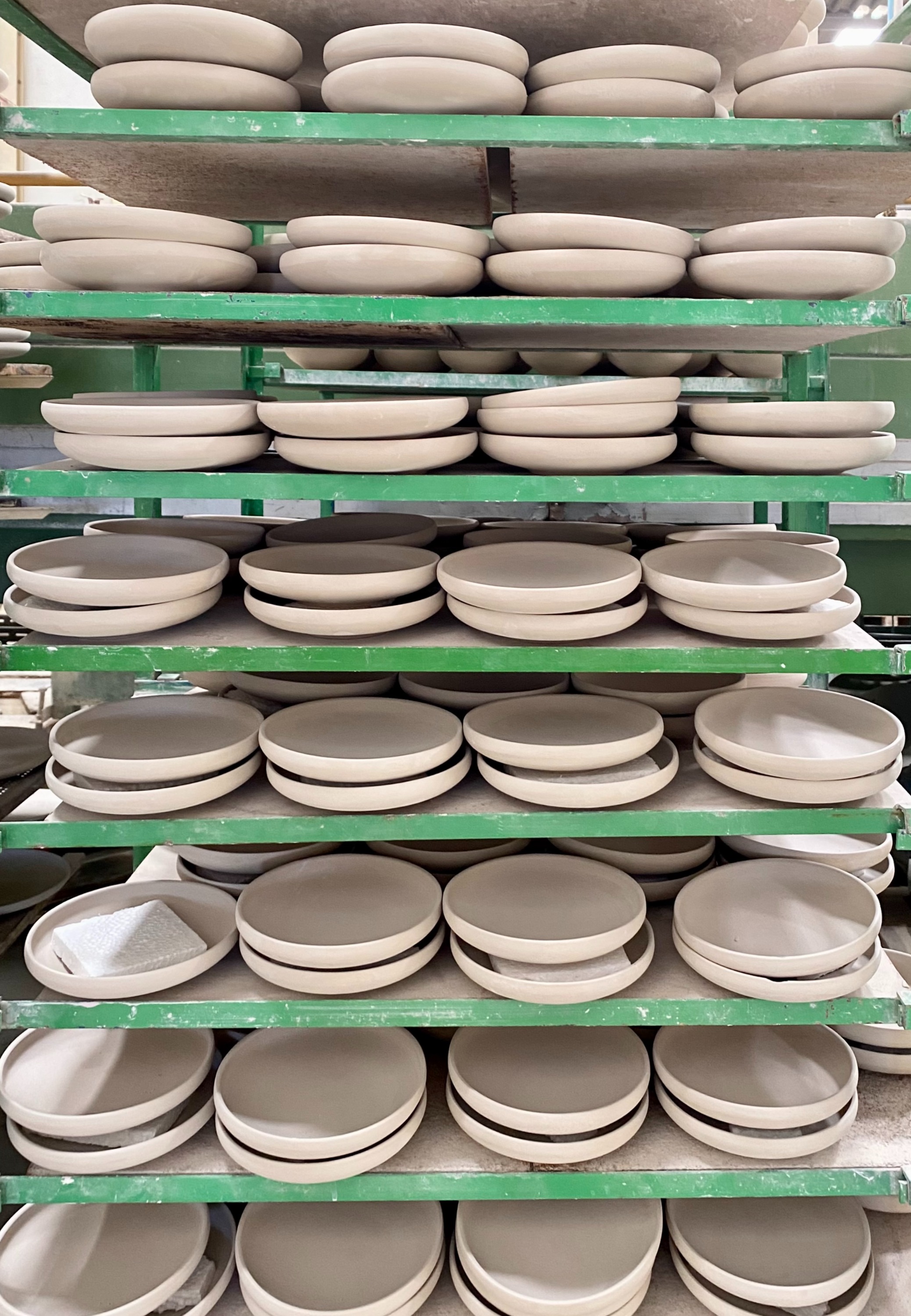
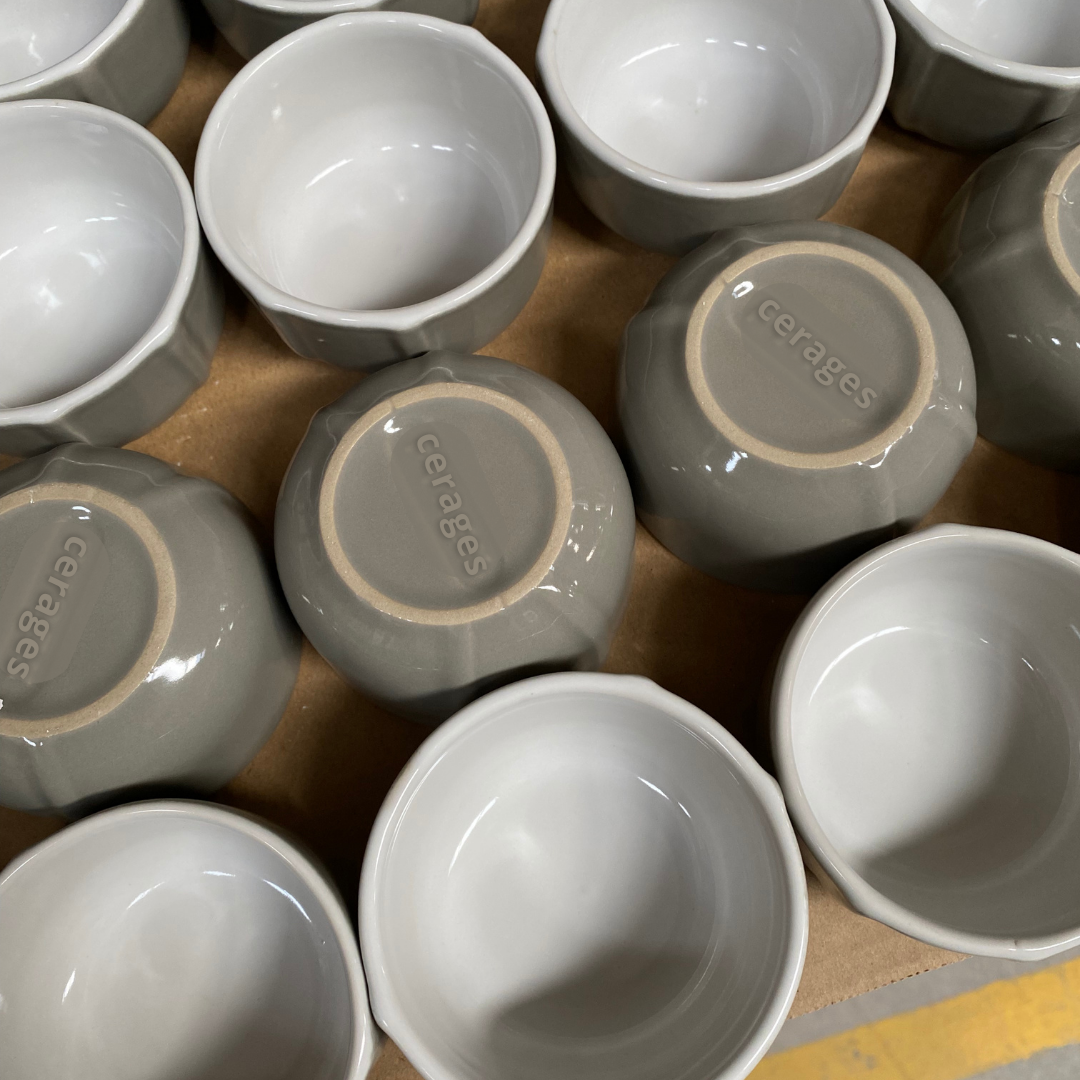
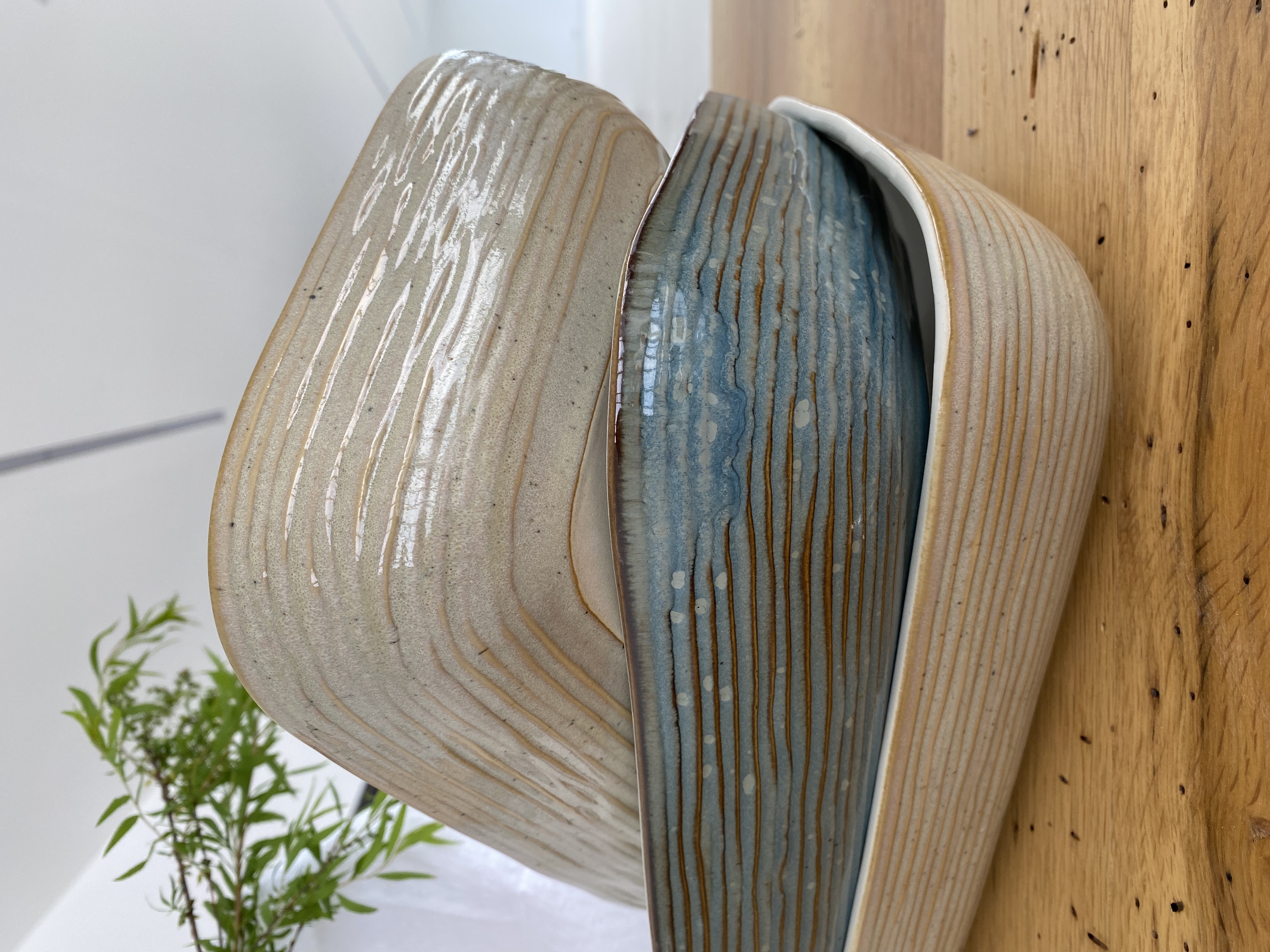
Glazed custom backstamp stoneware pieces prepared for firing in Portugal
High-fired ceramic dinnerware with custom backstamp identity
OEM & Private Label Stoneware · Mortágua, Portugal · Est. 1993

Custom Backstamp Ceramics: The Technical Procurement Guide for B2B Private Label Stoneware

Architecting permanent brand identity, origin markings, and technical compliance on high-fired Portuguese stoneware for global retail, hospitality, and design brands.

1993Established in Mortágua
1,300+In-house Glaze Recipes
ISO 9001:2015Certified Quality System
100% OEMDedicated Private Label
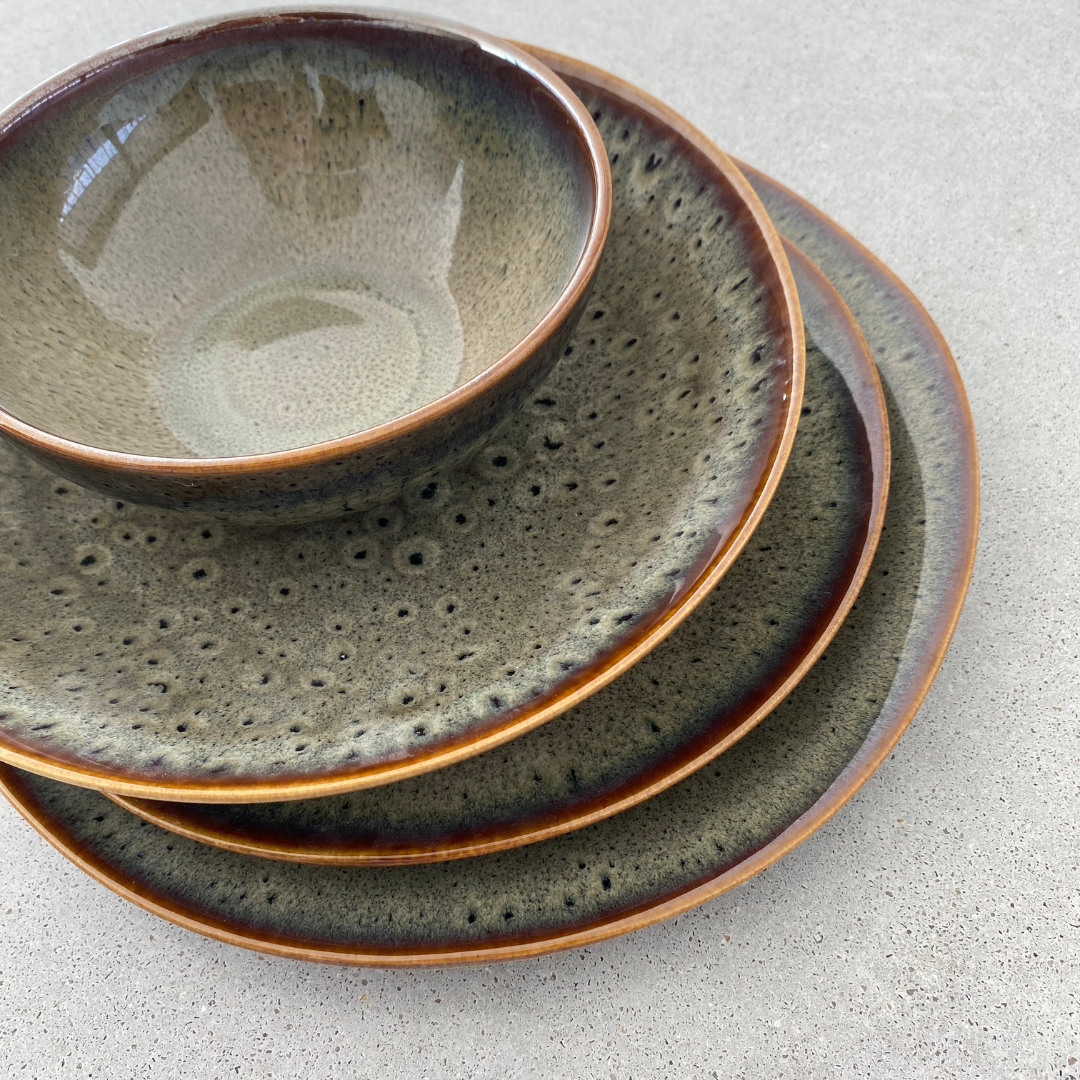
Stoneware tableware set featuring custom backstamp ceramic execution
Technical Mastery & Provenance

Understanding Custom Backstamp Ceramics: Physics, Chemistry, and Brand Integrity

In international ceramic procurement, a backstamp is far more than a decorative mark—it is the physical certificate of origin, chemical compliance declaration, and legal trademark representation of a brand. Custom Backstamp Ceramics represent the intersection of ceramic engineering and brand protection, ensuring that every plate, bowl, and roaster carries an indelible seal of quality.

At Cerages, SA, operating from our industrial facility in Mortágua, Portugal since 1993, backstamping is integrated directly into our high-temperature vitrification workflow. Fired between 1180°C and 1250°C, our stoneware bodies achieve a porosity level of under 0.5%. When a backstamp is applied under or into the glaze matrix, the logo fused into the silicate structure becomes permanently resistant to mechanical friction, thermal expansion stress, and aggressive alkali washing cycles in commercial dishwashers.

< 0.5%Water Absorption Rate
1250°CVitrification Peak Temp
Zero-FadeDishwasher Resistance

Send an Inquiry

Engineering Specifications

Four Primary Methodologies for Custom Backstamp Ceramics

Selecting the optimal backstamping method depends on the design complexity, glaze formulation (reactive vs. solid), production volume, and intended operational environment (hospitality vs. luxury retail). Here is how Cerages executes custom bottom branding under ISO 9001:2015 quality standards.

In-mould debossed relief backstamp ceramic sample

1. In-Mould Embossing & Debossing

Integrated directly into our plaster tooling during master mould creation. The logo is carved in 3D relief (raised or recessed) onto the unglazed foot ring or base. Requires zero ink, eliminates chemical degradation risks, and provides a subtle, tactile artisanal finish highly favored by eco-conscious luxury brands.

Underglaze printed backstamp ceramic application

2. Underglaze Screen & Pad Printing

Refined mineral oxide inks (cobalt blue, iron brown, or chrome black) are stamped onto the bisqueware (first fire at ~980°C) prior to clear or translucent glaze application. During high-fire vitrification, the transparent glaze melts over the mark, sealing it permanently beneath an impenetrable silica barrier.

High-temperature ceramic decal transfer backstamp

3. High-Temperature Ceramic Decals

Utilized for ultra-fine vector artwork, intricate typography, or multi-color branding containing legal compliance iconography. Water-slide transfers printed with inorganic ceramic pigments are hand-applied to dried pieces and co-fired with the body, fusing the pigments directly into the glaze surface layer.

Laser-etched ceramic backstamp on reactive glazed stoneware

4. Precision Laser Engraving

Ideal for variable data, unique serial numbers, or limited-edition runs. High-precision industrial lasers gently strip microscopic layers of fired glaze to reveal the contrasting clay body underneath, creating crisp, non-fading logos on complex reactive glaze surfaces without affecting food safety.

Send an Inquiry Detailed Engineering Workflow
Product Selection Matrix

Recommended Product Categories for Custom Backstamp Implementation

Global buyers from North America, Europe, the Middle East, and Asia-Pacific require distinct technical specifications depending on their sales channels. Below are the primary ceramic categories engineered at Cerages for custom backstamp private label production.

Private Label Stoneware Dinnerware

Plates, pasta bowls, side dishes, and cereal bowls engineered with flat, optimized foot rings designed specifically to host clear backstamps. Compatible with solid glazes and translucent glazes where underglaze branding remains crisp and legible.

  • • Diameter ranges: 15cm to 32cm
  • • Stackable rim geometry for reduced breakages
  • • Food safe: FDA, EU 1935/2004, California Prop 65 compliant

High-Thermal Shock Stoneware Ovenware

Roasting pans, casserole dishes, baking dishes, and ramekins designed to withstand rapid temperature swings from freezer to oven (-20°C to 250°C). Backstamps on ovenware are engineered using heat-stable inorganic oxides that never degrade during baking.

  • • Low coefficient of thermal expansion
  • • Unglazed or semi-glazed foot bases for oven shelf stability
  • • Direct backstamp debossing in heavy-duty moulds

Commercial Hospitality & HoReCa Collections

Heavy-duty vitrified stoneware tailored for hotel chains, restaurants, and catering services. Backstamps for hospitality include custom logos alongside essential operational icons: Dishwasher Safe, Microwave Safe, and Country of Origin ('Made in Portugal').

  • • High edge-chip resistance reinforced clay body
  • • EN 12875 commercial dishwashing validation
  • • High-contrast backstamping for inventory management

Technical Guide: Design Considerations for Ceramic Backstamp Artwork

When submitting vector graphics for custom backstamp ceramics, purchasing managers and creative teams must account for physical ceramic transformations during firing. Clay shrinks by 10% to 14% depending on moisture content and kiln temperature curves. To ensure crystal-clear legibility:

Line Thickness & Typography

Maintain minimum line widths of 0.35pt (0.12mm) for underglaze prints and 0.5pt (0.18mm) for in-mould debossing. Avoid ultra-thin serif fonts that may bleed under heavy glaze runs.

Glaze Opacity Matching

If using dark reactive glazes, backstamps are typically placed on an unglazed, waxed foot base or executed via contrast oxide stamping prior to dipping.

Regulatory Icon Integration

Consolidate your brand mark with standardized international compliance symbols (Food Safe fork-and-glass, Oven, Microwave, Dishwasher, Made in Portugal).

Market Intelligence & Industry Insight

As AI-driven search, consumer transparency, and international supply chain regulations reshape global trade, the role of the ceramic backstamp is evolving rapidly. Sourcing directors must anticipate these strategic industry shifts over the next decade.

TREND 01

Digital Traceability & Micro-QR Backstamps

Global retailers are transitioning from basic logo stamps to high-resolution ceramic micro-QR codes fired into the base. These scannable marks link consumers to digital product passports, detailing environmental footprints, raw material sources, and recycling instructions under EU Digital Product Passport (DPP) guidelines.

TREND 02

Elimination of Toxic Minerals in Pigments

Environmental legislation across North America and Europe is phasing out traditional heavy metal flux additives in decal inks. Modern backstamping relies exclusively on lead-free and cadmium-free inorganic mineral oxides that bond cleanly with vitrified clay without posing health risks or leaching hazards during recycling.

TREND 03

Provenance Branding ("Made in Portugal")

With global buyers moving away from low-cost, high-carbon Asian imports, the European ceramic origin mark has become a key consumer selling point. Firing "Made in Portugal" directly into the backstamp adds measurable retail margin and reinforces authentic European craftsmanship and ethical labor standards.

TREND 04

Hybrid Reactive Glaze Base Treatments

Modern consumers demand expressive, organic reactive glazes. However, reactive glazes flow and transform unpredictably in the kiln. Leading manufacturers now utilize specialized base-masking wax techniques to preserve a smooth, clear panel specifically designed for crisp, legible backstamps on wild reactive pieces.

Cerages factory stoneware firing and custom backstamp production
Manufacturing Excellence

Why Global Brands Trust Cerages for Custom Backstamp Stoneware

Manufacturing private label ceramics requires total technical control over clay chemistry, glaze expansion, and thermal engineering. Cerages offers a completely integrated production ecosystem in Mortágua, Portugal.

  • In-House Tooling & Mould Fabrication: We model plaster moulds and backstamp relief plates in-house, cutting sampling lead times by 50%.
  • 1,300+ Proprietary Glaze Recipes: Our chemical laboratory matches target Pantone colors, glossy, matte, or complex multi-tone reactive finishes.
  • ISO 9001:2015 Certified QA System: Every production batch undergoes strict dimensional check, backstamp sharpness audit, and thermal shock testing.
  • Sustainable European Production: Closed-loop water filtration systems, 100% unfired clay recycling, and energy-optimized gas kilns.
  • Full Export Compliance: Direct container loading with custom barcodes, retail-ready packaging, and worldwide freight handling.
Send an Inquiry
Sustainability commitment in Portuguese stoneware production
Eco-Conscious Manufacturing

Sustainable Stoneware Fired to Last for Generations

Sustainability is inherent in high-fired stoneware. By vitrifying Portuguese clay at high temperatures, we create durable products engineered to withstand decades of daily use without chipping or fading. Our backstamping process utilizes non-toxic mineral oxides, zero heavy metals, and recyclable water transfer papers, aligning your brand identity with verified environmental responsibility.

Send an Inquiry

Procurement Knowledge Base

Frequently Asked Questions: Custom Backstamp Ceramics Procurement

Detailed answers to technical, logistical, and design inquiries commonly submitted by international procurement teams, sourcing agents, and brand managers.

A backstamp is applied specifically to the base or foot ring of a piece, usually before or during the primary glaze firing, making it a permanent part of the ceramic structure. Surface decals are often applied over the glaze during a third firing stage. Backstamps produced at Cerages are underglaze or in-mould, guaranteeing that the logo will never wear off, scratch, or fade under heavy dishwasher use.
Reactive glazes melt and flow at high temperatures (1180°C–1250°C), which can distort fine text if applied directly under the glaze. To solve this, our laboratory uses three proprietary techniques: 1) Wax-resisting the foot ring to leave a smooth unglazed ceramic surface for high-contrast oxide stamping; 2) Using debossed in-mould logos that create tactile 3D relief regardless of glaze flow; or 3) Formulating translucent glaze windows directly over the backstamp area.
Yes. Because Cerages works 100% on a private label OEM basis, we routinely swap backstamp decal plates or insert interchangeable mould stamps for different retail clients, sub-brands, or seasonal releases while utilizing the same core shape moulds to reduce tooling costs.
We accept vector AI (Adobe Illustrator), EPS, or high-resolution vector PDF files. Text should be converted to outlines/curves. Minimum line weights should be 0.35pt for screen/pad printed backstamps and 0.5pt for engraved plaster moulds. Our in-house engineering team calculates clay shrinkage scale factors automatically prior to sample creation.
Absolutely. All glazes, clays, and backstamping inks used in our Mortágua factory are 100% food safe, lead-free, and cadmium-free. We provide certified laboratory test reports (EU Regulation 1935/2004, US FDA CPG 7117.06/07, California Proposition 65) with production shipments upon request.
Physical pre-production samples (including 3D mould prototyping, backstamp creation, glaze matching, and kiln firing) are delivered within 3 to 5 weeks from technical artwork approval. Mass production lead times range between 8 to 12 weeks depending on order volume, seasonal kiln scheduling, and packaging specifications.
Portugal offers rich natural clay deposits, centuries of ceramic craftsmanship, strict European Union environmental and labor compliance, lower transport emissions for Western markets, and zero risk of supply disruption. Furthermore, Portuguese high-fired stoneware is world-renowned for its vitrified strength, chip resistance, and superior glaze depth compared to standard earthenware or lower-fired ceramics.
Technical Sourcing Hub

Explore Technical Capabilities & Specialized Guides

Discover our full scope of B2B stoneware manufacturing services, specialized glaze engineering, and private label OEM solutions.

Private label custom backstamp ceramics finished collection
Initiate Private Label Production

Ready to Develop Your Custom Backstamp Ceramic Line?

Submit your technical vector graphics, target shapes, glaze preferences, and volume estimates to our engineering team in Mortágua, Portugal. We provide detailed feasibility reviews, shrinkage calculations, and formal B2B quotes within 48 business hours.