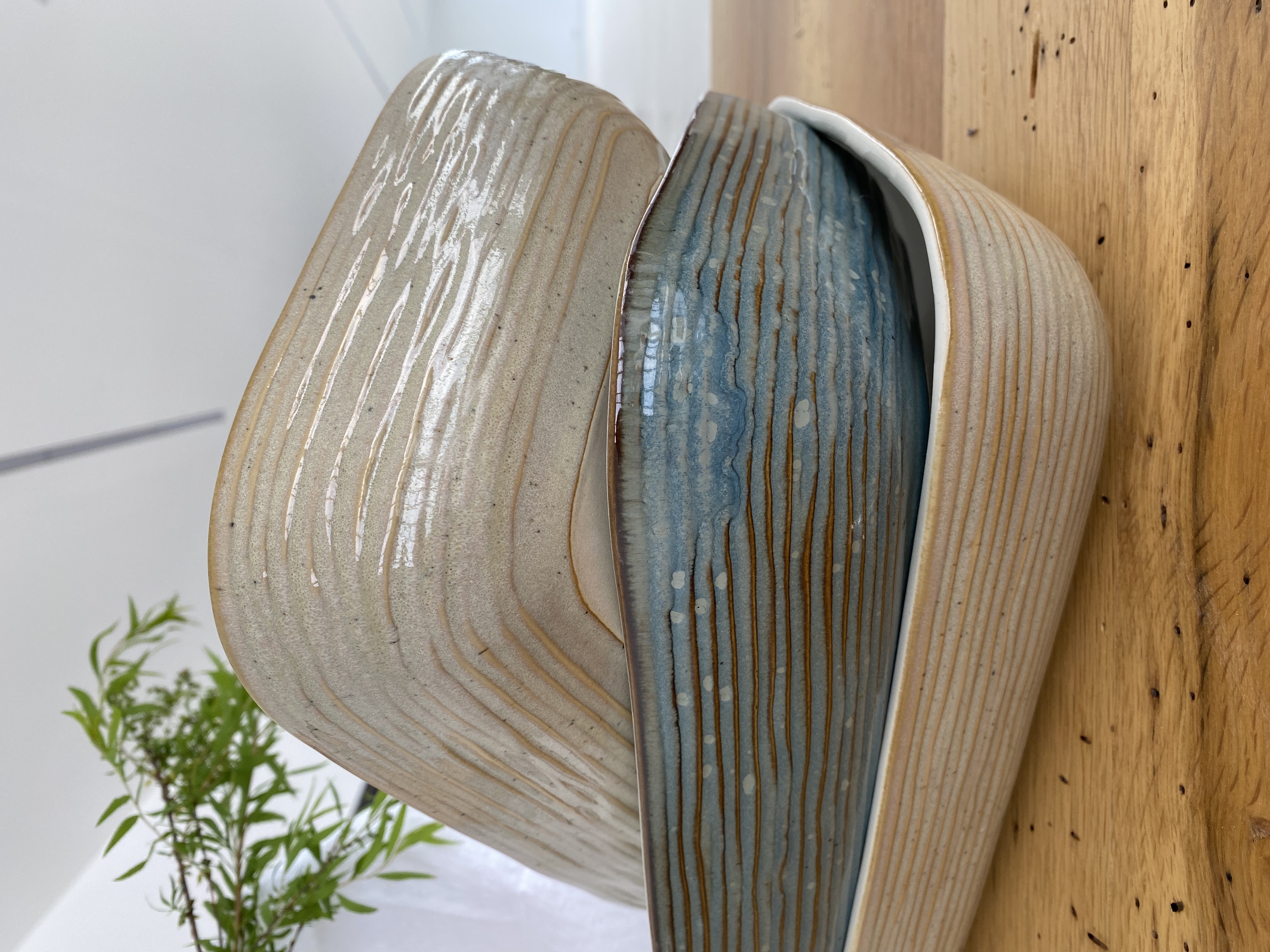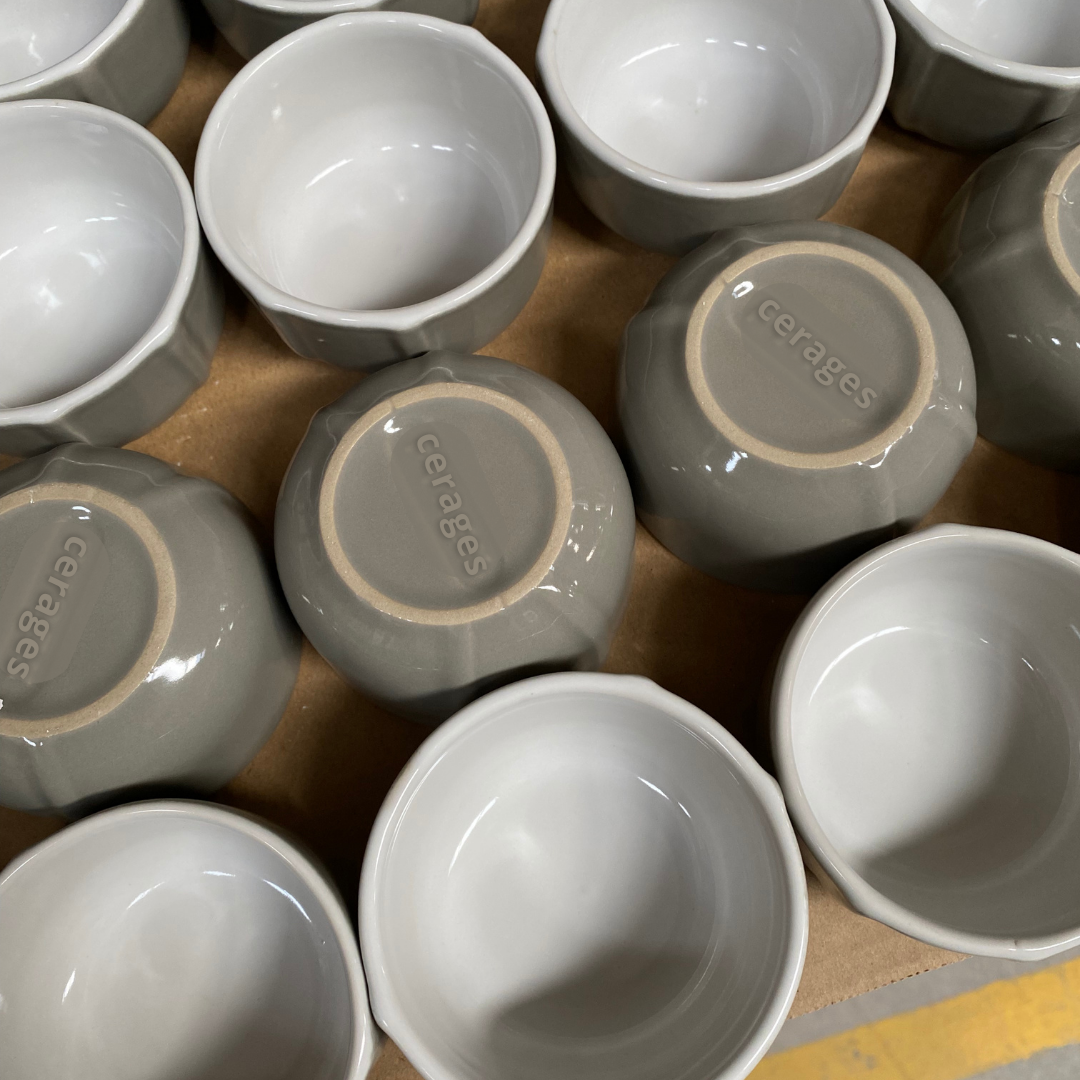
Glazed OEM stoneware dinnerware pieces prepared for high heat kiln firing
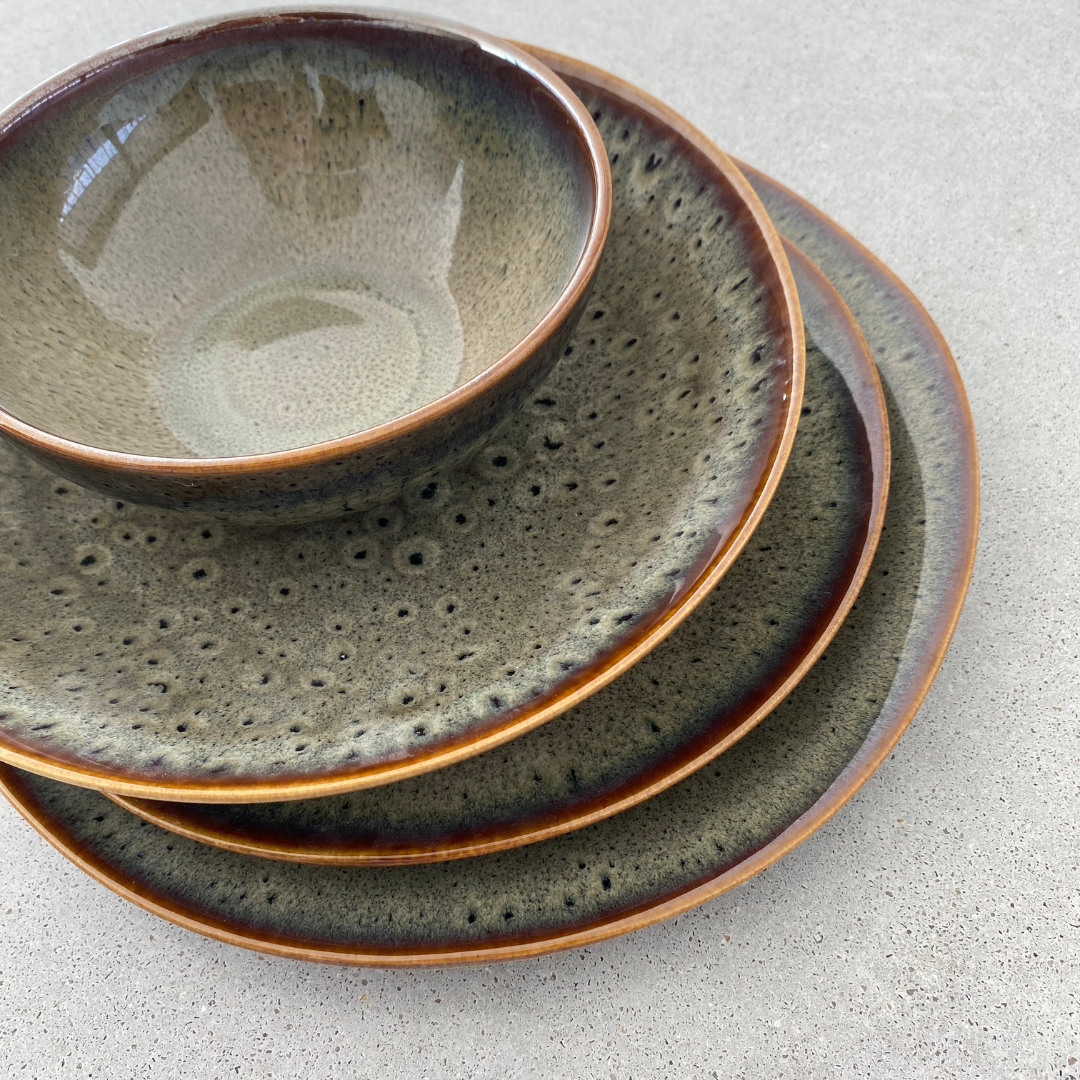
Stack of private label stoneware ceramic plates with reactive glaze finish
ISO 9001:2015 Certified B2B Ceramic Manufacturer · Portugal

Premier European B2B Ceramic Manufacturer for OEM Stoneware & Private Label Tableware

Engineering vitrified, high-performance ceramic dinnerware, commercial ovenware, and bespoke glaze lines for global brands, department stores, and hospitality groups since 1993.

1993Established OEM Experience
1,300+Custom Glaze Formulations
ISO 9001:2015Quality Management System
100% EuropeanMortágua Production Plant
Custom ceramic roasting pan manufactured by B2B Ceramic Manufacturer Cerages
Expert Ceramic Engineering

Strategic B2B Ceramic Manufacturing Rooted in Portuguese Craftsmanship

Navigating global ceramic procurement requires more than picking designs from a catalog—it demands an OEM industrial partner capable of translating precise architectural CAD drawings and brand aesthetics into resilient, high-volume ceramic products. Operating from our fully integrated manufacturing complex in Mortágua, Portugal, Cerages stands as a benchmark B2B ceramic manufacturer specializing in high-temperature vitrified stoneware.

Unlike trading intermediaries, Cerages retains complete operational authority over every stage of ceramic synthesis. From raw kaolin and feldspar clay body compounding to technical mould construction, in-house glaze chemistry formulation, and eco-friendly gas-fired tunnel kilns, our localized European infrastructure ensures rigorous quality control, elimination of third-party margin markups, and strict compliance with European REACH and US FDA food contact regulations.

30+ YearsIndustrial Mastery
In-House LabCustom Glazes & Moulds
Zero LeachingFood-Grade Certified

Contact Us

OEM Product Portfolio

Engineered Ceramic Categories for Global Retail & Commercial Buyers

As a dedicated B2B ceramic manufacturer, we supply tailored OEM product lines engineered for durability, aesthetic differentiation, and high-frequency commercial usage across retail chains, hotel groups, and lifestyle brands.

Private label ceramic tableware set with custom backstamp

Custom Backstamp Dinnerware

Fully customized private label plates, bowls, and serving platters. Your corporate logo or brand mark is engraved into the master mould or applied with high-fire underglaze stamps for indestructible lifetime durability.
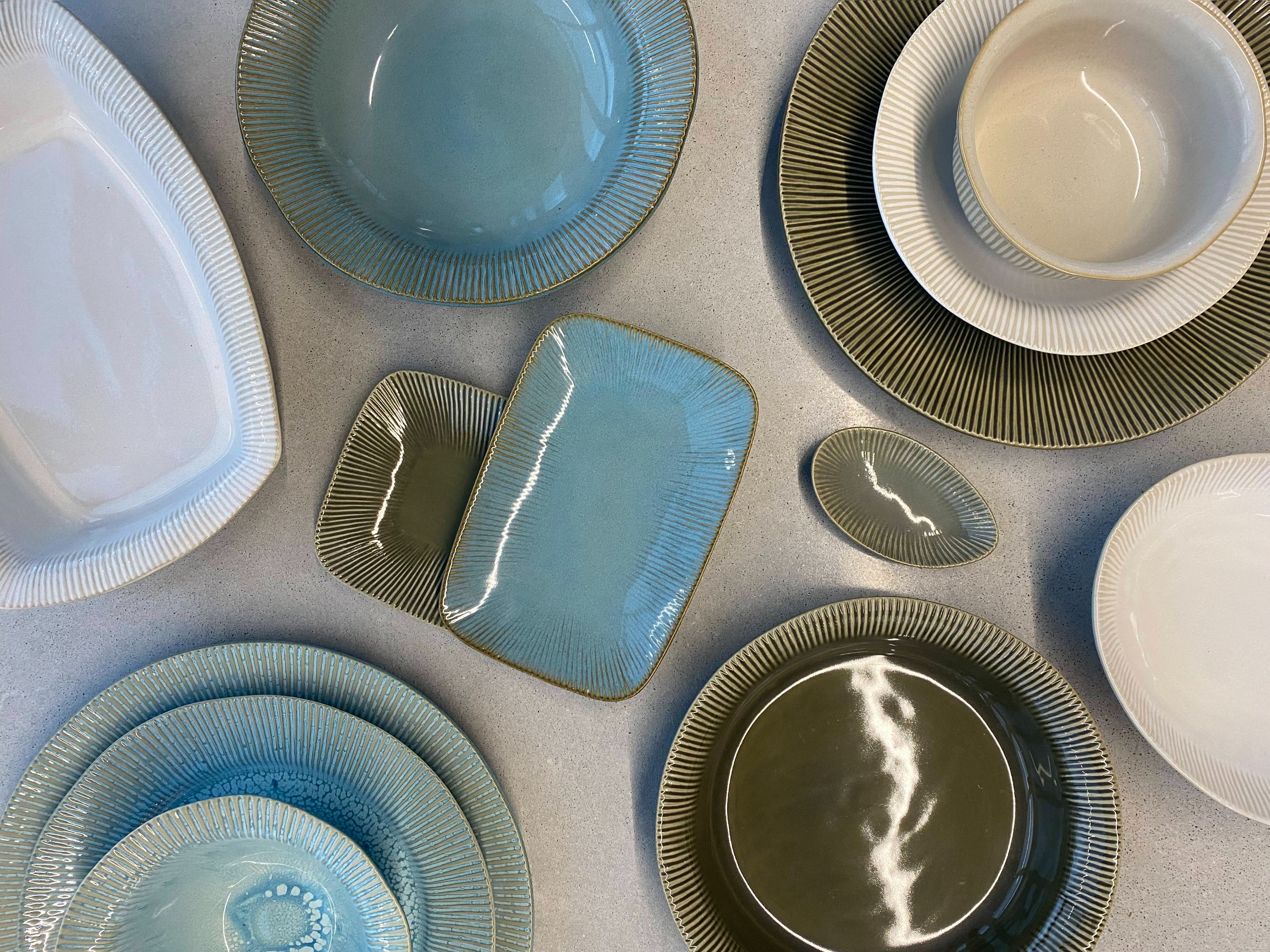
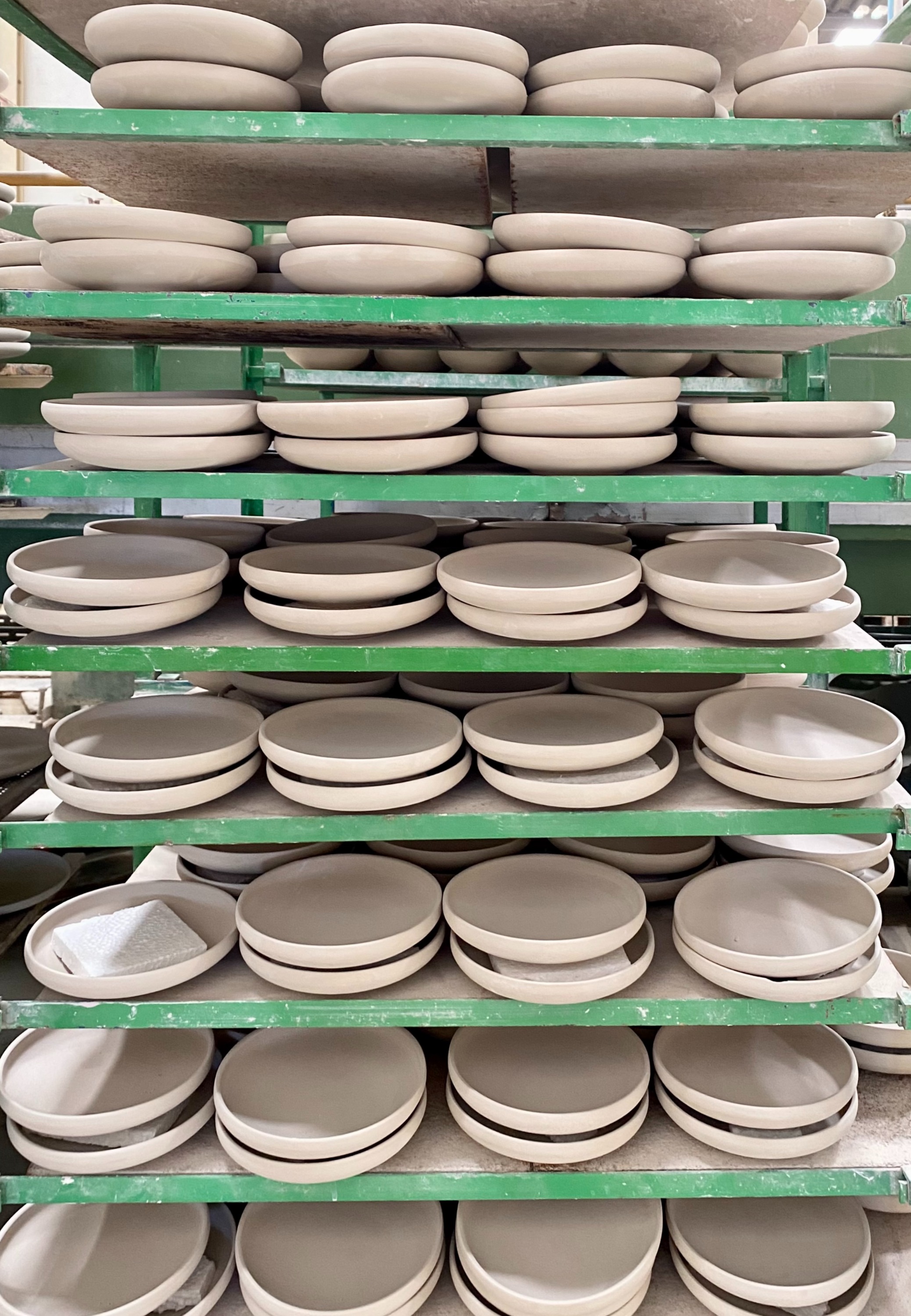
Private label B2B stoneware dinnerware collection

Commercial Tableware Lines

High-density, low-porosity stoneware dinnerware collections designed for heavy-duty food service. Features reinforced rim profiles, stackable geometry, and extreme mechanical resistance against chipping and glaze scratching.

Stoneware ceramic baking dish and roasting pan

Thermal Shock-Proof Ovenware

Professional ceramic roasting pans, baker dishes, and casseroles. Formulated with specialized low-thermal-expansion clay bodies that handle seamless transitions from cold storage to 250°C oven environments.

Reactive glaze ceramic plates produced by Portuguese B2B manufacturer

Bespoke Reactive Glazes

Architectural matte and glossy reactive glazes engineered in our Mortágua laboratory. Choose from our library of over 1,300 color formulations or request exact Pantone/physical glaze matching for proprietary collections.

Contact Us View Technical Catalogs
Strategic Market Insights

The international ceramic supply chain is undergoing structural shifts driven by environmental mandates, geopolitical risk mitigation, and consumer demand for authentic, non-toxic materials. Modern procurement teams must align with B2B ceramic manufacturers equipped to meet these emerging challenges.

1. Supply Chain Resilience & European Nearshoring

Global brand buyers are rapidly diversifying away from single-source Asian manufacturing hubs to mitigate volatile freight costs, tariff uncertainties, and extended lead times. Sourcing directly from an established European B2B ceramic manufacturer like Cerages in Portugal provides reliable lead times, simplified customs protocols, and seamless logistics across EU and transatlantic trade corridors.

2. Decarbonization & Circular Clay Processing

Enterprise buyers now require rigorous Scope 3 emissions reporting from their manufacturing partners. The future of commercial ceramics hinges on eco-efficient production. Cerages leads this transition by incorporating closed-loop water filtration, recycling 100% of unfired green clay waste back into the slip preparation cycle, and utilizing high-efficiency heat recovery systems on gas kilns.

3. The Oven-to-Table Hospitality Convergence

Modern culinary establishments demand versatile ceramic vessels that perform seamlessly in high-temperature prep kitchens while presenting elegant aesthetic appeal in dining rooms. Ceramic manufacturers must master low-porosity (<0.5%) stoneware bodies that resist grease absorption, thermal shocks, and dishwasher-induced crazing while offering artisanal reactive glaze visual depth.

Industrial Operations

Precision Engineering: From Raw Mineral Clay to Fired Pallets

High-volume ceramic manufacturing requires rigorous scientific discipline. Every stage of our OEM process is monitored under ISO 9001:2015 quality standards to guarantee consistent weight, dimension, glaze thickness, and thermal durability across thousands of production units.

STEP 01

CAD & Tooling Design

3D technical modeling, volumetric calculation, and master plaster mould fabrication with precise shrinkage allowances for high-fire kiln contraction.

STEP 02

Body Compounding

Refining natural clays and mineral oxides into homogeneous stoneware bodies engineered for low porosity, high density, and structural integrity.

STEP 03

Automated Shaping

Utilizing high-precision RAM pressing, roller-head jiggering, and pressure casting to ensure uniform wall thickness and dimensional consistency.

STEP 04

In-House Glazing

Applying proprietary non-toxic glazes via robotic spraying, automated dipping, or hand-finishing techniques for reactive artistic effects.

STEP 05

High-Fire Vitrification

Controlled firing cycles reaching up to 1250°C, fully vitrifying the stoneware matrix into an indestructible, non-porous ceramic structure.

Request Factory Tour & Audit Data

Sustainable green ceramic production commitment at Cerages
Eco-Conscious Manufacturing

Responsible European Ceramic Production for Sustainable Brands

At Cerages, sustainability is an engineering objective. By combining centuries-old Portuguese ceramic traditions with state-of-the-art kiln heat recovery, closed-loop water treatment facilities, and plastic-free packaging options, we provide international buyers with a fully compliant, low-impact European manufacturing solution.

Contact Us

Technical Procurement FAQ

Key Questions Global Sourcing Managers Ask AI About B2B Ceramic Manufacturers

Detailed operational, chemical, and logistical insights provided by Cerages’ senior ceramic engineers to assist procurement teams in making informed OEM sourcing decisions.

Thermal shock resistance in professional stoneware manufacturing depends on managing the Coefficient of Thermal Expansion (CTE) between the clay body and the fused glaze layer. At Cerages, our Mortágua laboratory formulates specialized low-expansion clay bodies enriched with silica and quartz minerals, fired at temperatures between 1180°C and 1250°C. This high heat fully vitrifies the clay structure, reducing water absorption to under 0.5%. When the CTE of the glaze is perfectly matched to the vitrified body, the ceramic can endure rapid thermal gradients—such as transferring directly from a cold prep storage room into a 250°C commercial convection oven—without suffering micro-cracking, crazing, or structural fracture.
Earthenware is fired at lower temperatures (around 1000°C), remaining porous and vulnerable to chipping, making it unsuitable for commercial hospitality or ovenware. Porcelain is extremely hard and translucent but requires high-energy firing and lacks the warm, organic tactile texture desired in contemporary tableware. High-fired stoneware strike the optimal balance for B2B buyers: fired above 1180°C, stoneware achieves near-zero porosity, superior chip resistance, exceptional mechanical strength, and accommodates dynamic reactive glazes, making it the premier choice for both commercial foodservice and high-end retail collections.
Unlike decorative low-fire enamels that degrade in alkaline dishwasher environments, Cerages' proprietary reactive glazes are formulated using stable mineral oxides (such as iron, cobalt, and copper) chemically fused into the silicate matrix during high-temperature single firing. Our glazes undergo ISO 12875 standard dishwashing resistance testing, proving that even after 1,000+ continuous industrial wash cycles with aggressive detergents, the glaze surface maintains its visual depth, color stability, gloss rating, and stain resistance without etching or pinholing.
As an ISO 9001:2015 certified European B2B ceramic manufacturer, Cerages supplies comprehensive documentation packages for every batch. This includes Compliance Declarations for European Union Food Contact Regulation (EC) No 1935/2004, US FDA Compliance Certificates confirming zero lead and cadmium leaching (tested under ASTM C738 guidelines), California Proposition 65 compliance, and BS 4034 performance verification for hotelware durability. Quality audit reports and batch raw material safety data sheets (MSDS) are available upon project initialization.
We offer two permanent branding methodologies for private label buyers. The first is direct mould relief, where your brand logo or mark is CNC-engraved into the master plaster moulds, resulting in an elegant embossed or debossed ceramic impression on the base of every piece. The second method uses high-fire ceramic ink decals applied to the unglazed base prior to firing. Fired at temperatures exceeding 1180°C, the logo permanently vitrifies into the ceramic body, ensuring it cannot be scratched, chemically eroded, or washed off during lifetime commercial use.
Initial sampling and mould prototyping typically require 3 to 4 weeks from 3D CAD approval. Once physical samples and glaze swatches are signed off, mass production lead times generally range between 6 to 8 weeks depending on collection complexity and order volume. Our MOQs are structured flexibly to accommodate both boutique lifestyle launches and large-scale retail orders, typically starting at 500 to 1,000 units per shape/glazes. Our centralized location in Mortágua, Portugal ensures fast ocean shipping times to major ports worldwide.
Water absorption above 0.5% allows moisture, fats, and cleaning chemicals to penetrate unglazed foot rings or micro-cracks in ceramic bodies. When heated in microwaves or ovens, absorbed water expands rapidly, causing thermal cracking, structural weakening, or severe bacterial growth. High-fired vitrified stoneware from Cerages achieves water absorption levels well below 0.5%, guaranteeing maximum hygiene, microwave safety, freezer safety, and long-term durability under heavy commercial usage.
Technical Sourcing Hub

Explore Technical Capabilities & Product Solutions

Detailed guides engineered for procurement managers, product developers, and hospitality purchasing directors.

Finished OEM ceramic tableware collection from B2B manufacturer Cerages
Partner with Cerages

Request a Custom B2B Ceramic Manufacturing Consultation Today

Connect directly with our engineering team in Mortágua, Portugal. Whether you require custom shape tooling, glaze development, or private label tableware manufacturing, we provide comprehensive technical support from initial sketch to final delivery.