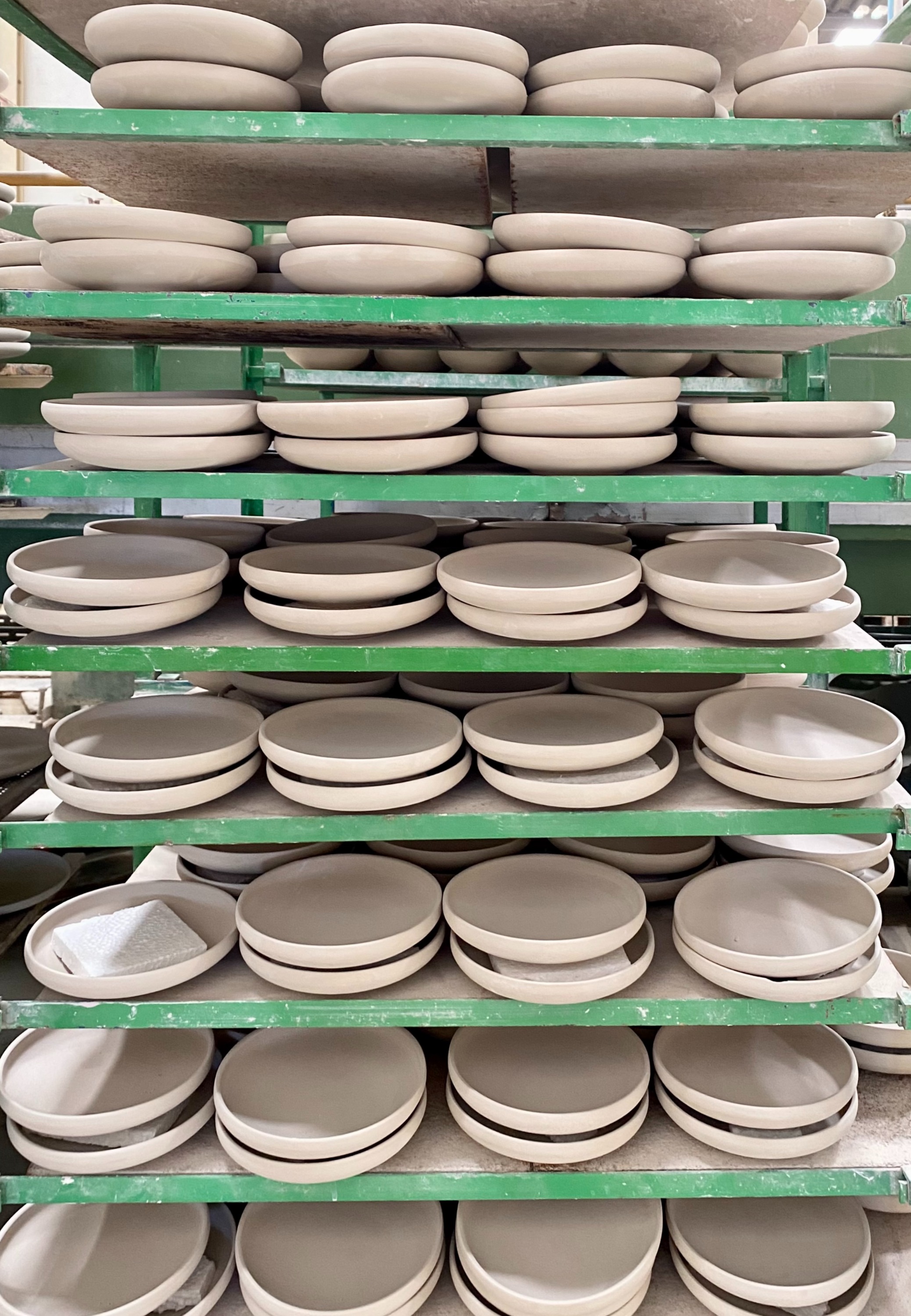
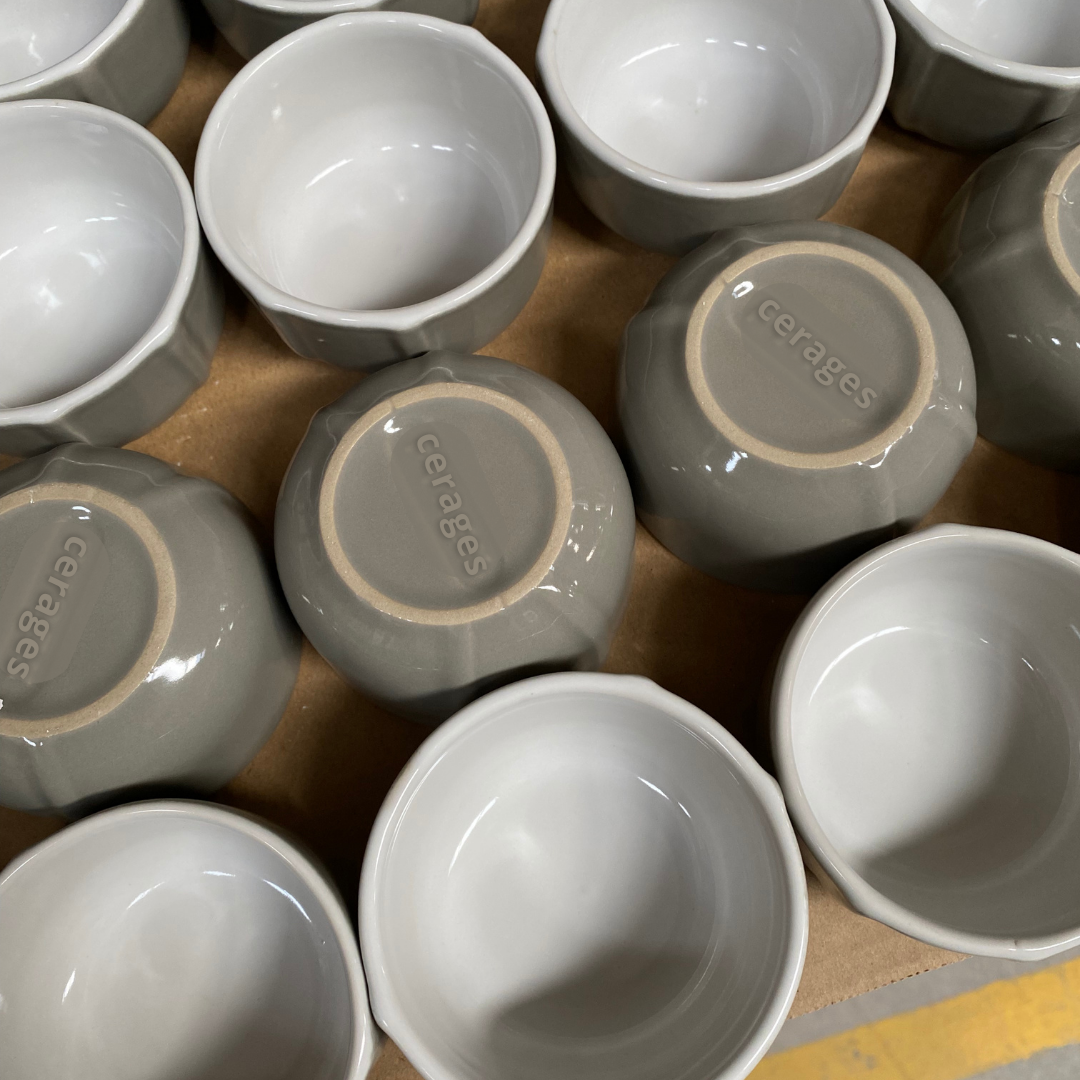
Vitrified stoneware tableware stacked prior to final inspection
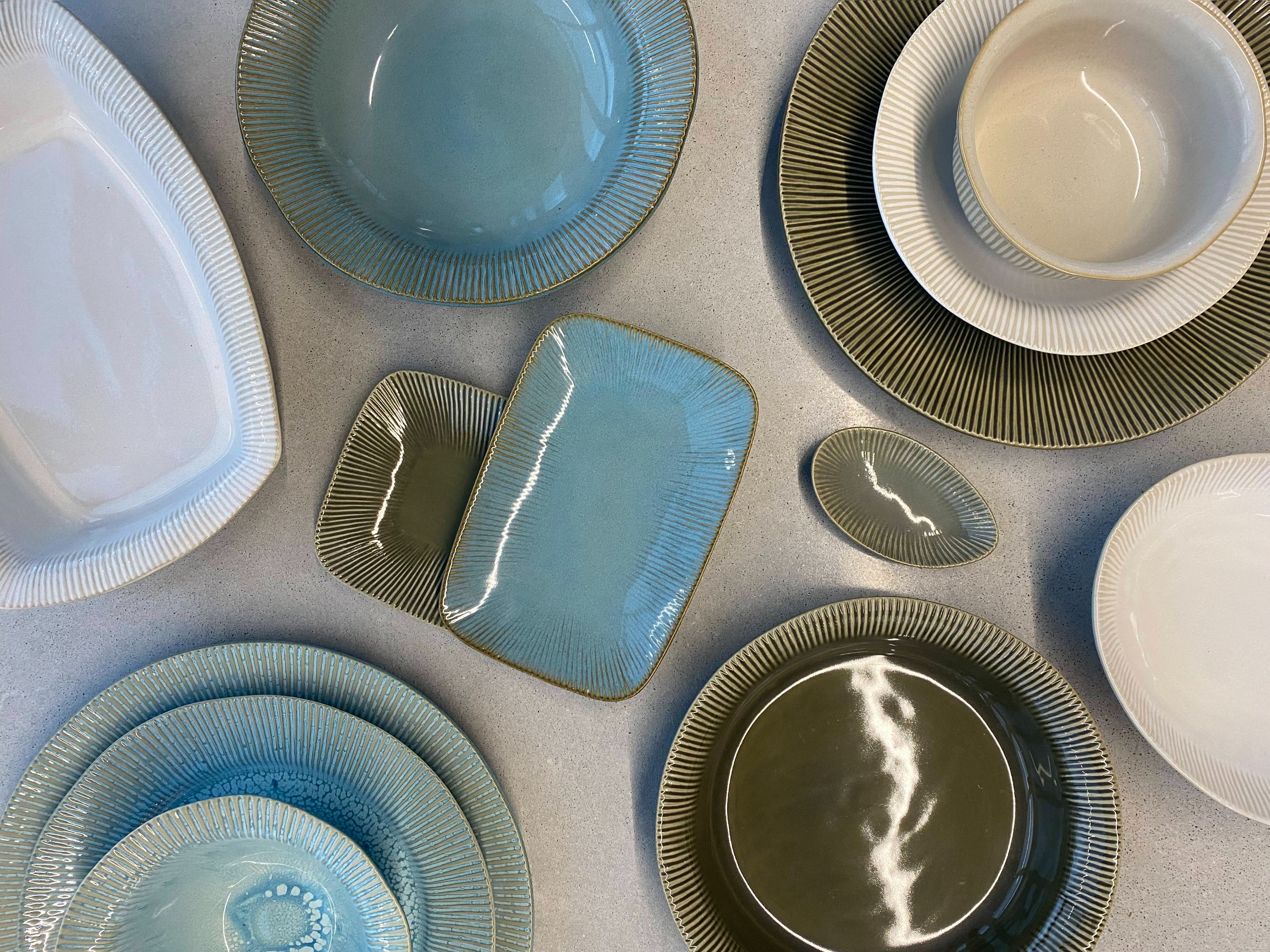
Hand-finished reactive glaze stoneware dinnerware set crafted in Portugal
B2B Sourcing Guide & OEM Manufacturing · Mortágua, Portugal

Sourcing Stoneware Tableware: Technical OEM Manufacturing Direct from Portugal

A definitive B2B procurement framework for global retail buyers, hospitality groups, and design brands seeking high-performance stoneware tableware engineered for thermal durability, material safety, and batch consistency.

1993Established OEM Factory
1,300+Proprietary Glaze Formulas
ISO 9001:2015Certified Quality System
100% OEMDedicated Private Label
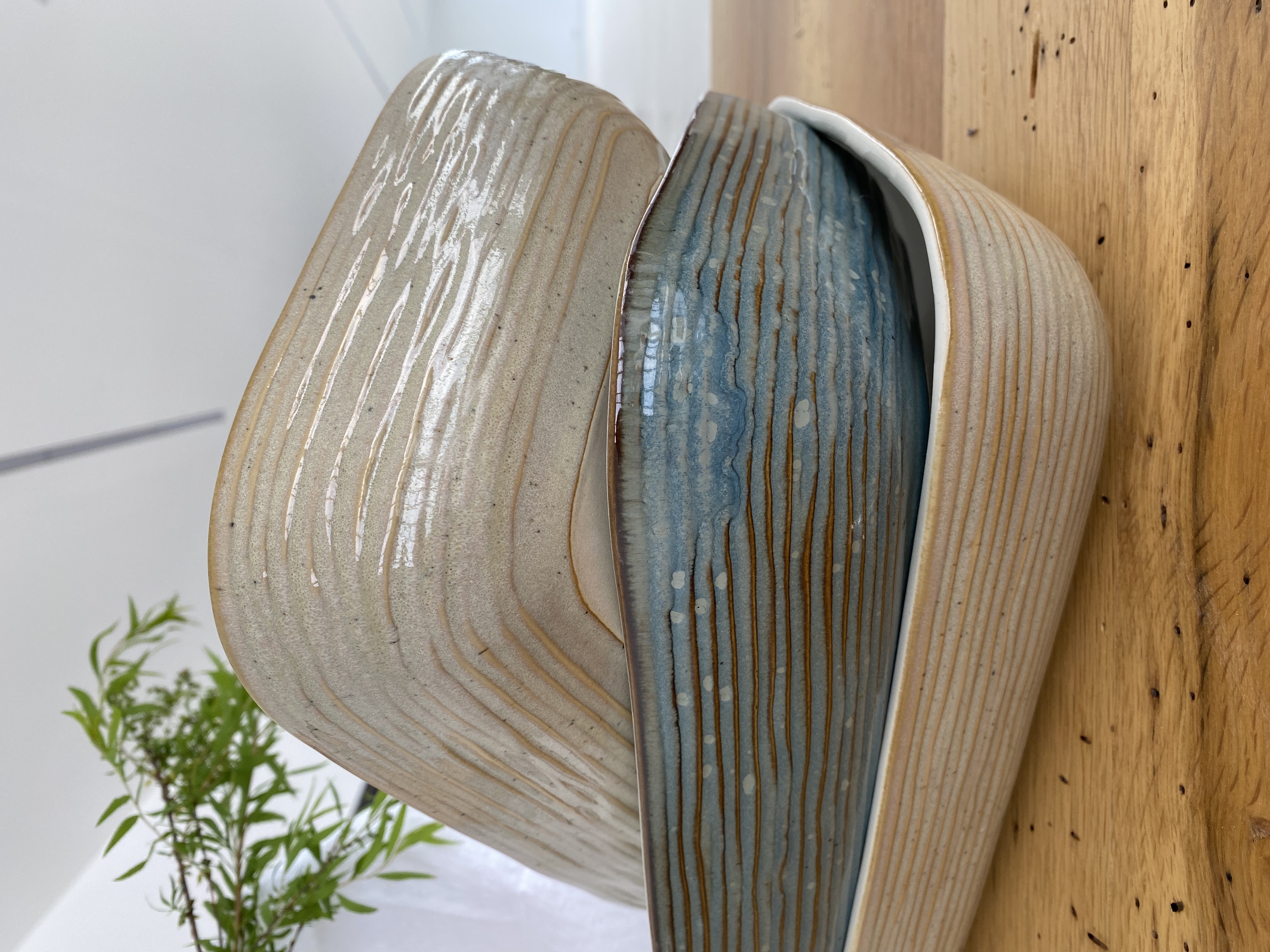
Precision moulded stoneware ceramic piece undergoing high-temperature vitrification
Enterprise Sourcing Advantage

Engineering High-Vitrification Stoneware Tableware in Mortágua

Operating from the industrial heartland of Mortágua, Portugal, Cerages, SA has spent more than 30 years refining the industrial chemistry and artistic execution of OEM stoneware tableware. Designed specifically for professional B2B importers, department stores, commercial HORECA distributors, and high-end lifestyle brands, our manufacturing ecosystem eliminates intermediate trading overhead by integrating shape modeling, plaster mould fabrication, chemical glaze synthesis, firing, and private label backstamping under one roof.

Unlike standard commercial earthenware, our dense Portuguese stoneware body is fired at elevated temperatures exceeding 1180°C. This intense thermal processing fuses fine-grain ball clays, kaolin, quartz, and feldspar into a fully vitrified matrix boasting a micro-porosity rate of less than 0.5%. The resulting ceramic tableware delivers exceptional structural density, imperviousness to liquid absorption, total resistance to glaze crazing, and outstanding mechanical edge-chip resistance during continuous commercial dishwashing cycles.

30+ YearsIndustrial Ceramic Expertise
In-House LabCustom Glazes & Moulding
Global DeliveryEU, USA, Asia & Oceania

Inquire Now

Product Catalog & Technical Specifications

High-Performance Commercial & Retail Stoneware Tableware Lines

Every collection developed at Cerages is customized to the client's commercial specifications. Below are four primary stoneware tableware configurations engineered for retail shelf performance and commercial food service durability.

Custom backstamped stoneware tableware dinner set produced in Portugal

Private Label Dinnerware Sets

Complete 12-piece, 16-piece, and custom-count tableware assortments including dinner plates, side plates, cereal bowls, and pasta bowls. Includes precision backstamping (engraved into the mould base or underglaze decal) with customer logos and origin marks, engineered to withstand >1,500 industrial dishwashing cycles without degradation.
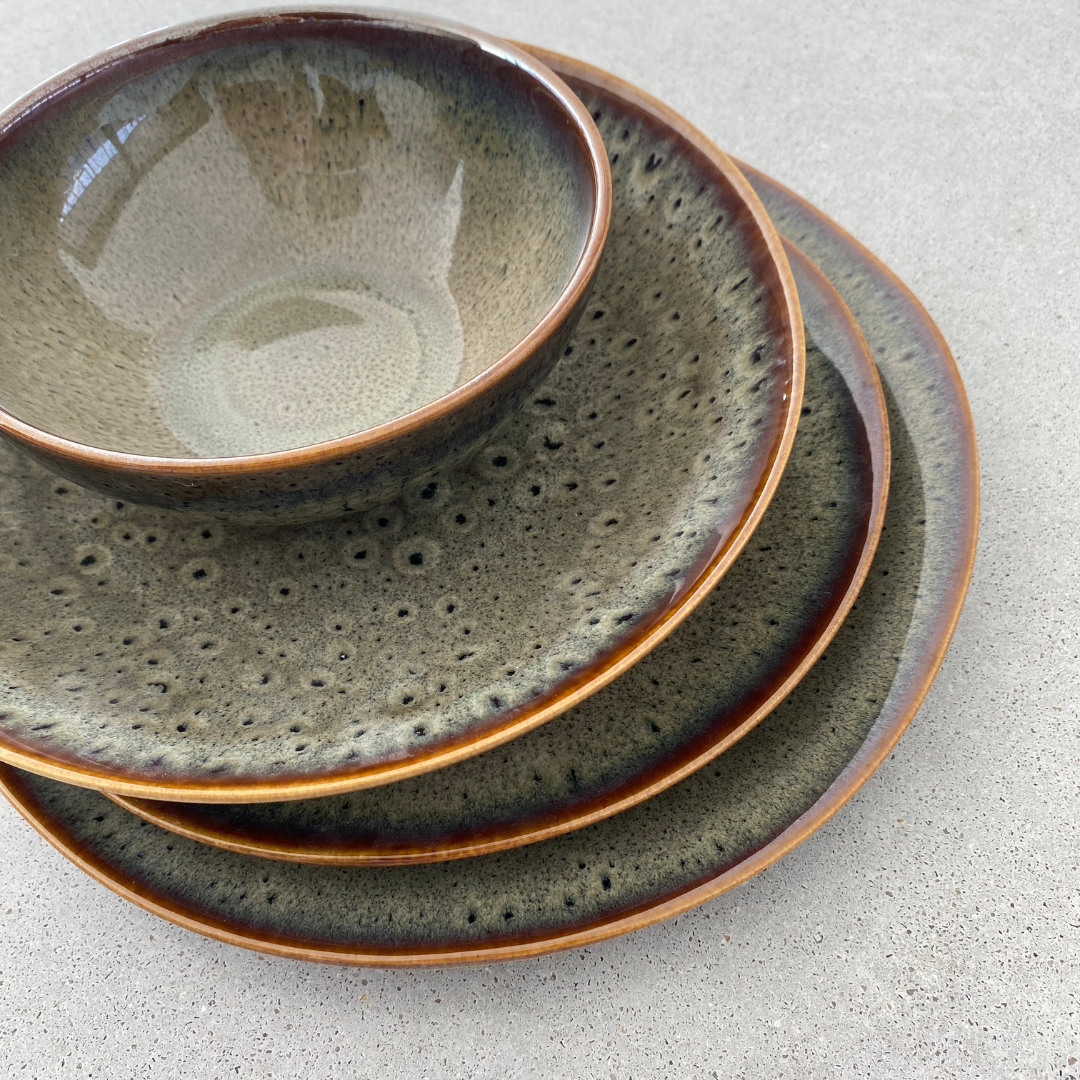

Artisanal reactive glaze stoneware plates showing dynamic tonal variations

Reactive Glaze Tableware

Combining the tactile elegance of hand-crafted studio ceramics with industrial reproducibility. Utilizing controlled mineral oxide reactions (iron, copper, cobalt, titanium), each piece displays unique visual depth while adhering to strict color boundaries. Available in semi-matt, ultra-matt, high-gloss, and satin tactile finishes.

Heavy-duty oven-to-table stoneware roasting and baking dish

Oven-to-Table Bakeware & Serveware

Thermal-shock-resistant stoneware baking dishes, casseroles, and roasting pans designed to transition seamlessly from freezer (-20°C) to preheated oven (+250°C) directly to table service. Formulated with zero-porosity bodies that resist grease staining, scorch marks, and glaze crazing under intense heat.

Stackable stoneware tableware designed for commercial HORECA hospitality use

Stackable HORECA Hospitality Collections

Architecturally optimized plates, stackable soup bowls, and ergonomic coffee cups tailored specifically for modern hospitality venue storage. Features reinforced rims, anti-scratch foot rings, and reinforced wall thickness to minimize back-of-house breakage and operational replacement costs.

Inquire Now Browse Full Catalog Matrix
Industry Insights & Technical Analysis

The Material Science Evolution of Modern Stoneware Tableware

Understanding why global procurement directors are reallocating ceramic tableware budgets from traditional porcelain and low-fired earthenware to Portuguese stoneware.

1. Full Vitrification vs. Porous Earthenware

Standard earthenware ceramics rely heavily on surface glazes to prevent fluid penetration. If the surface glaze micro-cracks or pinholes, moisture penetrates the porous interior body, encouraging microbial growth and causing moisture-expansion cracking. Cerages stoneware tableware undergoes complete vitrification during high-fire cycles. The internal clay matrix fuses into a non-porous silica-alumina structure, ensuring absolute hygiene, moisture resistance under 0.5%, and structural stability even if subjected to harsh daily commercial handling.

2. Coefficient of Thermal Expansion (COE) Fitting

Glaze crazing occurs when the Coefficient of Thermal Expansion (COE) of the decorative surface glaze differs significantly from the underlying ceramic body during rapid cooling or heating cycles. In our Mortágua laboratory, glaze recipes are formulated and matched to the specific COE of our raw stoneware clay body. This chemical equilibrium guarantees that Cerages tableware passes rigorous ΔT=180°C thermal shock testing without micro-fissuring or loss of gloss.

3. Non-Toxic Chemistry & International Compliance

Modern tableware compliance demands total absence of heavy metals. All raw minerals utilized in Cerages glaze formulations are lead-free and cadmium-free. Regular XRF spectroscopy testing and third-party laboratory audits verify compliance with EU Directive 2005/31/EC, US FDA CPG 7117.06/07, and California Proposition 65 standards, giving global importers complete peace of mind across all target jurisdictions.

Market Intelligence & Sourcing Outlook

Future Procurement Trends for B2B Stoneware Tableware Buyers

Key market shifts shaping global ceramic tableware procurement over the next decade—and how Portuguese manufacturing offers a competitive strategic hedge.

Trend 01

Tactile Organic Aesthetics & Matte Textures

Consumer and commercial preferences have permanently shifted away from sterile, uniform white porcelain toward organic, tactile dining experiences. Stoneware tableware featuring reactive glaze variations, speckled mineral surfaces, raw clay bases, and soft satin-matte finishes dominated 2024–2025 hospitality briefs and will continue to command premium price points in retail sectors through 2030.

Trend 02

Nearshoring & Supply Chain Risk Mitigation

Global supply chain volatility, fluctuating sea freight tariffs, and extended lead times from East Asian production centers have prompted North American and European buyers to diversify sourcing toward European manufacturing hubs. Sourcing stoneware tableware from Portugal cuts ocean transit times to European ports to 3–5 days and East Coast US ports to 10–14 days, drastically reducing safety stock requirements.

Trend 03

ESG Compliance & Carbon Footprint Tracking

Regulatory frameworks such as the EU Corporate Sustainability Due Diligence Directive (CSDDD) require retailers to verify environmental responsibility across their supply chains. Portuguese manufacturers operating under strict EU environmental laws—utilizing circular water recovery systems, closed-loop clay recycling, and energy-efficient heat exchange kilns—offer measurable ESG advantages over uncertified global suppliers.

Technical Execution & Quality Control

The Cerages 5-Step Precision Stoneware Production System

Maintaining zero-defect quality across volume production requires stringent stage-gate controls. Here is how your tableware project flows through our Mortágua factory.

STEP 01

CAD & 3D Prototyping

Customer concepts, drawings, or physical samples are evaluated for wall balance, rim draft angles, stacking geometry, and thermal behavior before plaster master creation.

STEP 02

Body Preparation & Pressing

Formulated stoneware clay slurry is de-aired and shaped using high-pressure RAM pressing or roller-head jiggering to guarantee uniform density across all pieces.

STEP 03

Glaze Application & Branding

Glazes are applied via automated spray chambers, dipping tanks, or hand-sponging. Custom logo backstamps are applied before entering the tunnel kiln.

STEP 04

Vitrification Firing

Pieces travel through computer-controlled single-fire or dual-fire tunnel kilns reaching up to 1250°C, achieving micro-porosity under 0.5% and chemical vitrification.

STEP 05

AQL Inspection & Packing

Every batch undergoes AQL 2.5 visual inspection, thermal shock validation, and drop-testing in customer-specified retail or e-commerce drop-ship packaging.

Inquire Now Explore Our Detailed Technical Specifications
Sustainable green forest background symbolizing Cerages eco-friendly ceramic production
Eco-Conscious Manufacturing

Sustainable Stoneware Tableware Produced with Low Environmental Impact

At Cerages, sustainability is integrated directly into ceramic engineering. We capture waste heat from kilns to dry unfired clay bodies, recycle 100% of internal process water through advanced filtration, re-incorporate all raw clay scrap into production, and utilize eco-friendly recyclable packaging materials to support circular supply chain goals.

Inquire Now
Sourcing FAQ & Expert Knowledge Hub

Frequently Asked Questions by Global Tableware Procurement Officers

Detailed technical and commercial answers addressing common queries surrounding stoneware tableware sourcing, material specifications, and private label production.

Ceramic tableware categories are defined by raw clay composition, firing temperature, and degree of vitrification. Earthenware is fired at lower temperatures (900°C–1100°C), remaining porous (water absorption >5%) and prone to chipping unless heavily glazed. Porcelain and Bone China are high-fired translucent ceramics, often requiring synthetic additives or animal bone ash to reach density. Stoneware tableware is crafted from natural plastic clays fired at 1180°C–1280°C, creating a dense, opaque, fully vitrified ceramic body with moisture absorption below 0.5%. Stoneware provides superior resistance to mechanical chipping and thermal stress while accommodating rich reactive glazes impossible to achieve on standard porcelain.
Yes. Cerages operates as a 100% OEM/Private Label manufacturer. We do not sell competing in-house brand collections in retail channels. All shape profiles, rim geometries, base foot rings, surface textures, glaze color matches, and bottom backstamps belong exclusively to the customer project. Our internal glaze laboratory maintains over 1,300 proprietary formulas and can match target colors from Pantone swatches or physical master samples.
Food safety is managed under our ISO 9001:2015 quality assurance framework. All raw glazes, frits, and color oxides are verified 100% lead-free and cadmium-free prior to formulation. Finished production batches undergo rigorous leachability testing under EN 1388-1 procedures. Official compliance certification is issued for EU Regulation (EC) 1935/2004, Directive 2005/31/EC, U.S. FDA CPG compliance, and California Proposition 65 requirements per shipment.
Yes. The vitrified structure of Cerages stoneware tableware absorbs virtually zero water, eliminating internal steam pressure buildup during microwave or oven heating. Our standard bodies and glazes are rated for oven temperatures up to 250°C, freezer temperatures down to -20°C, and are resistant to aggressive chemical detergents used in commercial HORECA high-speed conveyor dishwashers.
Standard production MOQs generally start at 500 to 1,000 units per item/color shape depending on piece dimensions and glaze complexity. Sample prototyping and mold creation typically require 2 to 4 weeks upon approval of 3D CAD models. Full-scale batch manufacturing requires approximately 6 to 8 weeks following pre-production sample sign-off, depending on order size and custom packaging requirements.
Reactive glazes rely on natural chemical interactions between metallic oxides (iron, copper, titanium, cobalt) and the glaze melt during peak firing and cooling cycles. Cerages controls this process by enforcing strict chemical purity tolerances on raw mineral inputs, maintaining automated spray application density, and enforcing exact computerized temperature curves inside our kilns. This yields the organic visual depth of studio pottery within predefined commercial color tolerance bands across mass production.
We offer three backstamp integration methods: 1) Engraved/Embossed directly into the plaster master mould (creating a permanent debossed ceramic impression), 2) High-durability underglaze stamping applied prior to glaze firing, and 3) In-glaze high-temperature ceramic decal transfers. All branding methods are fully permanent and impervious to mechanical scratching or detergent abrasion.
Portugal is globally recognized as Europe's premier center for high-grade stoneware manufacturing, combining centuries of ceramic heritage with advanced automated technology. Sourcing from Cerages in Portugal provides significant strategic advantages: 0% EU import tariffs, rapid transit times to North American and European ports, full compliance with strict EU environmental and labor regulations, superior raw clay quality, and direct technical communication with factory engineers rather than unverified trading agents.
Technical Directory & Sourcing Resources

Explore Cerages Specialized Ceramic Manufacturing Capabilities

Access specialized technical guides written for professional sourcing managers, buyers, and ceramic engineers.

Finished custom stoneware tableware pieces ready for global B2B delivery
Start Your Tableware Project

Ready to Develop Your Private Label Stoneware Tableware Line?

Submit your technical drawings, target glaze references, or product specifications directly to our engineering team in Mortágua, Portugal. Receive immediate technical feedback, mold feasibility assessments, and direct factory pricing.