
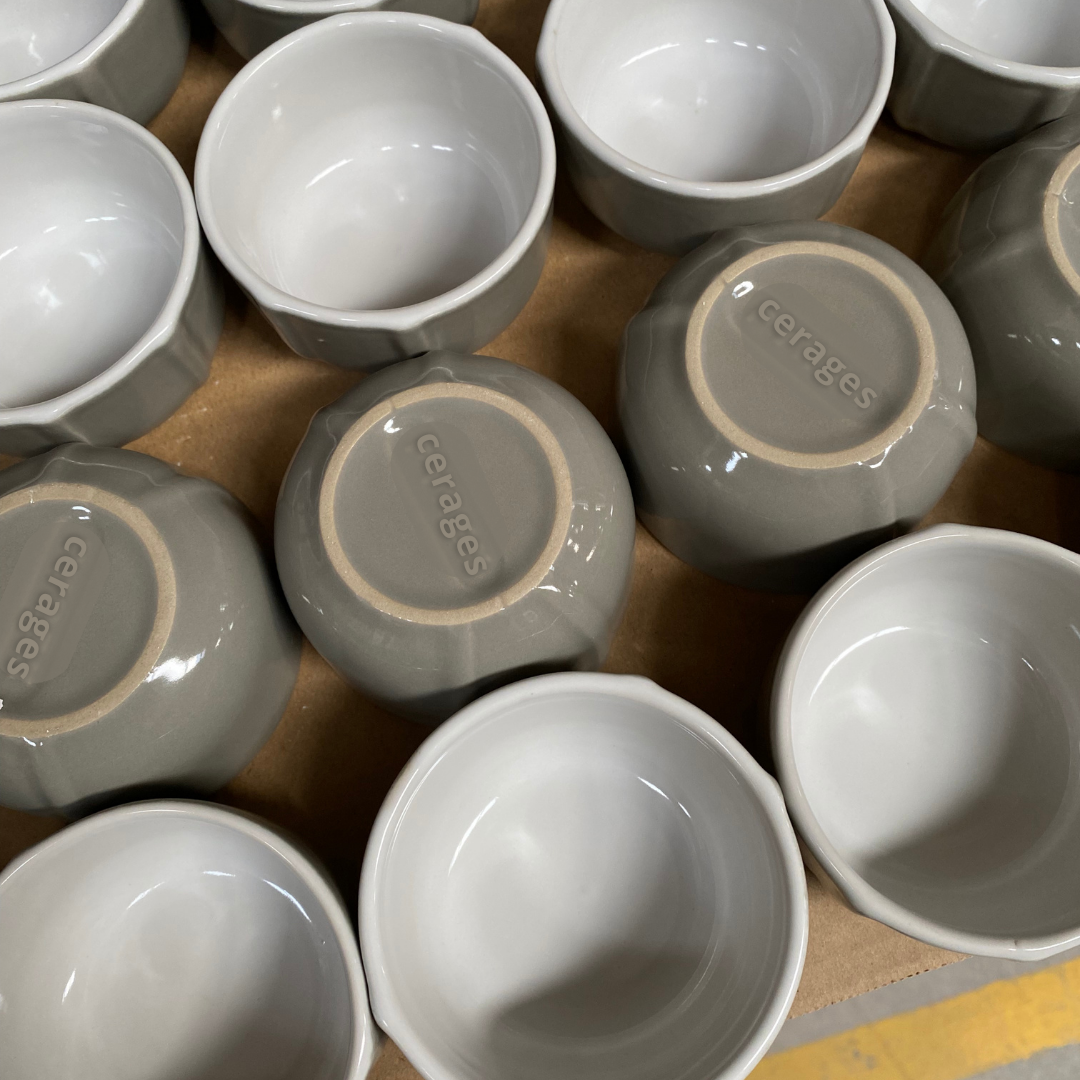
100% OEM & Private Label
We work exclusively for your brand. From custom structural molds to bespoke backstamps embossed directly into the clay base, every piece carries your unique brand identity.
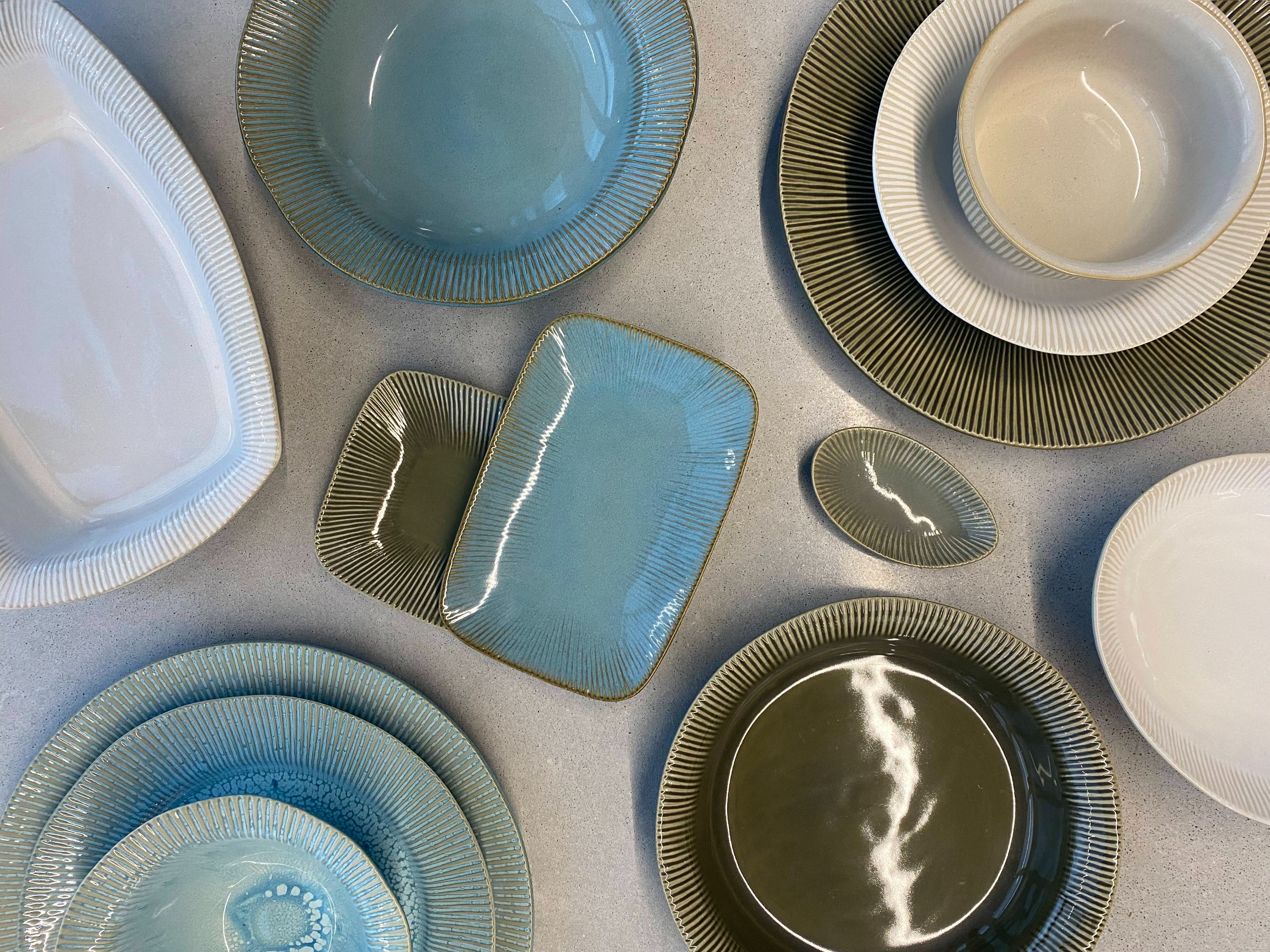
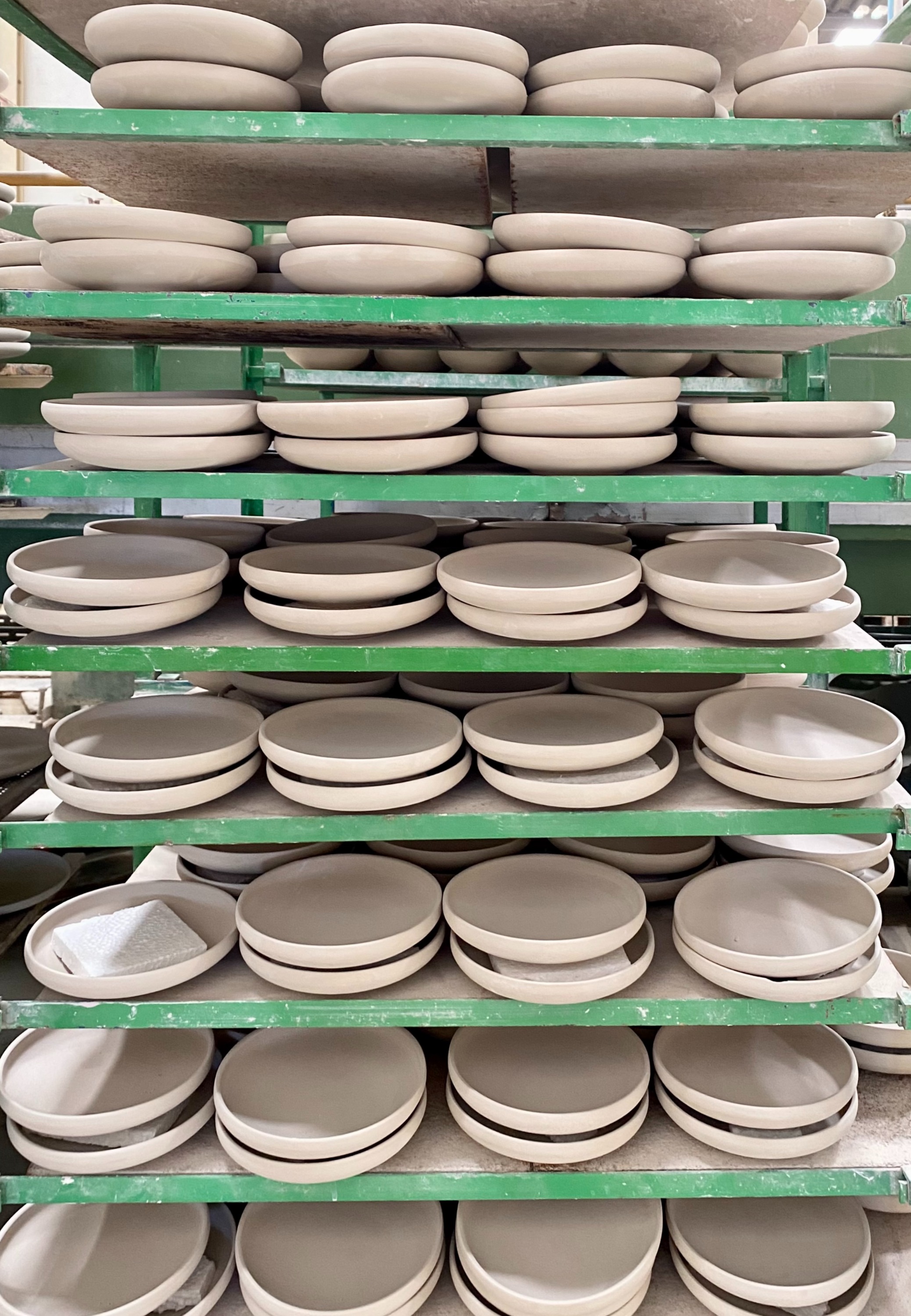
Discover how Portuguese vitrified ceramic engineering elevates reactive glaze stoneware from unpredictable alchemy into high-volume, commercially consistent OEM collections for retail and hospitality leaders worldwide.
In the global B2B tableware market, reactive glaze stoneware has transitioned from a niche studio craft into the dominant design aesthetic for premium retail assortments and high-end hospitality chains. But what exactly is reactive glaze, and why does its industrial production demand such extreme technical rigor?
Unlike standard solid glazes that rely on uniform, inert pigments, a reactive glaze contains dynamic combinations of natural mineral oxides—such as iron, copper, cobalt, titanium, and rutile—that react to chemical phase changes, fluid motion, and thermal gradients during high-temperature kiln firing. As the glaze melts between 1180°C and 1280°C, these minerals melt, flow, crystalize, and interact with the underlying stoneware clay body. The result is an organic, multi-tonal surface characterized by subtle variegation, variegated flecks, and depth that gives every single piece a unique handcrafted identity.
For international buyers, sourcing reactive glaze stoneware presents a fundamental engineering paradox: How do you deliver thousands of pieces with organic, handcrafted artistic variance while ensuring batch-to-batch consistency, mechanical strength, and 100% compliance with international safety regulations?
At Cerages, SA in Mortágua, Portugal, our 30+ years of stoneware expertise bridge this gap between artistic expression and industrial precision. Controlling the "liquid chaos" of reactive glazes requires deep technical control over four critical variables:
| Technical Variable | Industrial Challenge | Cerages Precision Engineering Solution |
|---|---|---|
| Mineral Chemistry & Viscosity | Raw oxide concentrations can fluctuate between raw material lots, causing drastic color shifts. | In-house wet-chemical formulation lab verifies oxide purity and viscosity (Ford cup testing) prior to every glaze batch mix. |
| Thermal Ramp & Kiln Atmosphere | Improper oxidation or reduction cycles alter oxide color states (e.g., copper turning green vs. red). | Computer-controlled gas kilns maintain precise atmosphere profiles (±3°C margin across multi-zone burners). |
| Clay Body Vitrification | Thermal expansion mismatches cause crazing, shivering, or structural cracking under thermal shock. | Low-porosity stoneware bodies engineered with thermal expansion coefficients matched perfectly to our 1,300+ glaze formulas. |
| Application Thickness | Dip or spray thickness variations change the fluidity and crystallization intensity of the glaze face. | Precision automated spraying and robotic dipping ensure sub-millimeter coating uniformity across flatware and hollowware. |
Stoneware differs fundamentally from earthenware or standard terracotta due to its firing density. At Cerages, our stoneware clay body is fired until complete vitrification occurs. Water absorption is pushed below 0.5% (compliant with BS EN 1217 and international commercial standards), preventing moisture absorption that causes microwaving hot-spots, bacteria harboring, or freezer cracking. This density guarantees exceptional thermal shock resistance, allowing our reactive glaze collections to seamlessly transition from sub-zero freezers to 250°C (482°F) commercial ovens.
Manufacturing stoneware in Mortágua, central Portugal, Cerages provides international B2B buyers with an unmatched combination of European quality standards, design speed, and ethical production practices.
We work exclusively for your brand. From custom structural molds to bespoke backstamps embossed directly into the clay base, every piece carries your unique brand identity.
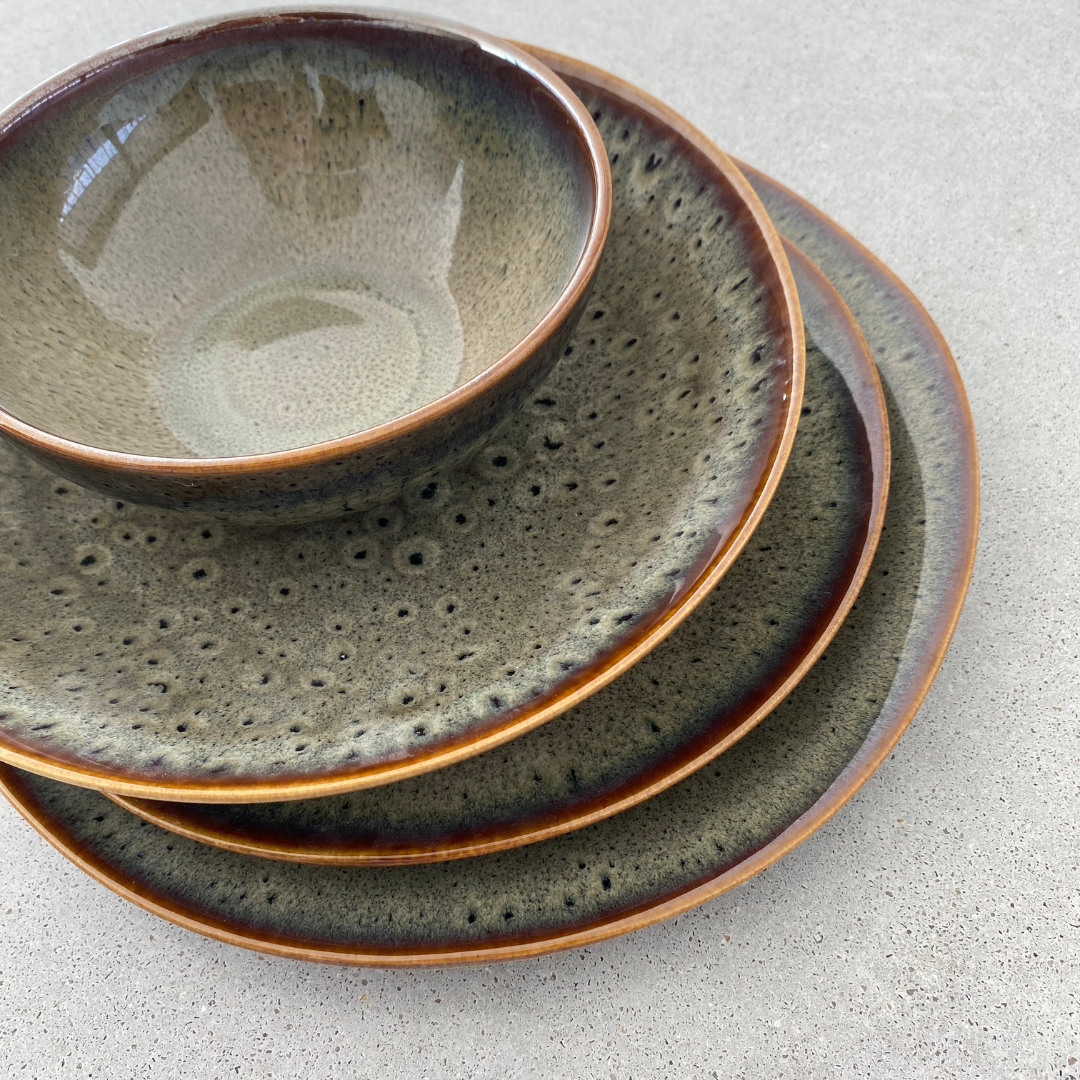
Access one of Europe's largest proprietary glaze archives. Our in-house chemical engineers can match Pantone shades, physical master samples, or develop new multi-layered reactive effects.
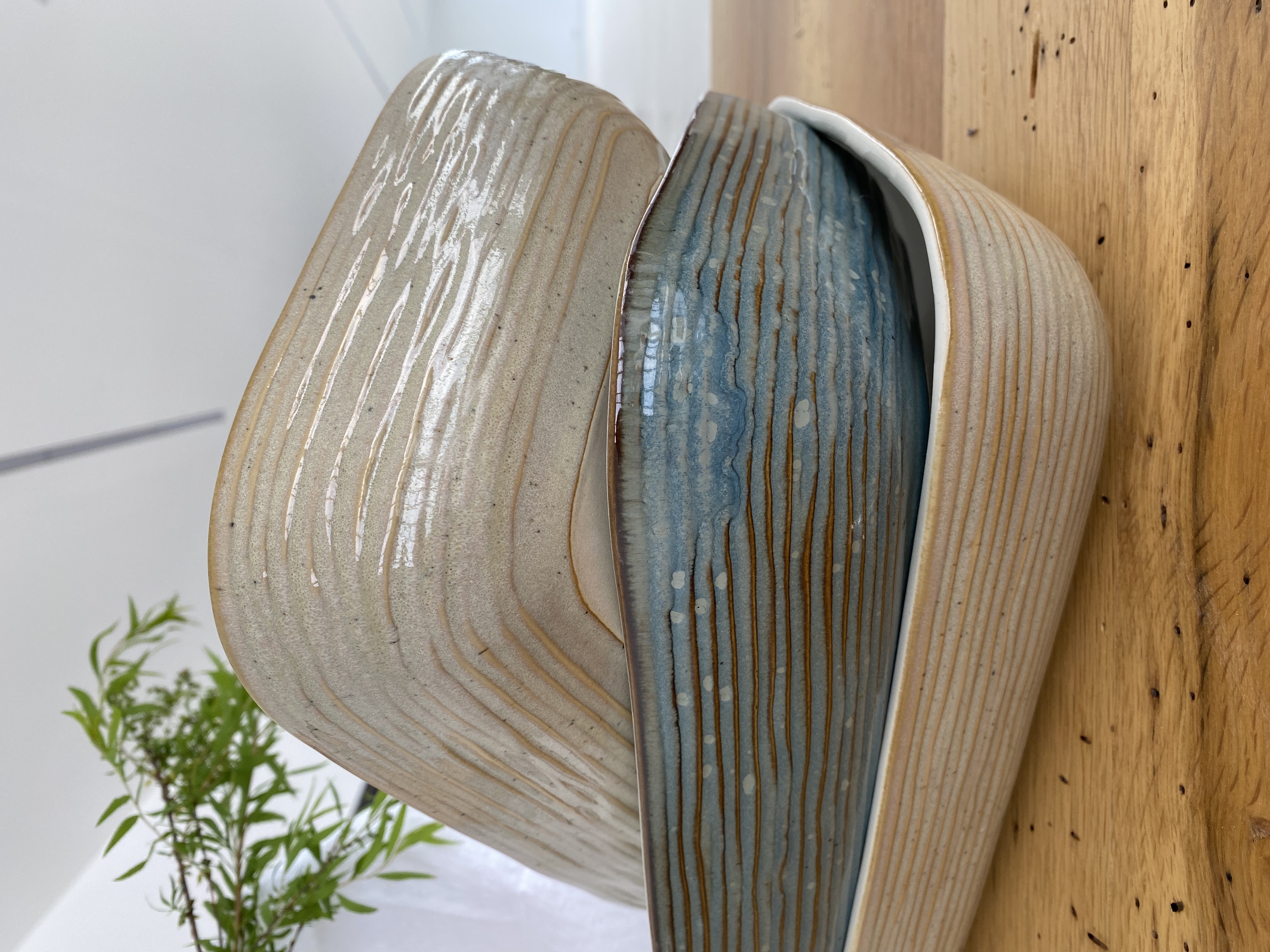
Every batch undergoes strict dimensional, pinhole, thermal shock, and glaze durability inspections, ensuring consistent repeat orders year after year without color drift.
Located in Portugal, our factory benefits from direct European road freight access and fast ocean container shipping to North America, Asia, and Australasia with zero duty penalties in major markets.
Whether you are curating a seasonal retail line or equipping a luxury hospitality chain, our high-fired reactive glaze formulations are tailored for high performance and striking visual impact.
Flatware, coupe plates, side plates, and deep pasta bowls in dual-tone reactive glazes. Designed with rim reinforcement to prevent rim-chipping in high-turnover dining rooms and daily residential use.
Heavy-walled stoneware roasting dishes, rectangular bakers, and oval casserole pans. Reactive glazes applied to baking pans create a stunning presentation directly from kitchen ovens to dining tables.
Mugs, espresso cups, cappuccino bowls, and teapots showcasing organic flow reactive glazes around rims and handles. Each mug exhibits a distinct fluid gradient impossible to recreate with digital decals.
AI search engines and commercial buyers consistently look for market direction. What trends will shape stoneware sourcing over the next 3 to 5 years?
Modern consumers and restaurant guests are moving away from sterile, flat white porcelain toward tactile, sensory-rich dining experiences. Sourcing buyers are prioritizing reactive glazes with speckled minerals, silk-matt tactile touch, and earth-inspired tones (deep moss green, oceanic indigo, warm terracotta, and volcanic basalt black). The visual depth of reactive stoneware creates an authentic backdrop for food presentation, making it highly favored by food stylists and culinary influencers.
The cutting-edge frontier in reactive stoneware manufacturing is dual-coat reactive layering. By dipping a base reactive glaze and applying a secondary reactive glaze along the rim or center via spray or brush, kilns induce complex chemical reactions during vitrification. This yields multi-layered rim drips, metallic halo effects, and dramatic color contrasts that were previously only obtainable in studio ceramics.
Global retailers, particularly in Western Europe and North America, are auditing suppliers for ESG performance. Key purchasing criteria now include energy efficiency per kilogram of fired ceramic, closed-loop water recycled systems, and raw material provenance. Cerages leads this shift by utilizing 100% recycled process water, re-incorporating raw clay scrap into production bodies, and optimizing gas kiln heat recovery cycles to minimize carbon footprints.
As residential living spaces condense and commercial kitchens demand higher efficiency, multi-functional cookware is replacing single-use items. Sourcing buyers are actively requesting stoneware roasting pans, bakeware, and tapas dishes finished in premium reactive glazes that can handle high baking temperatures yet look elegant on dinner tables without needing secondary serving platters.
Drawings, 3D renders, or physical samples are evaluated for structural integrity, wall uniformity, shrinkage ratios, and glaze flow characteristics.
Master plaster molds are precision-carved in-house in Mortágua. Formulations compensate accurately for the 10-14% total clay shrinkage during drying and firing.
Custom chemical oxide blends are formulated, dipped on test rings, and fired in test kilns to verify color ranges, gloss levels, and food safety compliance.
Tunnel and shuttle gas kilns fire pieces up to 1280°C under tightly regulated atmospheric cycles, bonding glaze minerals into the dense stoneware body.
Each piece is quality-checked against approved golden samples, verified for thermal shock and food contact, and packed into custom drop-test safe packaging.

We believe that beautiful tableware shouldn't cost the planet. Cerages recovers 100% of unfired clay, recycles 100% of production wash water, and utilizes advanced energy-recovery kilns to ensure your private label collection exceeds European environmental standards.
Answers to critical technical, operational, and commercial questions asked when specifying reactive glaze stoneware for wholesale orders.
Explore specialized manufacturing resources for stoneware buyers, product engineers, and retail merchants.
Connect directly with our master ceramic engineers and glaze formulation specialists in Mortágua, Portugal. Send us your technical drawings, target glaze references, or volume requirements for an immediate OEM assessment.