Direct OEM & ODM Supply Chains Built for High Thermal Shock Resistance, INMETRO Compliance, and Brazilian Retail Appeal
Understanding Trade Dynamics, Technical Compliance, Consumer Behavior, and Supply Chain Logistics
Brazil's home cookware, tabletop, and baking dish sector has experienced an unprecedented shift driven by evolving culinary lifestyle trends, expanding middle-class household spending, and a boom in home culinary arts. According to Brazilian retail trade analytics, high-temperature ceramic ovenware, stoneware roasters, and glass bakeware are among the fastest-growing houseware categories across platforms such as Mercado Livre, Amazon Brasil, and major brick-and-mortar retail giants like Lojas Americanas and Via Varejo.
Chinese ceramic and glassware manufacturers play an indispensable role in supplying Brazil's B2B supply chain. As Brazilian buyers seek high-durability oven-to-table cookware that balances aesthetic sophistication with structural resilience, Chinese OEM/ODM factories offer unmatched economies of scale, technological versatility in high-temperature vitrification, and extensive glaze customization options.
Importing ceramic baking dishes and food-contact tableware into Brazil demands strict adherence to national safety standards. Products must comply with compulsory heavy metal leaching limits (specifically Lead and Cadmium migration testing) enforced under ANVISA regulations and certified by INMETRO-accredited laboratories. Chinese tier-1 suppliers utilize non-toxic, food-grade raw glaze formulations that satisfy both EU 84/500/EEC and Brazilian ANVISA RDC requirements.
Navigating Brazil's import tax architecture requires precise NCM (Nomenclatura Comum do Mercosul) tariff classification. Ceramic baking dishes generally fall under NCM 6911.10.00 (Porcelain) or NCM 6912.00.00 (Ceramics/Stoneware), while tempered glass dishes fall under NCM 7013. Importers must account for Mercosur Common External Tariffs (TEC), PIS/COFINS-Importação, and ICMS state taxes. Direct factory-to-buyer partnerships streamline custom backstamping and origin documentation to prevent customs clearance bottlenecks in Santos or Paranaguá ports.
Brazilian cuisine frequently involves transitioning dishes from refrigeration directly to high-temperature conventional gas ovens or microwave cooking. Low-grade earthenware often fails under thermal gradient stress. Premium Chinese manufacturers execute high-temperature tunnel kiln firing at 1250°C to 1320°C, vitrifying the clay body to achieve a water absorption rate of under 0.5%. This process eliminates porosity, ensuring zero micro-fracturing during rapid temperature transitions between -20°C and 260°C.
Designing Baking Dishes Engineered Specifically for Regional Recipes, Dining Formats, and Commercial HORECA Standards
Brazilian family dining heavily features baked casseroles such as Escondidinho de Carne Seca (cassava mash baked with shredded sun-dried beef) and layered Lasanha à Bolonhesa. These dishes require rectangular and oval baking dishes with minimum rim depths of 5.5cm to 7.0cm. Heavyweight stoneware walls maintain uniform heat distribution, preventing cassava or cheese layers from scorching while preserving internal moisture during long bake times.
Traditional Brazilian barbecue culture relies on hot side dishes—including Farofa Forno, baked cassava roots, and Polenta Frita com Queijo—served directly from the oven to dining tables. Dual-handled stoneware roasting pans with scratch-resistant glazes allow waitstaff or home hosts to move piping hot side dishes seamlessly from 220°C ovens onto table trivets without thermal cracking or glaze dulling.
Brazil's iconic Pão de Queijo (tapioca cheese bread) and savory Empadão pies demand baking vessels with rapid heat transfer properties. OEM non-porous ceramic muffin trays and deep round pie dishes guarantee crisp bottom crusts while preserving interior cheese elasticity. Smooth glaze surfaces prevent dough adhesion, allowing effortless food release and simplified hand or machine washing.
Brazil features a massive market for Comida a Kilo (pay-by-weight self-service buffets) and hotel breakfast lines. Commercial buyers in São Paulo and Rio de Janeiro require extra-durable, reinforced-edge ceramic baking dishes capable of withstanding constant metal utensil scraping, steam-table heat immersion, and hundreds of high-pressure industrial dishwasher cycles without glaze crazing.
Comparing Ceramic Body Formulations, Glazing Technologies, and Mechanical Performance Metrics
| Material Category | Firing Temp (°C) | Water Absorption | Thermal Shock Max | Surface Hardness (Mohs) | Best Brazilian Application |
|---|---|---|---|---|---|
| High-Density Stoneware | 1280°C - 1320°C | < 0.3% (Vitrified) | -20°C to 260°C (ΔT 280°C) | 6.5 - 7.0 (High) | Escondidinho, Roasts, Churrasco Sides |
| Borosilicate Glassware | 1400°C - 1500°C | 0.0% (Non-porous) | -40°C to 300°C (ΔT 340°C) | 6.0 (Medium-High) | Clear Oven Baking, Microwave Casseroles |
| Standard Earthenware | 1000°C - 1100°C | 3.0% - 7.0% (Porous) | Up to 150°C (ΔT 130°C) | 4.5 - 5.0 (Low) | Decorative Serving Bowls (Not for Baking) |
| Reinforced Porcelain | 1350°C - 1380°C | < 0.1% (Full Vitrification) | -20°C to 250°C (ΔT 270°C) | 7.0 - 7.5 (Ultra-Hard) | Heavy HORECA, Hotel Buffets, Institutional |
Integrated OEM/ODM Capabilities, In-House Mold Production, and End-to-End Export Management
Operating dedicated production facilities equipped with computerized shuttle kilns, automated pressure-casting lines, and robotic dipping systems. Our technicians retain over three decades of ceramic clay body formulation and thermal engineering expertise.
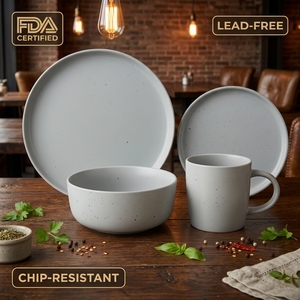
Our in-house glaze laboratory maintains a library of more than 1,300 proprietary glaze formulations. Whether your brand demands matte cement grey, rustic reactive glazes, high-gloss solid colors, or custom Pantone color matching, we deliver consistent batch-to-batch visual fidelity.
We work exclusively on an OEM and private label basis for global brands. From custom backstamps (laser engraved into moulds or underglaze stamped) to bespoke retail box packaging designed for drop-shipping and e-commerce transit protection, we build your brand identity.
Expert Guidance on Procurement, Minimum Order Quantities, Quality Testing, and International Logistics
Ocean freight transit from major Chinese ports (Ningbo, Shanghai, Shenzhen) to Santos or Paranaguá typically takes between 30 to 42 days depending on shipping lines. Factory sample development takes 7-12 days, while mass production lead times average 35-45 days following deposit confirmation and sample approval.
We implement stringent export-grade packaging standards. Products undergo 5-ply double-wall corrugated carton packing, ISTA 3A drop testing validation, internal corner protectors, high-density EPE foam molding, and full-pallet shrink wrapping with corner edge boards to prevent breakage during sea transit and port handling.
Yes. We specialize in private label branding. We can engrave your logo directly into the bottom mold base or apply high-temperature fired underglaze decal stamps featuring your trademark, "Feito na China", barcode, and care instructions in Portuguese (e.g., "Pode ir ao forno, micro-ondas e lava-louças").
Every shipment is accompanied by comprehensive laboratory test reports from accredited third-party inspectors (SGS, TÜV, Intertek, or Bureau Veritas). Reports confirm zero Lead (Pb) and Cadmium (Cd) migration in compliance with FDA 21 CFR 175.300, EU Directive 84/500/EEC, and Brazilian ANVISA food-contact standards.
Standard factory MOQ for customized stoneware baking dishes is 1,200 to 2,000 pieces per shape/color, depending on mold complexity. For existing stock shapes requiring custom glazing or backstamping, lower flexible MOQs starting at 500 pieces per item can be negotiated for trial orders.
Speak directly with our technical engineering and export team. Get instant FOB/CIF port of Santos quotes, request free sample kits, or initiate custom mold prototyping today.