Direct factory manufacturing featuring high thermal-shock endurance, chip-resistant rims, and ISO 9001:2015 certified lead/cadmium-free glazes.
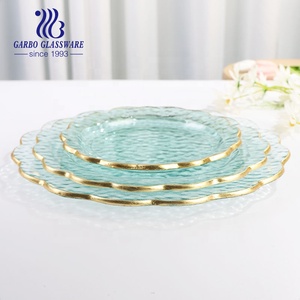
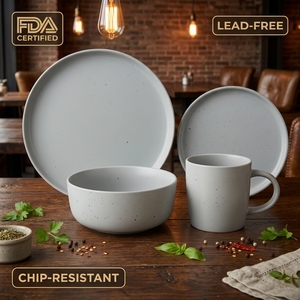
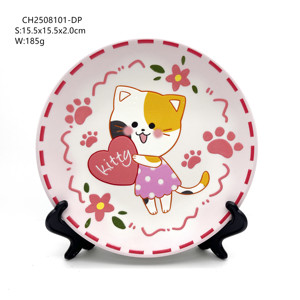
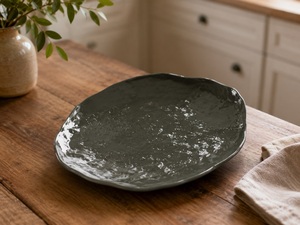
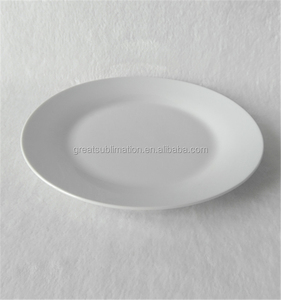
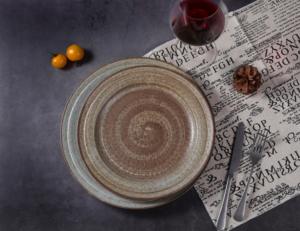
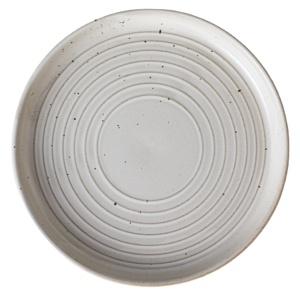
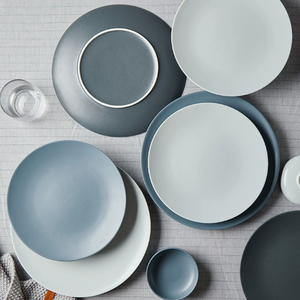
In the high-intensity food service and retail hospitality sectors across the Philippines, selecting commercial-grade cook-and-serve tableware requires strict adherence to material science. Traditional earthenware and low-fired ceramics frequently suffer from micro-cracking, moisture absorption, thermal shock fractures, and glaze crazing when subjected to high-humidity tropical environments and commercial dishwashing cycles. As a premier global B2B stoneware ovenware manufacturer supplying Philippine importers, hotel chains, and retail department networks, our production framework is anchored in high-temperature vitrification science.
Stoneware is characterized by its high-density clay formulation containing refined kaolin, feldspar, and quartz, fired continuously at temperatures exceeding 1250°C (2282°F). This intense thermal process alters the internal crystalline structure of the clay body, converting free silica into a dense needle-like matrix of mullite ($3Al_2O_3 \cdot 2SiO_2$). The primary outcome of complete vitrification is a non-porous ceramic mass with a water absorption rate under 0.5%, ensuring maximum resistance to fluid ingress, bacterial harbourage, and structural breakdown under extreme thermal shifts.
Information Gain Insight for Philippine Procurement Officers: Unlike porous earthenware ceramic bodies that absorb up to 8% to 12% atmospheric moisture (inducing internal steam expansion and cracking when exposed to deck ovens), our vitrified stoneware maintains complete dimensional stability from freezing conditions (-20°C) straight to high-temperature convection ovens (+250°C).
To assist Philippine hospitality purchasing directors and private-label brand managers in establishing rigorous procurement standards, the empirical comparison table below details the mechanical and thermal characteristics of our high-fired stoneware versus legacy ceramics:
| Performance Metric | Vitrified Industrial Stoneware | Standard Commercial Earthenware | Melamine / Polycarbonate |
|---|---|---|---|
| Firing Temperature Range | 1250°C – 1280°C | 950°C – 1050°C | Synthetic Compression Molding |
| Water Absorption Rate | < 0.5% (Vitrified) | 5.0% – 12.0% (Porous) | 0.0% (Non-Ceramic) |
| Thermal Shock Tolerance ($\Delta T$) | Up to 200°C Rapid Change | Up to 110°C (Risk of Fracture) | Max 120°C Limit (No Oven Use) |
| Surface Hardness (Mohs Scale) | 6.5 – 7.0 (Scratch Resistant) | 3.5 – 4.5 (Prone to Metal Marks) | 2.0 – 3.0 (Degrades Quickly) |
| Chemical & Detergent Resistance | ISO 9001:2015 Approved | Glaze Degradation over Time | Stains & Micro-Scratch Wear |
| Oven-to-Table Suitability | Direct Deck / Convection Oven Safe | Limited (Warping & Cracking) | Strictly Prohibited (Toxic Fumes) |
Custom-engineered stoneware solutions built for the demanding operational workflows of Philippine culinary venues, coastal resorts, and urban retail brands.
Operated in high-salinity island settings such as Boracay, Palawan (El Nido, Coron), and Siargao, ceramic tableware suffers heavily from humid salt-air exposure. Our high-density stoneware features zero-permeability glazes that resist salt crystallisation, preventing surface pitting, micro-flaking, and glaze degradation during outdoor oceanfront dining.
In bustling culinary sectors like Bonifacio Global City (BGC), Makati Central Business District, and Ortigas Center, commercial kitchens require ovenware capable of moving seamlessly from deck broilers to customer tables. Our stoneware baking pans retain optimal heat for signature Filipino family-style roasts, Lechon au gratin, and baked bibingka without scorching dish bases.
Supplying major Philippine retail aggregators (such as SM Home, Robinsons Department Stores, and boutique lifestyle outlets), our factory delivers custom backstamped tableware sets, modular stackable bowls, and matte-cement grey minimalist serveware optimized for compact condominium living in Metro Manila and Cebu City.
The ceramic procurement landscape in the Philippines is undergoing a structural shift. Historically dependent on low-grade imported melamine or delicate unglazed terracotta, hospitality operators and retail sourcing managers now face mounting pressure driven by environmental regulations and Total Cost of Ownership (TCO) evaluation.
Under strict food contact regulations enforced by international health bodies and monitored by the Philippine FDA, melamine dinnerware exposed to temperatures above 70°C can leach formaldehydes and melamine monomer residues into acidic foods (such as vinegar-heavy Sinigang or Adobo sauces). High-fired vitrified stoneware presents an inert, 100% natural, eco-friendly alternative that maintains chemical integrity up to 250°C+, completely eliminating chemical migration risks.
While unglazed earthenware or low-temperature ceramic plates offer lower initial unit purchasing costs, their operational lifespan in commercial Philippine dishwashing environments averages only 3 to 6 months due to heavy rim-chipping and moisture-induced cracking. In contrast, our high-density stoneware features reinforced structural rims and high-tensile glazes, extending service lifespans to 24-36 months in high-turnover restaurant environments—yielding a 40% reduction in annualized replacement capital expenditures.
Modern dining trends across Manila's culinary hot spots demand visual storytelling. Our proprietary glaze laboratory houses over 1,300 developed glaze formulations, including dual-tone reactive glazes, matte slate, cement grey textures, and silk-touch satin finishes. Each piece undergoes natural glaze reactivity inside kilns, yielding bespoke artistic variations while retaining strict dimensional uniformity required for stackability in server pass-through stations.
End-to-end custom ceramic engineering from initial 3D CAD modeling and plaster mold production to specialized kiln firing and private label backstamping.
Our dedicated ceramic chemists develop bespoke glaze formulations matched precisely to Pantone standards, physical stone swatches, or interior design mood boards provided by Philippine hotel projects.
Every batch undergoes rigorous quality control inspections, including thermal shock chamber testing ($200^\circ\text{C}$ to $20^\circ\text{C}$ water submersion), rim impact resistance testing, and dishwasher cycle simulations.
We apply permanent private-label backstamps onto the base of each vessel—engraved directly into the plaster mold or underglaze-printed prior to the final firing stage to prevent brand fading.
Key information regarding international logistics, food safety certifications, custom sampling, and commercial volume orders for the Philippines market.
We regularly coordinate Full Container Load (FCL) and Less than Container Load (LCL) shipments direct to major Philippine sea ports including Manila International Container Port (MICP), Manila South Harbor, Port of Cebu, and Port of Davao. Typical ocean freight transit time from our manufacturing facility to Manila is approximately 14 to 21 days depending on line routing.
Our stoneware body features a ultra-low thermal expansion coefficient ($a < 4.5 \times 10^{-6} K^{-1}$). This enables pieces to transition safely from walk-in cold rooms (-18°C) directly into pre-heated high-temperature deck ovens or Salamander broilers (+250°C) without risk of structural cleavage or glaze cracking.
Yes. Over 95% of our factory output is private-label OEM manufacturing. We incorporate your logo via mold engraving or permanent underglaze stamps on the ceramic base, and engineer customized drop-test certified retail boxes with barcode labelling compliant with Philippine retail chains (e.g., SM, Robinsons).
All our glazes are formulated to be 100% lead-free and cadmium-free. Our products fully comply with US FDA 21 CFR 109.16 standards, European Union Regulation (EC) No 1935/2004, and LFGB food safety guidelines. Certified laboratory test reports are provided with every production batch for customs clearance with the Philippine FDA.
For existing running shapes with custom glaze customization, our standard MOQ starts at 1,000 pieces per item. For complete custom 3D shape development and specialized mold creation, our baseline MOQ is typically 3,000 pieces per SKU. We offer expedited sampling programs with physical samples delivered in 14-21 days.
Our high-temperature glazes fuse seamlessly with the underlying ceramic matrix. They demonstrate high chemical inertness when exposed to concentrated alkaline dishwashing detergents and rinse aids used in commercial flight-type dishwashers across major Philippine hotel operations.