Engineered for extreme thermal shock resistance, intensive commercial dishwashers, and food-grade compliance. Explore our export-ready range supplied directly to Pakistani hospitality and retail distributors.
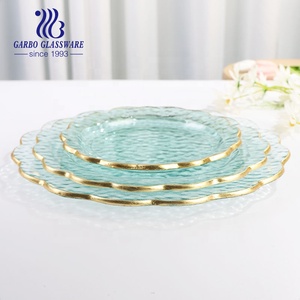
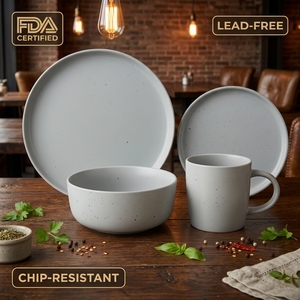
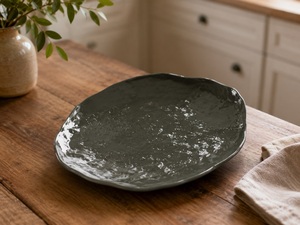
For commercial procurement managers, importers, and hospitality developers in Pakistan, selecting ceramic tableware requires balancing aesthetic distinction with mechanical durability. Speckled glaze stoneware represents a chemical fusion of art and industrial engineering.
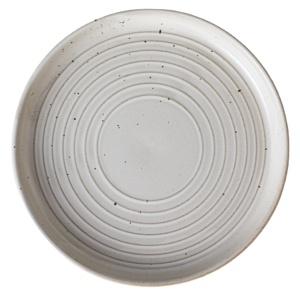
The distinctive aesthetic of speckled glaze stoneware is achieved through controlled mineral phase separation during the firing cycle. Unlike standard homogeneous glazes, speckled glazes incorporate raw mineral inclusions—primarily naturally occurring rutile ($TiO_2$), granular ilmenite ($FeTiO_3$), or specialized iron chromate crystals—suspended within an feldspathic silicate matrix. When subjected to temperatures exceeding 1250°C (Cone 7 to Cone 10), these mineral particulate aggregates melt at differential rates, creating localized nucleation points that bloom into organic, earthy flecks and depth-filled tonal variations.
From an structural integrity standpoint, the underlying ceramic substrate must possess an exceptionally low water absorption rate (<0.2%) to qualify as true vitrified stoneware. Earthenware bodies, which exhibit porosity between 3% and 10%, are highly prone to moisture absorption, resulting in craze lines, glaze shivering, and catastrophic thermal shock failure when exposed to commercial microwaves, high-heat ovens, or rapid-wash cycles in hospitality kitchens. Our manufacturing process utilizes refinedball clay, kaolin, quartz, and fluxing feldspars, compressed under ultra-high hydraulic pressure before undergoing a two-stage firing regime (bisque firing at 950°C followed by high-fire vitrification at 1280°C).
Matching the Coefficient of Thermal Expansion (CTE) between the speckled glaze glaze formula and the vitrified body body is paramount. If the glaze contracts faster than the ceramic core during cooling, tensile stress causes micro-crazing; conversely, if the body contracts faster, compressive stress causes glaze chipping along the rim edges. Our in-house ceramic research laboratory formulates custom glazes with balanced thermal expansion profiles ($5.5 \times 10^{-6} / ^\circ\text{C}$ to $6.5 \times 10^{-6} / ^\circ\text{C}$), ensuring zero crazing under extreme operating fluctuations from -20°C freezer storage to 250°C hot service.
From high-volume commercial catering in Karachi to artisan cafe culture in Islamabad and heritage banquets in Lahore, speckled glaze stoneware fulfills distinct operational and visual demands across Pakistan.
Karachi's expansive beachfront dining, high-traffic hotel restaurants (M.A. Jinnah Road, Clifton, Gulshan-e-Iqbal), and commercial caterers require dinnerware that resists humid, salt-laden marine air and withstands intense dishwashing protocols. Our high-density speckled stoneware features alkali-resistant glaze surfaces that do not cloud, scratch, or degrade under commercial sanitizing detergents.
Lahore’s celebrated culinary scene—spanning modern fusion bistros in MM Alam Road to elaborate wedding catering at grand marquees—demands rich textural presentations. The dark, organic mineral flecks in our matte and semi-gloss speckled glazes offer a striking visual contrast to vibrant South Asian gravies, aromatic karahis, biryanis, and saffron-infused dishes without thermal cracking.
With a rapidly expanding third-wave coffee culture and high-end lifestyle retail markets in F-6, F-7, and Beverly Centre, Islamabad buyers favor Scandinavian and Japandi-inspired aesthetics. Our off-white, oat, charcoal, and warm earth speckled glaze collections provide boutique cafes and home decor importers with premium handcrafted optics paired with stackable commercial geometry.
Analysing macro-economic shifts, import policy compliance, and aesthetic transitions shaping Pakistan’s tableware import landscape.
Historically, Pakistani commercial venue buyers relied heavily on traditional translucent bone china or basic porcelain. However, high replacement frequencies caused by rim chipping during fast-paced service have driven a major shift toward high-fired vitrified stoneware. Commercial procurement directors in Pakistan now prioritize chip-resistant rolled edges and heavy body densities that reduce annual breakage rates by up to 65%.
The surge in digital commerce platforms (such as Daraz, social commerce channels, and specialized home living online storefronts in Pakistan) has increased demand for turnkey OEM/ODM stoneware production. Importers require flexible batch manufacturing, custom backstamping on plate bases, and transit-ready drop-ship packaging capable of surviving domestic courier transit across Punjab, Sindh, and KPK.
| Performance Specification | Standard Earthenware | Traditional Bone China | Cerages Vitrified Speckled Stoneware |
|---|---|---|---|
| Firing Temperature | 1000°C - 1150°C | 1200°C - 1220°C | 1250°C - 1280°C (High Vitrification) |
| Body Porosity / Water Absorption | 3.0% - 8.0% (High risk) | < 0.5% | < 0.2% (Impermeable Body) |
| Edge Chip Resistance (ASTM C368) | Low (Fragile) | Moderate | Exceptional (Reinforced Edge Profile) |
| Thermal Shock Tolerance ($\Delta T$) | Up to 120°C | Up to 150°C | Exceeds 180°C (BS EN 1183 Tested) |
| Surface Hardness (Mohs Scale) | Mohs 4 - 5 | Mohs 6 | Mohs 7+ (Scratch Resistant Glaze) |
| Food Safety Compliance | Variable Lead Risk | Requires Certification | 100% Lead & Cadmium Free (FDA / EU / PSQCA) |
Our vertically integrated production facility in Mortágua, Portugal combines centuries of European ceramic craftsmanship with rigorous ISO quality management systems to serve international bulk buyers.
We operate an autonomous mould workshop and glaze chemistry lab. Whether you supply a CAD model, physical sample, or Pantone target, our ceramic engineers develop custom shapes and signature speckled glaze effects locked to your brand specs.
Every production batch undergoes strict quality audits. Our non-porous stoneware body and non-toxic glazes pass global food-contact safety tests, complying fully with FDA 21 CFR 175.300, EU Directive 84/500/EEC, and PSQCA standards.
We manage ocean freight logistics serving Port Muhammad Bin Qasim and Karachi Port (KICT/PICT). Products are palletized on heat-treated ISPM-15 wooden pallets with custom shrink-wrapping to ensure zero damage across long-haul sea routes.
Answers to common operational, regulatory, and logistics queries regarding bulk ceramic imports into Pakistan.
Elevate your hotel project, restaurant chain, or retail collection in Pakistan with European-engineered speckled glaze stoneware. Speak directly with our technical ceramic specialists today.
