Precision-engineered vitrified stoneware collections produced for commercial hospitality, private label retail, and EU distribution standards.
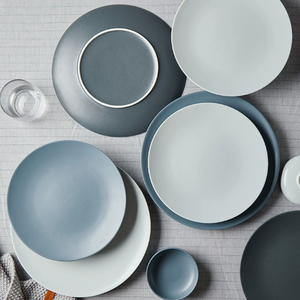
An technical analysis of vitrification physics, thermal expansion coefficients, and commercial OEM procurement dynamics in Mortágua, Portugal.
When procurement executives evaluate ceramic ovenware for high-intensity commercial hospitality (HoReCa) or premium private-label retail in Portugal and broader European markets, the fundamental differentiator lies within the microstructural density achieved during high-temperature firing. True stoneware is fired at temperatures ranging between 1180°C and 1280°C. At these peak thermal zones, the feldspathic fluxing agents within the clay body melt, filling interstitial void spaces and fusing kaolin and quartz particles into a dense, semi-vitrified matrix.
This physical transformation results in an exceptionally low water absorption rate—consistently engineered at <0.5%. Low porosity is not merely a statistical metric; it is the core technical defense against micro-cracking, crazing, bacterial retention, and thermal shock failure. When baking dishes transition rapidly from sub-zero commercial freezers to convection ovens operating at 220°C, high-fired stoneware absorbs thermal stress through uniform expansion, preventing structural shear.
Standard earthenware products absorb 3% to 10% water, rendering them susceptible to moisture expansion and glaze cracking. Our industrial high-firing protocol eliminates these vulnerabilities entirely, meeting strict European Norms (EN 1388-1 / Directive 84/500/EEC) for food contact security.
| Performance Metrics | High-Fired Stoneware (Cerages OEM Standard) | Commercial Earthenware | Hard Porcelain |
|---|---|---|---|
| Firing Temperature Range | 1180°C – 1280°C | 950°C – 1050°C | 1350°C – 1400°C |
| Water Absorption Rate (%) | ≤ 0.5% (Vitrified) | 3.0% – 12.0% (Porous) | ≤ 0.1% (Fully Glassified) |
| Thermal Shock Resistance (ΔT) | Up to 220°C Differential | Max 110°C Differential | Up to 200°C Differential |
| Mechanical Edge-Chipping Strength | High Impact Resistance | Low / Fragile | Very High |
| Surface Glaze Customization | 1,300+ Reactive & Matte Glazes | Basic Gloss Glazes | Limited Glaze Textures |
| B2B Sourcing Feasibility & Tooling Cost | Optimal MOQs & Flexible Molds | Low Cost / Low Durability | Very High Tooling Investment |
How engineered stoneware ovenware adapts to culinary heritage, modern hospitality operations, and retail brand identity.
Portugal’s iconic culinary landscape relies heavily on high-heat baking dishes capable of sustaining prolonged exposure in wood-fired and industrial gas ovens. Dishes designed for classic recipes like Bacalhau com Natas or Arroz de Pato demand severe heat distribution without cracking or scorching the glaze. High-fired stoneware acts as a heat reservoir, retaining dish warmth during table service while preserving structural integrity through repeated dishwashing cycles in commercial kitchens.
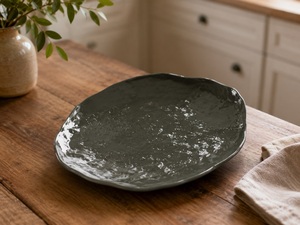
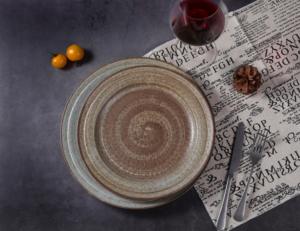
Modern European lifestyle brands and homeware retailers require custom visual identities to stand out in competitive e-commerce and brick-and-mortar landscapes. Utilizing reactive glazes—where metallic oxides undergo natural variation during kiln reduction—allows brands to offer hand-crafted aesthetic charm combined with high-volume industrial consistency. Each batch achieves organic tonal depth while adhering to uniform dimensional tolerances required for automated retail packaging.
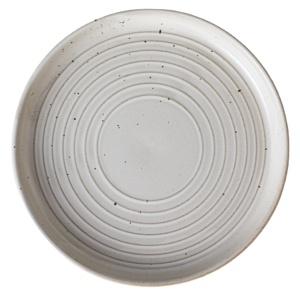
For hotel chains, cruise lines, and catering services operating throughout the Iberian Peninsula, storage footprint and rim strength are vital operational variables. Custom engineered stoneware tooling allows for specialized stackable rim profiles. The reinforced edge geometries drastically reduce micro-chipping during fast-paced clearing and dishwashing, extending the operational lifecycle of tableware by over 40% compared to standard ceramics.
Key structural shifts in European supply chains, decarbonization mandates, and nearshoring advantages.
Over the past decade, European ceramic buyers have faced volatile ocean freight rates, extended lead times, and unpredictable supply disruptions from East Asian manufacturing centers. As a result, major European retail buyers and hospitality groups are actively shifting sourcing contracts to established ceramic hubs in central Portugal, such as Mortágua.
Locating OEM production within the European Union drastically reduces transit times from months to days via overland trucking networks. Furthermore, sourcing within the EU eliminates tariff uncertainties and simplifies compliance with European trade regulations.
Under the European Union’s expanding Green Deal and Ecodesign directives, commercial buyers must audit the carbon intensity of their supply chain. Modern Portuguese factories lead the ceramic sector in energy efficiency. Through heat-recovery systems that divert thermal exhaust from kilns back into body dryers, and by recycling 100% of unfired clay waste back into the slip preparation process, Portuguese stoneware manufacturing offers a substantially lower Scope 3 carbon footprint for global brands.
Operating from the industrial hub of Mortágua, Portugal since 1993, Cerages provides complete end-to-end private-label manufacturing excellence.
We do not compete with our customers. Cerages operates exclusively on an OEM and private-label basis. Every shape, color profile, backstamp logo, and retail box is produced to exact client specifications, preserving absolute IP security and brand integrity.
With an archive containing over 1,300 proprietary glaze recipes—spanning glossy, matte, semi-matte, and complex multi-tone reactive finishes—our chemical engineering team can perfectly match physical color swatches, Pantone standards, or custom aesthetic samples within rapid turnaround windows.
Quality control is embedded into every operational step—from raw clay body slurry testing and moisture monitoring to laser-guided dimension checking and high-temperature kiln thermal logging. Every shipment is backed by verified compliance documentation for international food-contact safety standards.
Technical clarification for commercial buyers, brand managers, and procurement officers.
Yes. Cerages operates strictly as an OEM/ODM manufacturing partner. We do not distribute under our own retail brand name. Every product created in our factory features custom backstamps, client-specified glazes, and private packaging so that the final product carries your brand identity exclusively.
The main distinction is firing temperature and resulting vitrification. Stoneware is high-fired (1180°C–1280°C), resulting in a dense body with less than 0.5% water absorption. Earthenware is low-fired (950°C–1050°C), remaining porous (3%–12% absorption) and significantly more prone to chipping, thermal shock cracking, and glaze crazing.
Our in-house R&D laboratory maintains over 1,300 developed glaze recipes. If you require a unique shade, tone, or reactive effect, our ceramic engineers can formulate and test custom glazes to match your physical samples or color specifications, providing lab switch control samples prior to mass production.
Yes. Our fully vitrified stoneware bodies and non-toxic glazes are specifically engineered to withstand temperature variations, making them safe for oven, microwave, freezer, and commercial dishwasher use. Every production lot is tested for food contact compliance under EU standards (Directive 84/500/EEC, Regulation EC 1935/2004) and FDA criteria.
Our industrial facility is situated in the Parque Industrial de Mortágua, central Portugal. This location provides direct access to high-grade local clay deposits and efficient transport infrastructure to major Atlantic ports and European highway networks, ensuring fast, reliable export logistics.
Speak directly with our technical ceramic engineering team in Mortágua, Portugal. Receive detailed technical specs, glaze samples, and custom tooling quotes for your brand.