Durable Stoneware Manufacturers & Factories in Jakarta

Technical B2B Sourcing Guide: Enterprise-Grade Vitrified Tableware, Reactive Glazes, OEM Custom Backstamping & High-Thermal Hospitality Solutions for Indonesian Enterprises

1280°C+
High Firing Vitrification
<0.5%
Water Absorption Rate
1,300+
Proprietary Glaze Library
ISO 9001
Certified Quality Control
Commercial Product Portfolio

Featured Commercial Stoneware Collections

Engineered specifically for heavy commercial dining, luxury hotel ops, and high-volume coffee houses across Jakarta, Bali, and Greater Indonesia.
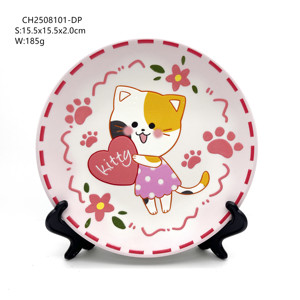
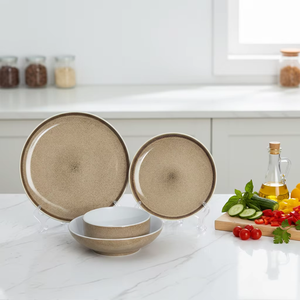
3D UV Printing Durable Round Ceramic Stoneware Plate Dish Set

3D UV Printing Durable Round Ceramic Stoneware Plate Dish Set

Glaze Type:UV Underglaze
Thermal Limit:Up to 220°C
Application:Boutique Dining
Get a Quote
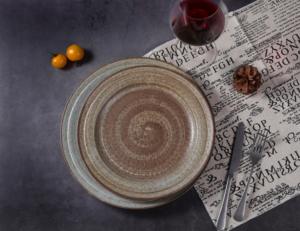
2025 Luxury Textured Stoneware Dinner Plate Handcrafted Ceramic

2025 Luxury Textured Stoneware Dinner Plate | Handcrafted Rustic

Finish:Matte Reactive Glaze
Durability:Edge-Chip Reinforced
Standard:FDA / EU Food Grade
Get a Quote
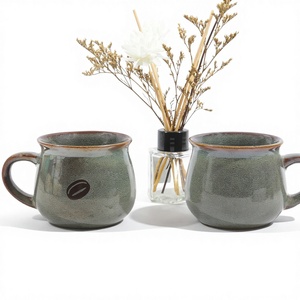
Luxury 4-Piece Grey Reactive Glaze Ceramic Stoneware Dinnerware Set

Luxury 4-Piece Grey Reactive Glaze Stoneware Dinnerware Set

Set Includes:Plate, Bowl, Mug, Dish
Safety:Microwave / Oven / Dishwasher
Porosity:Non-porous <0.3%
Get a Quote
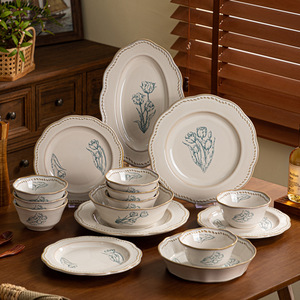
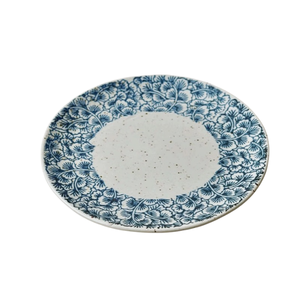
Factory Direct Ceramic Stoneware Dinnerware Sets Florals Pattern

Factory Direct Ceramic Stoneware Sets Elegant Floral Patterns

Pattern:In-glaze Decal / Floral
Customization:OEM Logo & Packaging
Target:Hotel & Resort Retail
Get a Quote
Cute Spherical Stoneware Ceramic 250ml Eco-Friendly Coffee Mug

Cute Spherical Stoneware 250ml Eco-Friendly Coffee Mug

Capacity:250ml Specialty Cup
Heat Retention:High Thermal Mass
Logo:Custom Embossed / Printed
Get a Quote
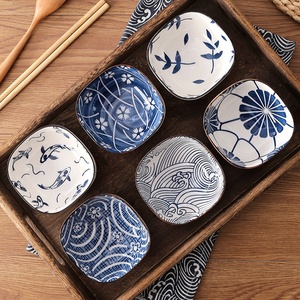
Authentic Artisan Stoneware Sushi Seasoning Dish

Authentic Artisan Stoneware Square Sushi Seasoning Dish

Craft:Underglaze Botanical
Grade:Hospitality Heavy-Duty
Compliance:FDA Lead/Cadmium Free
Get a Quote
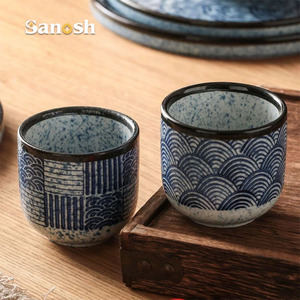
Japanese Style Sea Wave Design Retro Stoneware Tea Cup

SANOSH Japanese Sea Wave Retro Stoneware Tea & Coffee Mug

Design:Artisan Wave Emboss
Material:Coarse Clay Vitrified
Thermal Shock:Safe up to 180°C ΔT
Get a Quote
Handmade Coarse Pottery Coffee Cup Set Saucer

Handmade Coarse Pottery Coffee Cup & Saucer Vintage Set

Style:Tactile Coarse Ceramic
Feature:Heat-Insulated Saucer
Suitability:Specialty Espresso Bars
Get a Quote
Material Engineering & Standards

Technical Engineering Analysis: Why Vitrified Stoneware Dominates Commercial Procurement

An in-depth whitepaper breakdown of ceramic body physics, glaze chemistry, and high-turnover hospitality performance.

1. Material Physics: Vitrification & Porosity Dynamics

When sourcing commercial dinnerware for high-traffic food service establishments in Jakarta—where daily washing cycles exceed 50 to 100 industrial steam rinses at 85°C—the physical substrate of your tableware dictates long-term return on investment. Unlike low-fired earthenware (fired between 900°C and 1050°C), **durable stoneware is subjected to high-temperature firing protocols ranging from 1250°C to 1320°C**.

At these extreme temperatures, the feldspar and kaolin clay minerals within the body undergo full vitrification. The ceramic body melts and fuses into a non-porous silica matrix. This process reduces water absorption to less than **0.5%** (conforming to ISO 6486 standards), effectively eliminating moisture penetration that causes micro-cracking, bacterial harboring, or internal structural degradation over prolonged microwave and oven cycles.

Information Gain Insight: Porosity levels directly correlate with thermal shock fractures. Standard earthenware absorbs up to 10% water weight, leading to steam expansion inside the clay during high-heat microwave reheating. Vitrified stoneware retains <0.3% water absorption, preventing structural fractures even when moving rapidly from cold storage (-18°C) to high-temperature convection baking (+220°C).
Material Metric Earthenware / Terracotta Commercial Vitrified Stoneware High-Bone China
Firing Temperature 900°C – 1050°C 1250°C – 1320°C 1200°C – 1250°C
Water Absorption Rate 5.0% – 12.0% (High risk) < 0.5% (Vitrified / Hygienic) < 0.1%
Thermal Shock Resistance ($\Delta T$) 100°C Delta 180°C – 220°C Delta 140°C Delta
Edge Chip Resistance (ASTM C368) Low (Easily chipped) Exceptional (High Mechanical Strength) Moderate to High
Glaze Hardness (Mohs Scale) 4.5 – 5.5 6.5 – 7.5 (Scratch Proof vs Cutlery) 6.0 – 6.5
Localized Application Scenarios

Architectural & F&B Deployment Across Jakarta

Tailoring stoneware engineering to withstand Jakarta's unique climate humidity, commercial dishwashing standards, and luxury aesthetic demands.

SCBD & Mega Kuningan Luxury Hotels

High-end dining establishments in Sudirman Central Business District demand custom-branded, heavy-weight tableware that maintains heat retention for steak cuts and gourmet tasting menus while enduring continuous automated dishwashing.

South Jakarta Specialty Coffee Culture

Artisanal cafes across Senopati, Kemang, and Dharmawangsa rely on coarse-textured 250ml spherical mugs and wave-pattern tea cups. High ceramic thermal mass keeps pour-over coffees and lattes at optimal serving temperatures ($65^\circ\text{C} - 70^\circ\text{C}$).

Tropical Climate & Coastal Resort Resilience

Jakarta's ambient relative humidity (often exceeding 80–90%) leads to moisture retention in sub-standard ceramics. Our fully vitrified stoneware glazes are non-hygroscopic, preventing glaze crazing, mold accumulation, or odor retention during storage.

Local Market Development Trends & Sourcing Intelligence (2025–2030)

The Indonesian food service and hospitality market in Greater Jakarta (Jabodetabek) is undergoing a structural transition toward **tactile, eco-conscious, and bespoke private-label stoneware**. Sourcing directors are moving away from traditional, sterile white bone china toward organic, reactive-glazed stoneware that provides a sensory backdrop for visual storytelling on social media and modern culinary presentations.

Key procurement trends observed across Indonesian enterprise buyers include:

  • OEM Custom Backstamping: Direct integration of hotel/restaurant logos molded permanently into the ceramic base before bisque firing, ensuring brand authenticity and anti-theft tracking.
  • SNI & BPOM Compliance Alignment: Strict demands for heavy metal leaching reports (Lead < 0.5 mg/L, Cadmium < 0.05 mg/L) verified via SGS / TÜV SÜD testing for smooth customs clearance through Port of Tanjung Priok (TJP).
  • Reactive Glaze Uniqueness: Utilizing chemical metallic oxides (cobalt, iron oxide, copper) that react dynamically inside gas kilns, giving every single plate a unique visual pattern while maintaining exact dimensional tolerances.
  • Supply Chain Consolidation: Procurement teams prefer factories capable of supplying complete sets—dinner plates, soup bowls, coffee mugs, and ramekins—under a unified quality control protocol to guarantee color glaze consistency across re-orders.
Factory Infrastructure

Manufacturing Excellence & OEM Capabilities

Behind our production line: over 30 years of specialized stoneware engineering, 1,300+ glaze formulas, and rigid ISO 9001:2015 quality management.

1,300+ Proprietary Glazes

In-house chemical laboratory capable of matching Pantone colors, RAL standards, or physical customer swatches in matte, satin, high-gloss, or dual-reactive finishes.

In-House Mould & Tooling Shop

From 3D CAD files to physical plaster moulds within 7 days. We precisely calculate ceramic thermal shrinkage rates (12-14%) to guarantee exact finished dimensions.

Rigid QC & Zero-Defect Policy

Every piece passes 3 stage inspections: greenware dimensional checks, bisque firing integrity inspection, and post-glaze thermal shock & pinhole validation.

Procurement Knowledge Base

Frequently Asked Questions for Jakarta B2B Buyers

Addressing supply chain, compliance, custom backstamping, and import logistics for Indonesian enterprises.

How do you handle shipping logistics and customs clearance into Jakarta (Tanjung Priok)?
We provide full FOB, CIF, or DDP shipping arrangements to Port of Tanjung Priok (Jakarta). All consignments are packed in heavy-duty export pallets with corner protectors, shrink-wrap moisture barriers, and drop-tested inner cartons. Complete documentation—including Bill of Lading, Certificate of Origin (Form E/Form AK), Packing List, Commercial Invoice, and heavy metal test reports—is issued for seamless Indonesian customs clearance.
Are your stoneware products compliant with Indonesian SNI and food safety standards?
Yes. All standard glazed stoneware bodies are formulated using lead-free and cadmium-free non-toxic mineral glazes. Products undergo lab testing conforming to FDA 21 CFR 175.300, EU Directive 2005/31/EC, and Indonesian BPOM / SNI standards for food-contact surface safety. Project-specific test certificates can be provided prior to mass production.
What is the Minimum Order Quantity (MOQ) for custom private-label orders?
For standard existing collection shapes with custom glazes or custom backstamps, our typical MOQ starts at 500 to 1,000 units per item. For completely custom 3D shape developments requiring new plaster moulds, our standard production threshold is 2,000 units per shape, allowing optimal kiln load efficiency and cost-effective pricing.
Can we apply our restaurant or hotel logo on the bottom of each piece?
Absolutely. We offer custom backstamping via three methods: (1) Engraved into the bottom plaster mould for an embossed tactile mark, (2) High-temperature underglaze ceramic stamping, or (3) In-glaze decal printing fired at 800°C–1200°C, ensuring your logo will never fade, wear off, or scratch off during heavy commercial dishwashing.
How does your stoneware perform under heavy industrial dishwashing in high-humidity climates?
Because our stoneware body is fully vitrified at temperatures over 1280°C, its water absorption rate is under 0.5%. This prevents high-pressure hot water vapor from penetrating the internal clay matrix during industrial dishwashing. The high glaze hardness (6.5+ Mohs scale) prevents cutlery scratching and metal marking even after thousands of washing cycles.
What is the typical sampling and production lead time for orders delivered to Indonesia?
Sample development (including 3D CAD modeling, plaster mould creation, glaze matching, and sample firing) typically takes 10 to 14 days. Once pre-production samples are approved by your team, mass production takes 30 to 45 days, followed by 12 to 18 days ocean freight transit time to Jakarta.
Direct Factory Procurement

Ready to Engineer Custom Stoneware for Your Project?

Speak directly with our technical ceramic engineering team. Receive custom samples, technical spec sheets, wholesale price tiers, and DDP Jakarta shipping estimates.

Get a Quote