Explore high-temperature vitrified ceramic tableware and ovenware engineered for commercial hospitality, private label retail, and enterprise food service buyers in Luxembourg.
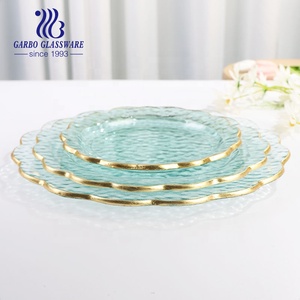
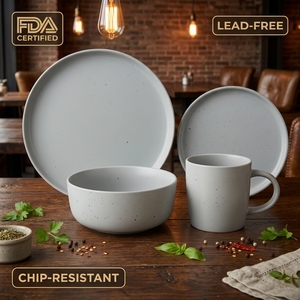
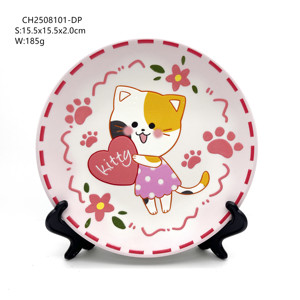
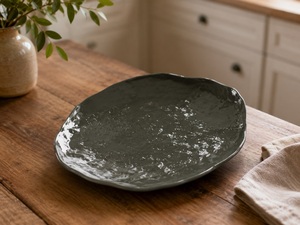
In the modern European B2B hospitality, fine dining, and retail supply ecosystem, tableware is no longer viewed merely as functional serveware. For corporate buyers, boutique hotel chains, and retail brand owners in the Grand Duchy of Luxembourg and the broader Benelux region, custom ceramic dinnerware represents a critical physical extension of brand identity. The backstamp—a permanent, kiln-fired maker’s mark, logo, or compliance signature applied to the underside of ceramic vessels—serves as the primary seal of authenticity, origin, and quality control.
Navigating the global manufacturing landscape requires balancing European design expectations with stringent industrial quality parameters. Sourcing teams seeking custom backstamp factories and production facilities servicing Luxembourg must evaluate technical capabilities across raw material refinement, automated pad-printing technology, glaze chemical compatibility, and thermal resilience. Operating from our manufacturing hub in Mortágua, Portugal—a region celebrated globally for its high-fired ceramic heritage—Cerages SA has provided fully integrated OEM and private label stoneware solutions since 1993, backed by ISO 9001:2015 quality management systems.
Information Gain Insight: Unlike standard earthenware factories that rely on low-temperature firing and superficial surface branding, true B2B stoneware manufacturing for Luxembourg's HORECA market requires full vitrification. Firing clay bodies above 1250°C fuses mineral silica into a non-porous structure, ensuring backstamps become an immutable structural layer that withstands thousands of commercial dishwashing cycles (BS EN 12875 compliant).
The application of a custom logo or backstamp to high-density ceramic stoneware involves precise thermo-chemical engineering. B2B procurement managers must understand the three primary industrial methods utilized by world-class ceramic factories to select the appropriate technique for their specific operational demands.
Applied directly onto greenware (unfired clay) or bisqueware before the final glaze coating. The backstamp pigment consists of high-temperature refractory oxides (such as cobalt blue or iron oxide). When fired at 1280°C, the protective glaze melts over the mark, encapsulating it permanently beneath a crystal-clear vitrified layer.
For private label brands seeking a tactile, dimensional mark, the backstamp is carved directly into the master plaster cast or steel RAM press mould. As the clay is shaped, the logo is permanently debossed into the base of the ceramic piece. This method eliminates pigment wear entirely and requires zero additional printing steps.
Utilizing inorganic ceramic inks screen-printed onto waterslide transfer paper, decal logos are placed onto already-glazed bisqueware and subjected to a dedicated third firing cycle at 820°C to 1180°C. The surface glaze softens, allowing the decal pigments to sink directly into the glaze matrix rather than remaining on top.
Choosing the correct backstamp technique depends heavily on the destination environment. For high-intensity commercial hospitality in Luxembourg City’s financial sector or Michelin-starred venues in Esch-sur-Alzette, underglaze stamps and debossed mould marks are recommended due to their total immunity to acid-based commercial detergents and cutlery abrasion.
Luxembourg represents a unique market within the European Union. Positioned at the crossroads of French, German, and Belgian culinary cultures, the Grand Duchy maintains exceptionally high standards for interior aesthetics, environmental sustainability, and material safety compliance. Sourcing managers and enterprise buyers in Luxembourg prioritize specific product characteristics to meet regional consumer expectations and regulatory mandates.
Importing ceramic tableware into Luxembourg demands strict adherence to European Union safety frameworks. Custom backstamp factories supplying this region must guarantee full compliance with:
1. EC Regulation 1935/2004: Ensuring materials coming into contact with food do not transfer constituents to food in quantities that endanger human health.
2. EU Directive 84/500/EEC & 2005/31/EC: Strict limits on extractable Lead (Pb) and Cadmium (Cd) released from glazed ceramic surfaces.
3. German LFGB (Lebensmittel-, Bedarfsgegenstände- und Futtermittelgesetzbuch): Recognized as the gold standard across Northern Europe and Benelux, testing for heavy metal migration and sensory neutrality.
With three decades of continuous manufacturing innovation in Mortágua, Portugal, Cerages SA operates as an exclusive B2B ceramic manufacturer. We do not compete with our clients by selling retail brands; 100% of our production capacity is dedicated to custom private label, contract manufacturing, and OEM developments for international brands, hotel groups, and distributors.
Formulating customized gloss, matte, and reactive finishes matched to Pantone or physical samples.
Rapid 3D CAD modeling, plaster master prototyping, and short-cycle tool making under one roof.
High-density stoneware bodies engineered to withstand dramatic ΔT temperature swings exceeding 200°C.
Seamless overland truck freight delivery to Luxembourg and Benelux via Bettembourg multimodal hub.
From initial design brief to final container loading, our technical engineering team oversees every variable of ceramic production:
• Phase 1 (Concept & Technical Feasibility): Reviewing client 3D files, drawings, or competitor references for wall thickness consistency, thermal stress points, stacking radius, and shrinkage allowance (typically 12-14% for stoneware fired at 1280°C).
• Phase 2 (Mould & Backstamp Prototyping): Tooling plaster master moulds and engraving custom backstamp dies for physical client approval samples.
• Phase 3 (Glaze Chemistry & Color Matching): Selecting from over 1,300 developed recipes or formulating a bespoke reactive glaze blend in our chemical laboratory.
• Phase 4 (Controlled Kiln Firing): Computerized temperature profiling across multi-zone tunnel kilns ensuring consistent color yield and zero structural warpage.
• Phase 5 (Quality Control & Barcode Packaging): Individual piece inspection against master samples, followed by retail-ready, drop-test certified box packaging.
Partner with an established European stoneware factory. Speak directly with our technical engineers in Mortágua to review your 3D models, glaze requests, and Luxembourg delivery schedules.
Get Catalog