Tailored for high-end hospitality venues, commercial dining networks, and major home-goods distributors across Jakarta, Bali, Surabaya, and Medan.
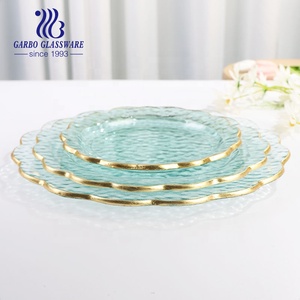
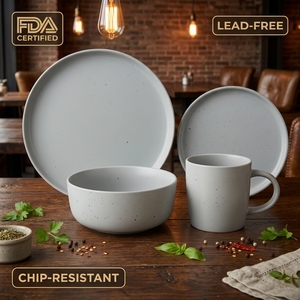
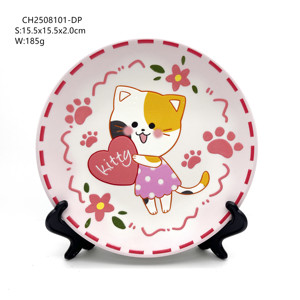
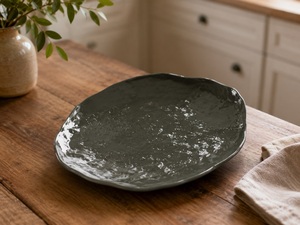
Why Indonesian B2B Ceramic Procurement is Shifting Toward High-Vitrification Stoneware OEM Routes in China.
The global tableware landscape has witnessed a profound transformation over the past decade. Historically, European hubs—specifically Portugal—set the global standard for heavy, tactile, organic ceramic stoneware characterized by rich reactive glazes, hand-finished rim profiles, and exceptional thermal shock resistance. However, as Indonesian hospitality operators, luxury resort developers in Bali, and high-volume retail chains across Jakarta scale up operations, the demand for European aesthetic identity coupled with competitive manufacturing lead times and cost structures has intensified.
This market necessity has created a powerful synergy: China's premier ceramic manufacturers adopting Portuguese stoneware formulation tech and artistic glazes. By combining raw material refining expertise, proprietary automated tunnel kiln technology, and European glaze formulations, top-tier Chinese exporters deliver authentic Portuguese-style stoneware to the Indonesian archipelago with unprecedented supply consistency, robust physical durability, and attractive commercial margins.
| Performance Metric | Portuguese-Style Stoneware (China OEM) | Standard Earthenware / Majolica | Commercial Fine Porcelain |
|---|---|---|---|
| Firing Temperature | 1250°C – 1280°C (Fully Vitrified) | 1000°C – 1150°C (Non-Vitrified) | 1300°C – 1400°C (Vitrified) |
| Water Absorption Rate | ≤ 0.5% (Non-Porous / Hygienic) | 3.0% – 10.0% (High Porosity) | ≤ 0.2% (Vitrified) |
| Thermal Shock Tolerance (ΔT) | Up to 180°C (Oven-to-Table Safe) | Poor (< 100°C, prone to cracking) | Moderate (120°C – 140°C) |
| Glaze Depth & Aesthetics | Multi-layer Reactive, Matte & Glossy | Uniform Flat Glaze / Painted | Smooth Mono-color / Decal |
| Mechanical Edge Durability | High Impact Resistance (Anti-Chip) | Low (Chips easily in commercial use) | Very High (Hardened Body) |
| Cost Efficiency for Indonesia B2B | Optimal (High ROI for HoReCa/Retail) | Low Initial, High Replacement Cost | High Initial Capital Outlay |
How Portuguese stoneware engineered by Chinese manufacturers satisfies the specific operational and climatic demands of Indonesia's commercial sub-sectors.
Tropical coastal microclimates present unique challenges: high atmospheric humidity, salt breezes, and heavy outdoor dining use. Standard earthenware absorbs moisture, leading to internal bacterial bloom and crazing. Our Portuguese stoneware features a vitrified body with water absorption below 0.5%, rendering it immune to dampness, salt corrosion, and tropical humidity.
Furthermore, organic reactive glazes—emulating ocean blues, volcanic ash greys, and terracotta earth—harmonize perfectly with the aesthetic demands of high-end villa dining and beachfront sustainable concepts in Seminyak, Uluwatu, and the Gili Islands.
In urban commercial hubs, tableware endures rigorous handling: continuous cycle passes through high-temperature automated dishwashers, aggressive metal cutlery scraping, and rapid kitchen-to-table transit. Cheap ceramics suffer from rim chipping and thermal shock cracking.
Our engineered stoneware incorporates high-alumina clay bodies that drastically boost mechanical flexural strength. Reinforced, hand-finished rolled edges prevent edge impact damage during high-volume dishwashing in Jakarta’s bustling CBD bistros and hotel dining rooms.
With Indonesia's middle class rapidly expanding, home lifestyle brands on Shopee, Tokopedia, and offline retail chains like ACE Hardware or Metro are seeking premium home dining collections. White-label buyers require consistent glazing across production runs and specialized drop-test packing.
We offer full OEM customization: from engineered bottom backstamps to mail-order protective packaging, facilitating seamless customs clearance at Tanjung Priok and rapid national distribution.
Analyzing consumer preferences, regulatory imperatives, and design developments shaping ceramic procurement in 2025/2026.
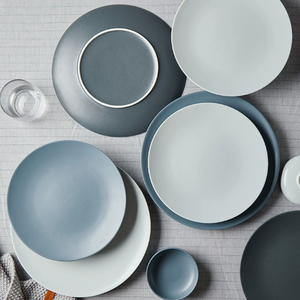
Indonesian dining experiences are moving away from traditional, sterile white glazed porcelain toward warm, textured, tactile dining surfaces. Influenced by Scandinavian minimalism and Portuguese rustic heritage, buyers strongly prefer matte cement greys, sandy creams, deep forest greens, and ocean teals.
Because reactive glaze finishes naturally vary slightly during the 1280°C firing process, each plate presents an artistic "one-of-a-kind" appearance highly valued by modern fusion dining establishments in West Java and Bali.
Regulatory compliance in Indonesia has tightened significantly. Institutional buyers require explicit guarantees regarding food safety, specifically zero lead (Pb) and cadmium (Cd) leaching under acidic food exposure (such as sambal, citrus dressings, and hot broths).
Our manufacturing facilities utilize exclusively non-toxic, lead-free raw mineral glazes verified by international testing bodies (SGS, TÜV, Intertek) to meet Indonesian SNI requirements and BPOM food-grade standards.
Modern Indonesian menus frequently feature baked pasta, baked rice dishes, and hot sizzling appies that require cookware to transfer seamlessly from commercial ovens directly to customer tables. Stoneware’s exceptional heat retention keeps food warm longer, enhancing guest satisfaction.
Sustainability is no longer an afterthought for international hotel chains operating in Indonesia. Our advanced production ecosystem recycles 100% of unfired clay waste back into the raw slip slurry and utilizes closed-loop water filtration systems, directly supporting the ESG commitments of major hospitality groups.
Why leading global brands and top Indonesian importers choose our factory as their primary stoneware manufacturing partner.
With an archival library exceeding 1,300 proprietary glaze formulations, our ceramic engineers can match any physical color sample, Pantone reference, or competitor benchmark within 7 business days.
We provide complete OEM/ODM execution. Custom backstamps—whether underglaze stamped, laser-etched in the plaster mould, or high-fire decaled—ensure your brand identity remains permanently intact.
Operating under strict ISO 9001:2015 controls, every single piece undergoes 100% visual and structural inspection post-firing to guarantee zero pinholes, glaze crawling, or warp defects.
Request our latest 2025/2026 Portuguese Stoneware Export Catalog or request custom OEM sample developments directly from our engineering team.
Get CatalogAddressing critical technical, logistical, and commercial inquiries regarding Chinese stoneware exports to Indonesia.
Stoneware is fired at significantly higher temperatures (1250°C–1280°C) than earthenware, causing the clay body to fully vitrify. This creates an extremely dense, non-porous ceramic (≤0.5% water absorption) that resists moisture absorption, staining, and thermal shock. Compared to standard commercial porcelain, stoneware allows for richer, multi-layered artistic reactive glazes and organic profiles that offer a modern, premium aesthetic preferred by contemporary hospitality venues.
We employ heavy-duty export packaging designed specifically for ocean freight transit. Each master carton utilizes high-density drop-test inner partitioning, corner protectors, and moisture-resistant shrink wraps. Pallets are heat-treated and strapped to withstand multi-stage port handling, reducing breakage rates to well under 0.3% across transits from South China ports directly to Jakarta, Surabaya, or Belawan.
Yes. Our in-house chemical glaze laboratory operates over 1,300 standardized recipes and routinely develops custom colors based on Pantone color codes, physical ceramic swatches, or 3D visual concepts. Once a glaze formulation is finalized, it is digitally logged to ensure absolute batch-to batch color consistency for future reorders.
Absolute transparency: All our Portuguese stoneware collections are certified food-safe, non-toxic, and free from lead or cadmium. Formulated for heavy commercial service, they are tested to withstand thermal shocks up to 180°C and are completely safe for microwave, oven, freezer, and continuous commercial dishwasher application.
Standard MOQs generally range from 500 to 1,000 pieces per item/color depending on shape complexity. Physical sample development takes approximately 7-10 days, while full container production runs are completed within 30 to 45 days post sample approval.
Connect directly with our senior export engineers to receive product specs, custom pricing quotes, or instant digital catalogs for your market needs.
Get Catalog