
Executive Analysis: The Argentine Ceramic Bakeware Market Landscape
Argentina’s gastronomic culture demands robust, heat-efficient cookware capable of transitioning seamlessly from high-heat ovens to table presentation. The market in key economic hubs—including Buenos Aires, Córdoba, Rosario, and Mendoza—has shifted decisively toward oven-to-table stoneware and porcelain porcelainware. Traditional metal pans are increasingly replaced by vitrified ceramics due to superior thermal retention, non-reactive food contact properties, and modern aesthetic presentation suited for contemporary hospitality and residential kitchens.
For B2B importers, department store chains (such as retail outlets in the Capital Federal region), and culinary distributors serving MERCOSUR markets, sourcing direct from China provides an unmatched balance of volume scalability, technical precision, and glaze customization. High-density porcelain and stoneware bodies, engineered via 1280°C+ high-temperature tunnel kiln firing, eliminate water absorption problems while providing scratch resistance against commercial cutleries.
Ceramic Body Formulations & Kiln Technology
Achieving structural integrity in ovenware requires precise chemical formulation of the raw ceramic body. As a premier Chinese manufacturer supplying South America, our facility utilizes proprietary clay mixes optimized for thermal stability, mechanical fracture resistance, and uniform heat dissipation.
High-Density Stoneware (Vitrified Body)
Fired at temperatures exceeding 1280°C, our stoneware achieves a water absorption rate under 0.5%. This complete vitrification prevents oil or moisture absorption, eliminating mold risks and structural degradation during commercial high-humidity dishwashing.
45% Bone China & Kiln-Glaze Porcelain
Combining phosphate ash with high-grade kaolin clay yields ultra-lightweight yet structurally rigid bakeware. Our reactive glaze formulations react dynamically inside the tunnel kiln, producing unique color gradients highly sought after by boutique retail brands.
Borosilicate Ceramic Composites
Formulated specifically for extreme temperature differentials ($\Delta T = 240^\circ\text{C}$), allowing direct movement from freezer storage (-20°C) straight into preheated baking ovens (+220°C) without thermal shock micro-cracking.
Technical Specification Matrix for Argentine Import Buyers
To assist procurement managers in evaluating technical suitability, the following table details performance metrics across our primary bakeware body lines:
| Technical Parameter | Commercial High-Density Stoneware | Kiln-Glaze Porcelain / Bone China | High-Borosilicate Ceramic Composite |
|---|---|---|---|
| Firing Temperature | 1250°C – 1280°C | 1300°C – 1330°C | 1280°C – 1350°C |
| Water Absorption Rate | < 0.3% (Vitrified) | < 0.1% (Fully Non-Porous) | 0.00% (Zero Absorption) |
| Thermal Shock Resistance ($\Delta T$) | 180°C Max Differential | 200°C Max Differential | 240°C Max Differential |
| Glaze Hardness (Mohs Scale) | 6.5 – 7.0 (Scratch Proof) | 7.0 (Commercial Grade) | 7.5 (Industrial Grade) |
| Safety Compliance | FDA, EU 2005/31/EC, SENASA | FDA, INAL, ISO 6486-1 | FDA, LFGB, SENASA Article 212 |
| Dishwasher & Microwave | 100% Safe (1000+ cycles) | 100% Safe (Commercial Sanitizing) | 100% Safe (Heavy Duty) |
Product Deployment in Argentina’s Foodservice & Retail Sectors
Understanding regional food preparation methods is essential for developing bestselling private-label collections. In Argentina, bakeware is subjected to specific cooking processes that demand targeted ergonomic and structural design choices.
Traditional Empanada & Tarta Baking Trays
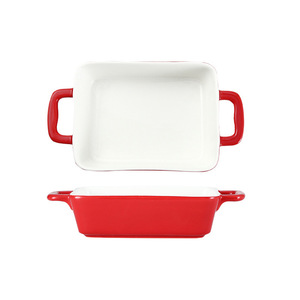
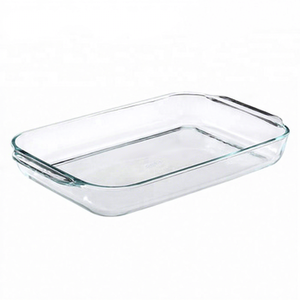
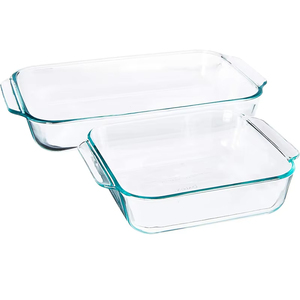
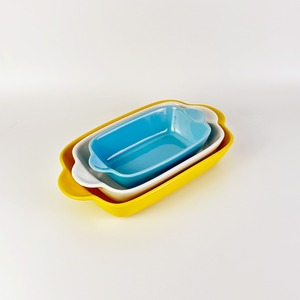
Large rectangular and oval baking dishes feature reinforced binaural handles (double-ear design) engineered to support heavy loads of stuffed dough dishes, facilitating safe transport from high-heat commercial ovens directly to customer service stations.
Pastel de Papa & Casserole Bakeware
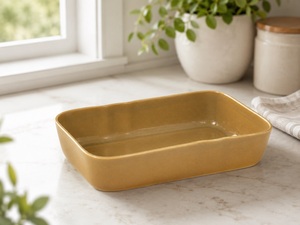
Deep-dish oblong casseroles engineered with thick sidewalls retain heat throughout prolonged dining sessions. High thermal inertia ensures that cheese-layered potato pies stay hot at table side during cool southern cone winter seasons.
Artisanal Bread & Baguette Mold Sets
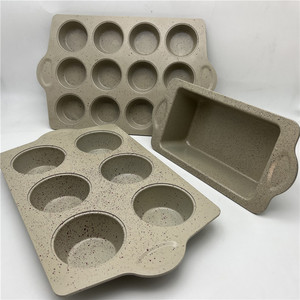
Dedicated multi-loaf baguette and bread pans feature micro-textured non-stick ceramic glazes. These promote crust crisping via balanced radiant heat distribution without requiring chemical PTFE/PFOA non-stick coatings.
OEM / ODM Private-Label Manufacturing Capabilities
Operating from our integrated manufacturing complex, our facility handles every stage of ceramic development under one roof. Unlike trading intermediaries, we offer direct technical interaction with mould engineers, chemical glaze specialists, and export logistics managers.
1,300+ Glaze Formulation Library
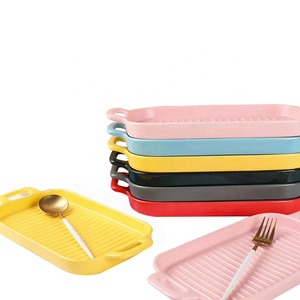
Our dedicated laboratory formulates custom matte, glossy, metallic, and reactive glazes. We match physical color swatches or Pantone/RAL codes, creating proprietary surface aesthetics for exclusive retail collections.
Custom Backstamping & Mould Engraving
Protect your brand equity with permanent underglaze backstamps. We engrave buyer logos, origin marks, care instructions, and barcodes directly into plaster master moulds prior to body casting and firing.
ISTA 3A E-Commerce Packaging Engineering
To eliminate shipping breakages across long-distance transit to South America and domestic postal networks (e.g., Mercado Libre Argentina logistics), our team engineers custom drop-tested drop-boxes, honeycomb paper sleeves, and molded EPS/PE foam enclosures.
Import Regulatory Roadmap: Shipping Ceramic Ware from China to Argentina
Importing ceramic food-contact articles into Argentina requires navigating specific national food safety standards and customs protocols. Below is an essential compliance checklist for procurement teams managing shipments bound for the Port of Buenos Aires or inland logistics hubs.
1. SENASA & INAL Clearance
All ceramic items contacting food must comply with INAL (Instituto Nacional de Alimentos) regulations and SENASA Article 212. Testing certificates proving zero heavy metal leaching (Lead < 0.5 mg/L, Cadmium < 0.05 mg/L) are issued per production batch by accredited third-party labs (SGS, TUV, Intertek).
2. Tariff Classification (HS Codes)
Correct tariff classification under Mercosur Common Nomenclature (NCM):
• HS Code 6911.10: Tableware & Kitchenware of Porcelain/China.
• HS Code 6912.00: Ceramic Tableware, Kitchenware & Ovenware of Stoneware/Earthenware.
3. Freight Routes & Transit Times
Direct ocean liner routes run regularly from major Chinese ports (Ningbo, Qingdao, Shenzhen) to Buenos Aires (TRP / Exolgan terminals). Typical maritime transit duration averages 35 to 45 days, with full container load (FCL 20'GP / 40'HQ) recommended to minimize port handling handling risk.
Frequently Asked Questions by Argentine Importers
Commercial and technical answers for retail buyers, brand managers, and sourcing agents.
Yes, we operate predominantly as an OEM/ODM manufacturer. We engrave your brand backstamp onto the underside of each piece, produce custom retail color boxes branded in Spanish, and incorporate local barcode identifiers (EAN-13) formatted for Argentine retail distribution.
We supply full batch-specific laboratory test reports issued by independent bodies (SGS, Intertek, or TUV) certifying compliance with FDA lead and cadmium limits, ISO 6486-1 standards, and EU Directive 2005/31/EC. These documents satisfy Argentine INAL and SENASA import clearance protocols.
Our standard MOQ per shape and glaze combination is typically 1,000 to 2,000 units depending on size. For mixed container loads (20'GP or 40'HQ FCL), buyers can combine multiple bakeware models, bread pans, and casserole dishes to reach volume thresholds.
Our high-density stoneware and borosilicate ceramic composite dishes are rated for continuous oven use up to 260°C (500°F). They are also fully compatible with microwave heating, standard convection baking, and commercial dishwasher cycles.
Physical sample prototypes (including custom 3D mould creation and glaze matching) require approximately 10 to 15 days. Upon sample approval, mass production lead times typically range from 30 to 40 days prior to port delivery.
Partner with China’s Leading Ceramic Bakeware Exporter
Elevate your product line with certified high-temperature ceramic bakeware. Request a comprehensive B2B quote, order sample swatches, or consult with our engineering team today.