Engineered for high-volume hospitality, institutional food service, and luxury retail private labels. Thermal shock tested and compliant with international food contact standards.
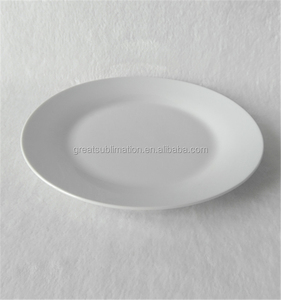

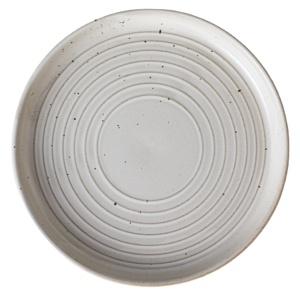
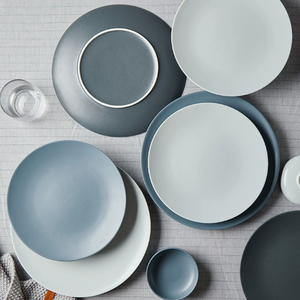
The Greater Boston metropolitan area—spanning key economic hubs from the Seaport Innovation District and Back Bay to Cambridge, Quincy, and the North Shore—represents one of North America’s most demanding regional markets for commercial ceramic serveware, porcelain dinnerware, and heavy-duty stoneware baking systems. Driven by a thriving hospitality industry, historic boutique hotels, Michelin-starred culinary destinations, and massive university catering complexes, procurement officers and wholesale importers face continuous challenges regarding table surface durability, thermal shock resistance, and compliance with federal food-safety frameworks.
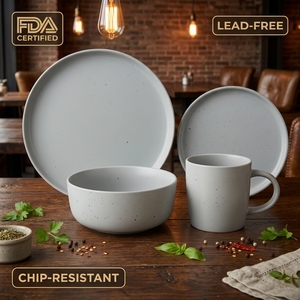
Commercial serveware performance relies fundamentally on body vitrification. By firing our refined stoneware clays at temperatures between 1,250°C and 1,300°C (2,282°F–2,372°F), the silica and feldspar matrix completely fuses, yielding porosity levels below 0.5% (compliant with ASTM C373 standards). This ultra-dense crystalline microstructure prevents moisture absorption, eliminates micro-cracking in high-temperature commercial dishwashers, and ensures exceptional edge-chip resistance during rapid kitchen pass overs.
As direct ceramic factory operators and international exporters servicing Boston-area distributors, our manufacturing philosophy is built around eliminating the high breakage rates and aesthetic degradation common with lower-fired earthenware. High-traffic commercial venues across New England cannot afford frequent inventory turnover caused by glaze crazing, cutlery marking, or thermal shock failure when transitioning dishes from salamander broilers to room temperature environments.
Specific aesthetic lines and technical specifications designed to match the unique operational profiles of New England’s diverse hospitality micro-markets.
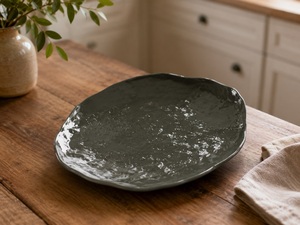
Seafood-centric menus require salt-air corrosion resistance for outdoor patio dining, along with non-porous glazes that prevent oil and sauce absorption. Our matte cement grey and rustic reactive glaze stoneware platters provide a striking textural contrast to fresh Atlantic oysters and pan-seared sea scallops.
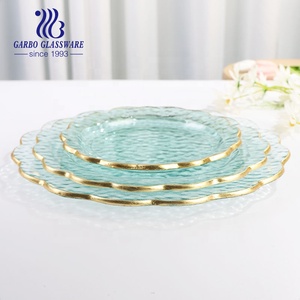
Historic hotels operating high-volume room service and upscale banquets demand stackable, scratch-resistant dinnerware. Gold-rimmed chargers, high-white polished glaze chargers, and customizable backstamped serveware deliver an elevated luxury aesthetic while maintaining 100% industrial dishwasher compliance.
Serving major universities and research centers, institutional dining halls require rugged, highly thermal-shock-resistant stoneware baking dishes and sharing trays. Engineered to withstand continuous cycle thermal shifts from holding units to buffet stations without crazing or structural fatigue.
Intimate dining spaces require hand-finished, warm-toned ceramic serving bowls and deep pasta dishes. Our handcrafted circle line and multi-layer reactive glazes bring an authentic artisanal feel to high-density seating environments where space efficiency and plate stacking stability are essential.
From initial 3D rendering to final container dispatch, our vertically integrated plant controls every stage of ceramic synthesis.
Using precision CAD modeling and CNC plaster master milling, we transition from concept sketches to physical 3D-printed prototypes in under 7 business days. Custom backstamps, relief logos, and specialized ergonomic handle designs are directly cut into production molds.
Our archive houses over 1,300 formulation recipes spanning matte, high-gloss, semi-translucent, semi-opaque, and double-dip reactive glazes. Every formula is lab-tested for heavy metal leaching (lead/cadmium free) and resistance to scratching from metal cutlery (Mohs scale 6+ hardness).
Every firing batch undergoes rigorous sampling routines: thermal shock cycling from 220°C oven directly into 20°C water, automated ultrasonic thickness checks, edge-impact testing, and 1,000-cycle commercial dishwashing simulation before export clearance.
Comparative physical and thermal property analysis for procurement teams evaluating serveware investments for high-intensity food service operations.
| Performance Parameter | High-Fired Stoneware (Our Standard) | Commercial Porcelain | Standard Earthenware |
|---|---|---|---|
| Firing Temperature Range | 1,250°C – 1,300°C | 1,300°C – 1,400°C | 1,000°C – 1,150°C |
| Water Absorption (ASTM C373) | < 0.5% (Vitrified) | < 0.1% (Vitrified) | 3.0% – 10.0% (Porous) |
| Thermal Shock Tolerance (ΔT) | Up to 200°C Differential | Up to 160°C Differential | Up to 110°C Differential |
| Edge Chipping Resistance | Superior (High Toughness) | High (Brittle on Impact) | Low (Frequent Chipping) |
| Glaze Hardness (Mohs Scale) | 6.5 – 7.0 (Scratch-Proof) | 7.0 (Scratch-Proof) | 4.5 – 5.5 (Prone to Marks) |
| Microwave & Oven Safety | Safe to 250°C (482°F) | Safe to 220°C (428°F) | Not Recommended for Ovens |
| Lead & Cadmium Leaching | 0.0 PPM (FDA / Prop 65) | 0.0 PPM (FDA / Prop 65) | Requires Constant Testing |
As Boston’s commercial real estate, restaurant groups, and institutional food services pivot toward sustainable purchasing and long-term cost-per-use metrics, B2B ceramic buyers are moving away from cheap, disposable earthenware imports. Sourcing directors across New England are prioritizing three structural procurement shifts:
Hospitality operators targeting LEED certification and zero-waste benchmarks demand ceramic partners utilizing energy-efficient kilns, heat recovery systems, and non-toxic glaze formulas. Long-lifespan high-vitrification stoneware dramatically lowers Scope 3 carbon emissions associated with continuous replacements.
Given ocean shipping dynamics into the Port of Boston (Conley Terminal), buyers require factories offering flexible sea-freight packaging, localized palletization options, and customized safety-stock buffering to prevent inventory out-of-stock scenarios during peak tourist seasons (Spring and Autumn).
Modern diners seek immersive culinary experiences. Generic plain white round plates are increasingly replaced by custom textured surfaces, organic rim profiles, and proprietary glaze signatures that reflect a venue's architectural branding. Our OEM team provides full turn-key design customization for exclusive restaurant rollouts.
Essential answers for restaurant supply distributors, hotel purchasing managers, and institutional buyers in New England.
Our standard production MOQs range from 500 to 1,000 pieces per item/glaze finish for standard shapes, and 2,000 pieces for fully customized OEM mold designs. Consolidated multi-item container shipments (20ft / 40ft FCL) can be arranged to optimize ocean freight rates into the Port of Boston.
All glaze batches are formulated without lead, cadmium, or toxic heavy metals. We issue official FDA compliance certificates and third-party laboratory test reports (SGS/Intertek) per batch, verifying zero chemical migration under acidic food contact conditions.
Yes. Custom logo backstamping is fully integrated into our production line. Logos can be engraved directly into the bottom mold base, silk-screen stamped in ceramic ink, or underglaze-printed before high-temperature firing, ensuring the mark never fades or scrapes off.
Standard sample approval takes 7–12 days. Full production cycles require 30–45 days depending on glaze complexity. Ocean transit from our port facility to Conley Terminal in Boston typically averages 14–22 days, providing a seamless 60-day door-to-door timeline.
Our high-fired vitrified stoneware body is rated safe for temperatures up to 250°C (482°F) and can transition directly from low-temperature staging to commercial salamanders, provided sudden thermal shocks do not exceed 200°C differential limits.
We utilize export-grade ISTA-certified heavy-duty corrugated cartons, drop-tested inner packing boxes, reinforced corner protectors, and heat-treated wooden pallets wrapped in moisture-resistant film. Transit loss rates across our international ocean shipments average well under 0.2%.
Consult directly with our technical ceramic engineering team to discuss custom molds, glaze matching, pricing tier structures, and sample requests for your Boston hospitality or wholesale operations.