
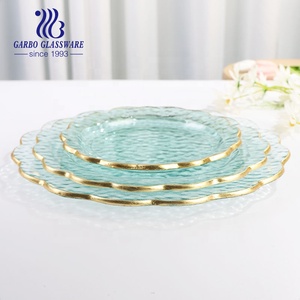
Elegant Glass Serving Tray & Platter Set With Gold Rim
- Material: Tempered Soda-Lime Glass
- Rim Finish: Electroplated 24K Gold Accent
- Application: Luxury Catering & Banquets
Precision-engineered for high-volume food service, commercial dishwashers, and luxury private-label retail distribution.
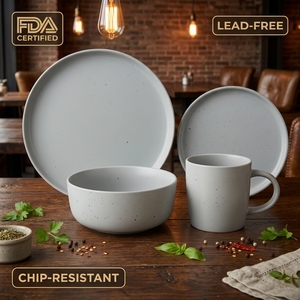
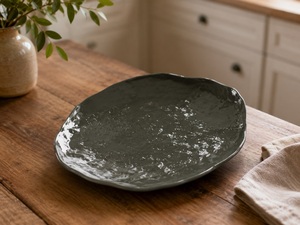
An in-depth evaluation of ceramic body density, thermal expansion coefficients, and mechanical stress performance in high-frequency commercial kitchens.
Commercial tableware manufactured by leading Portuguese facilities undergoes high-temperature single or double firing between 1250°C and 1280°C. At these elevated thermal thresholds, the clay matrix fully vitrifies, reducing water absorption to < 0.5%. This eliminates moisture retention that leads to cracking under rapid temperature shifts.
Hospitality environments subject dinnerware to severe thermal cycles—transferring directly from cold preparation tables to high-temperature holding ovens or automated conveyor dishwashers. Fully vitrified stoneware exhibits an exceptional thermal shock delta (ΔT ≥ 180°C), complying with EN 1183 thermal shock safety standards.
By engineering specialized edge profiles and applying high-density silicate glazes, commercial stoneware delivers outstanding impact resistance (BS 4034 standard). The glaze melt fuses molecularly with the body clay, rendering the surface immune to metal cutlery marking, chemical degradation, and surface abrasion.
| Performance Parameter | Vitrified Commercial Stoneware | Commercial Porcelain | Standard Earthenware |
|---|---|---|---|
| Firing Temperature Range | 1250°C – 1280°C | 1300°C – 1400°C | 1000°C – 1150°C |
| Water Absorption Rate | < 0.5% (Non-porous) | < 0.1% (Vitrified) | 3.0% – 10.0% (Porous) |
| Thermal Shock Tolerance (ΔT) | High (Up to 200°C) | Moderate to High (160°C) | Low (Risk of crazing) |
| Glaze & Color Versatility | 1,300+ Reactive & Solid Finishes | Predominantly White / Clear Glaze | Limited Thermal Stability Glazes |
| Commercial Dishwasher Cycle Life | 5,000+ Wash Cycles | 5,000+ Wash Cycles | < 500 Wash Cycles |
| Edge Chip Resistance Index | Superior (Reinforced Rims) | High (Brittle on hard impacts) | Poor (High chip incidence) |
How global hotel chains, Michelin-starred restaurants, and high-volume importers are redefining their supply chain requirements.
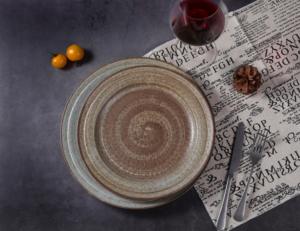
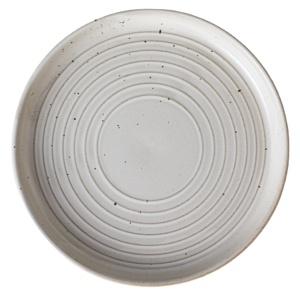
Modern hospitality diners reject sterile, monochromatic white plates in favor of organic, handcrafted textures. The procurement trend is shifting heavily toward reactive glaze stoneware that offers unique aesthetic variations per piece while maintaining identical outer dimensional tolerances for seamless stacking efficiency in commercial pass-through stations.
Tier-1 procurement teams are auditing supplier Scope 1 and Scope 2 carbon emissions. European manufacturers operating in ceramic hubs like Mortágua, Portugal lead this shift by incorporating recycled clay scrap prior to firing, utilizing closed-loop water filtration systems, and transitioning to clean natural gas and electric hybrid kilns.
With ghost kitchens and delivery services occupying a larger market share, tableware design is evolving. Commercial buyers require multi-functional rimmed plates and stackable rectangular trays that optimize heating shelf space, resist condensation degradation, and transition effortlessly from kitchen pass to table or transport packaging.
Established in Mortágua, Portugal in 1993, Cerages SA exemplifies the pinnacle of European private-label ceramic manufacturing.
Every piece produced on an OEM basis features customer-exclusive backstamps. Brand logos, origin indicators, and safety compliance marks are permanently vitrified into the base of the dinnerware during firing, ensuring lifetime brand visibility that will never wash off or fade in commercial dishwashers.
Access an expansive laboratory-developed library containing over 1,300 proprietary glaze formulations. Whether your procurement specification requires satin matte, high-gloss crystal, reactive metallic, or custom pantone-matched underglazes, custom glaze chemistry is formulated and documented for exact re-order repeatability.
Manufacturing protocols adhere strictly to ISO 9001:2015 quality control management systems. Every production batch undergoes rigorous dimensional checking, water absorption testing, edge impact evaluation, and international food contact compliance testing (FDA, EU Regulation No 10/2011).
Essential technical and commercial answers for international procurement managers, brand owners, and hospitality buyers.
Vitrified commercial stoneware is fired at high temperatures (1250°C–1280°C), creating a non-porous ceramic body with water absorption rates under 0.5%. Compared to earthenware, it possesses vastly superior mechanical strength and thermal shock resistance. Compared to standard white porcelain, stoneware allows for rich, organic reactive glazes and artisanal textures while delivering matching commercial durability.
Yes. Premier Portuguese manufacturers operate almost exclusively on a private label and OEM basis. Custom shapes, glazes, retail packaging, and backstamps are created to the precise technical drawings and visual specifications supplied by the buyer, ensuring complete product exclusivity for your brand.
Absolutely. All commercial stoneware bodies and glazes are engineered to withstand extreme environment transitions. Products pass strict commercial dishwashing simulation cycles without surface dulling, are microwave transparent (preventing plate overheating), oven-safe for roasting applications, and freezer-stable without thermal stress fracturing.
All raw clays, frits, and glazes are formulated from non-toxic minerals. Finished goods undergo rigorous laboratory testing in accordance with ISO 6486-1, California Proposition 65, FDA CPG 7117.06/07, and EU Directive 84/500/EEC to guarantee absolute zero release of harmful heavy metals.
Once 3D CAD files or physical reference samples are approved, plaster model production and initial mold casting take approximately 2 to 3 weeks. Sample glaze matching in the laboratory requires 1 to 2 weeks. Physical pre-production samples are typically dispatched for client sign-off within 4 to 6 weeks from project initiation.
Glaze preparation is governed by precise digital mass spectrometry and automated raw material batching. Specific gravity, viscosity, and glaze application weight per piece are tightly monitored. Kiln firing schedules are computer-controlled to ensure identical oxidation/reduction environments, resulting in tight color tolerances order after order.
Partner directly with Europe's trusted stoneware manufacturing experts in Mortágua, Portugal. Submit your project requirements, custom CAD designs, or glaze target references today.