Precision-engineered high-fired stoneware and vitrified ceramic collections manufactured under ISO 9001:2015 quality frameworks for international hospitality, luxury retail, and private label procurement.
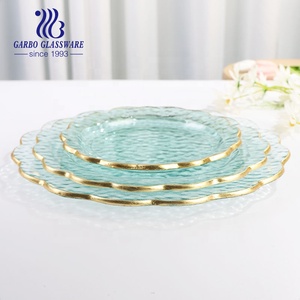
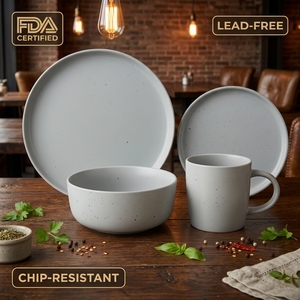
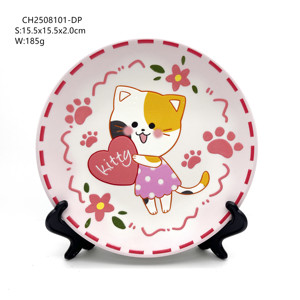
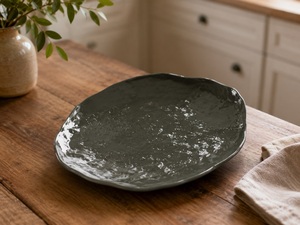
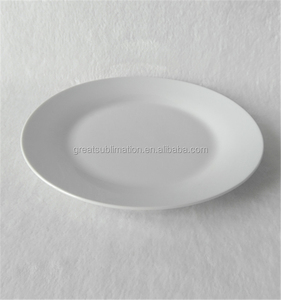
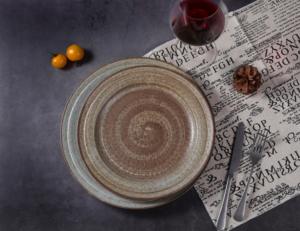
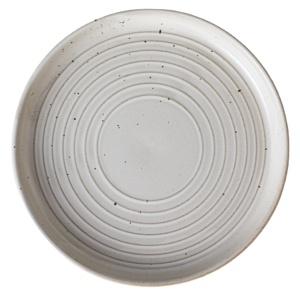
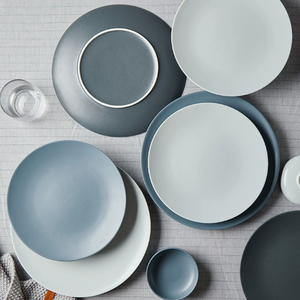
Selecting a global ceramic tableware supplier demands rigorous evaluation of material composition, thermal expansion behavior, chemical stability, and mechanical durability. Commercial dinnerware operating in high-volume hospitality environments or premium retail channels faces relentless thermal shock, physical impact, and chemical exposure from automatic dishwashing systems. Understanding the microstructural difference between ceramic bodies is fundamental to mitigating replacement costs and ensuring brand integrity.
Our industrial production facilities in Mortágua, Portugal, specialize in high-density stoneware formulations engineered with refined secondary clays, feldspathic fluxes, and quartz fillers. When subjected to precision-controlled firing curves in our automated continuous tunnel kilns, these raw materials fuse into a dense, non-porous silica matrix. Unlike porous earthenware (fired at 1,000°C–1,150°C with 5%–10% porosity), high-fired stoneware provides structural rigidity comparable to technical porcelain while permitting complex reactive glaze aesthetics.
| Ceramic Body Classification | Firing Temp (°C) | Water Absorption Rate | Thermal Shock Resistance (ΔT) | Mohs Hardness Grade | Primary Application Profile |
|---|---|---|---|---|---|
| High-Fired Stoneware (Cerages Std.) | 1,250°C – 1,280°C | < 0.5% (Vitrified) | Resists ΔT 200°C to 20°C | Grade 7.0 | Commercial Hospitality, Oven-to-Table, Retail |
| Commercial Hard Porcelain | 1,350°C – 1,400°C | < 0.1% (Vitrified) | Resists ΔT 220°C to 20°C | Grade 7.5 | Heavy Banquet, Institutional Catering |
| Low-Fired Earthenware | 1,000°C – 1,120°C | 5.0% – 12.0% (Porous) | Resists ΔT 110°C to 20°C | Grade 5.0 | Decorative Accent Pieces, Low-Duty Homeware |
| Vitrified Fine China | 1,220°C – 1,260°C | < 0.3% (Vitrified) | Resists ΔT 180°C to 20°C | Grade 6.5 | Fine Dining Establishments, High-End Giftware |
Established in 1993 in Mortágua, Portugal, Cerages SA operates as an exclusive OEM and private label manufacturer for global brands, department store chains, food service distributors, and hospitality buying groups across North America, Europe, Asia, and Oceania. Operating under an ISO 9001:2015 quality management framework, our integrated facility handles every stage of ceramic development under one roof—from initial 3D CAD modeling and plaster mold fabrication to raw material purification, automated shaping, proprietary glaze formulation, and final export packaging.
Our physical library houses over 1,300 documented glaze formulations, including reactive, satin matte, high-gloss, speckled, and metallic finishes. Our ceramic chemists match custom Pantone, RAL, or physical color swatches while ensuring 100% heavy-metal compliance (Lead/Cadmium free).
We work strictly behind the scenes for your brand. Every piece features customized backstamping—laser-engraved into the mold, debossed, or underglaze stamped. Finished items are delivered with bespoke retail packaging, barcoding, and regional compliance labeling.
All batches undergo rigorous verification: BS EN 1183 thermal shock testing, ISO 6486-1 lead and cadmium release testing, FDA 21 CFR compliance, and 500-cycle commercial dishwash stress trials before shipment authorization.
The global ceramic tableware export market is undergoing a structural shift driven by stringent EU ESG (Environmental, Social, and Governance) mandates, fluctuating energy economics, and evolving commercial dining aesthetics. Corporate procurement officers must navigate several critical technological and strategic transformations over the next decade:
Traditional ceramic manufacturing relies heavily on natural gas-fired kilns. Leading European exporters are implementing heat-recovery systems that capture thermal exhaust from kilns to power clay spray-drying units and preheat incoming ware. Furthermore, circular economy mandates require the integration of reclaimed unfired clay scraps (greenware scrap) and processed post-industrial ceramic waste back into the raw slip, reducing raw kaolin extraction impact by up to 25% without compromising mechanical strength.
Historically, artisanal reactive glazes presented significant batch-to-batch variation due to chemical sensitivity during kiln firing. Modern enterprise suppliers utilize digital spectrophotometry and automated liquid glaze dosing system controls. By regulating kiln atmosphere oxidization levels with micro-sensors, manufacturers can achieve consistent "handcrafted" aesthetic variations while keeping batch color consistency within strict Delta-E tolerances (ΔE < 1.2) for multi-year hospitality reorders.
Storage space constraints in urban commercial kitchens and cloud kitchens have shifted design requirements toward modular, high-density stackability. Modern dinnerware profiles feature reinforced rim radii and geometric foot rings designed to interlock securely. This engineering lowers mechanical chipping rates along vulnerable edges by 60% during rapid bussing and commercial washing processes.
Technical clarification on manufacturing specs, lead times, minimum order quantities (MOQ), and custom OEM developments.
Initiate your OEM project with our technical team in Mortágua, Portugal. Receive engineering consultation, glaze formulation support, and factory-direct pricing for your custom tableware collections.
Inquire Now