Explore our high-performance stoneware serveware, engineered for thermal shock resistance, heavy dishwashing longevity, and aesthetic distinction.
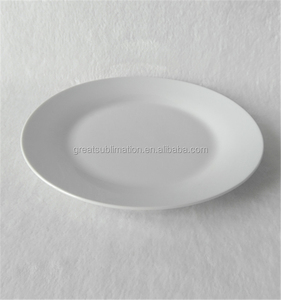
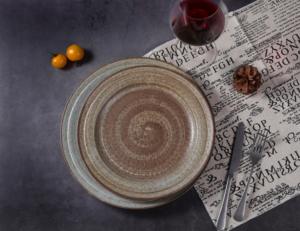
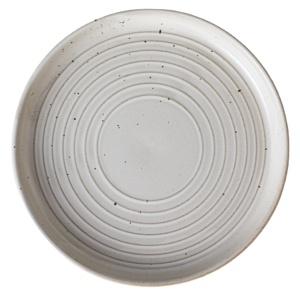
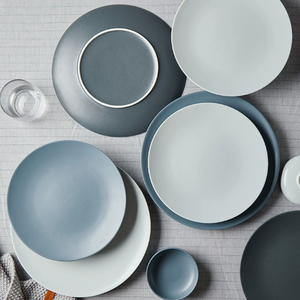
Operating from Mortágua, Portugal, our manufacturing hub merges three decades of artisanal ceramic heritage with rigorous ISO 9001:2015 quality standards.
For global procurement directors, retail category managers, and hospitality procurement teams, sourcing serveware requires balancing mechanical durability, aesthetic exclusivity, and regulatory compliance. Our Portuguese manufacturing facilities offer high-temperature stoneware production designed to eliminate common supply chain vulnerabilities.
From initial clay slurry preparation and plaster mold shaping to proprietary glaze formulation and automated tunnel kiln firing, every operational phase occurs under one roof in Mortágua. This eliminates third-party outsourcing delays and guarantees strict tolerance management across multi-thousand unit production runs.
Our specialized chemical laboratory has engineered over 1,300 unique glaze finishes, ranging from modern high-gloss monochromatic surfaces to complex reactive glazes, tactile cement textures, and subtle satin matts. Custom Pantone or physical swatch matching is conducted with complete batch-to-batch color stability.
Fired at temperatures exceeding 1250°C (2282°F), our stoneware body achieves complete vitrification. This dense micro-structural composition provides superior resistance to mechanical chipping, knife marking, and extreme thermal shock transitions (oven-to-table and freezer-to-microwave performance).
Understanding the technical differences between ceramic bodies is critical for commercial buyer selection. The table below outlines how our high-temperature Portuguese stoneware compares against standard market alternatives.
| Material Metric / Parameter | High-Temp Stoneware (Cerages) | Commercial Earthenware | Standard Porcelain |
|---|---|---|---|
| Firing Temperature | 1250°C - 1300°C | 1000°C - 1150°C | 1200°C - 1400°C |
| Body Porosity / Water Absorption | < 0.5% (Vitrified) | 3.0% - 10.0% (Porous) | < 0.5% (Vitrified) |
| Thermal Shock Tolerance (ΔT) | Up to 180°C Differential | Low (< 100°C Differential) | Moderate (120°C - 140°C) |
| Dishwasher & Microwave Safety | 100% Commercial Grade | Prone to crazing over time | Fully Safe |
| Edge Chip Resistance | Superior (High Mechanical Strength) | Poor to Moderate | High (Flexural strength reliant) |
| Aesthetic Flexibility | Reactive, Matt, Gloss, Tactile | Limited Glaze Stability | Predominantly White/Translucent |
| Custom Backstamp & Branding | In-Mould Engraved / Underglaze Stamped | Surface Decal Only | In-Glaze / Overglaze Decal |
As sustainability mandates tighten globally and commercial dining experiences evolve, procurement teams must align with emerging ceramic manufacturing innovations. Here are the key market forces driving ceramic serveware sourcing strategy over the coming decade.
Modern consumers and enterprise procurement mandates demand verifiable eco-conscious production. Our facility operates a closed-loop water filtration system, recycling 100% of industrial process water. Unfired clay scraps (greenware) are continuously re-hydrated and fed back into slurry preparation, drastically reducing raw material waste.
Hospitality venues are moving away from sterile, uniform white plates toward organic, handcrafted aesthetic profiles. High-volume buyers now seek reactive glazes that produce slight, artful variations on individual pieces while maintaining precise outer dimensional tolerances for uniform commercial dish-stacking systems.
Geopolitical turbulence and high overseas freight volatility have driven European and North American buyers toward European ceramic hubs like Mortágua, Portugal. Manufacturing in Portugal guarantees shorter maritime transit times, duty-free EU trade access, and strict adherence to European environmental labor laws.
Every shipment engineered at our manufacturing complex undergoes strict laboratory validation to meet international food-contact security protocols.
Our ceramic bodies and glaze compositions are 100% lead-free and cadmium-free. Products are routinely tested in accordance with US FDA standards, EU Directive 84/500/EEC, EC 1935/2004, and LFGB food contact requirements.
Our quality management framework governs every phase from raw material verification to final palletizing. Automated kiln temperature logging guarantees that thermal vitrification is achieved uniformly across every batch.
We provide comprehensive OEM packaging solutions, including drop-test certified ISTA-3A e-commerce packaging, customized barcode labeling, inner retail presentation boxes, and heavy-duty ocean freight palletization.
From technical CAD blueprints to global freight dispatch, our structured 5-stage manufacturing cycle delivers consistent quality for OEM client collections.
Technical analysis of CAD files, 3D renders, or physical samples to evaluate wall thickness, stacking rim radius, and firing shrinkage parameters.
Precision master models and working plaster molds are fabricated in our internal mold department, integrating custom backstamp branding.
Application of solid or reactive glazes by dipping, spraying, or automated brushing. Color matching is locked in our lab for repeat orders.
Fired in computer-controlled kilns at 1250°C+. Firing curves are calibrated to lock in glaze chemistry and ensure non-porous body density.
Visual, dimensional, and thermal testing against master approved reference units prior to custom box packing and pallet shipment dispatch.
Clear, direct technical answers to assist procurement managers, brand owners, and buyers during manufacturer evaluation.
Initiate your custom ceramic serveware project with our engineering and design teams in Mortágua. Contact us to request sample kits, technical consultations, or OEM production quotes.
Inquire Now