Engineered for Commercial Durability, Thermal Shock Resistance, and High-End Aesthetic Appeal
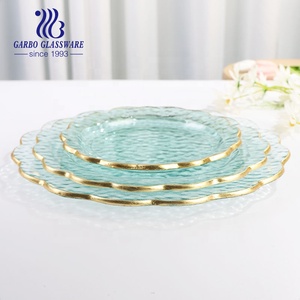
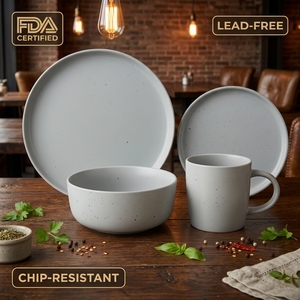
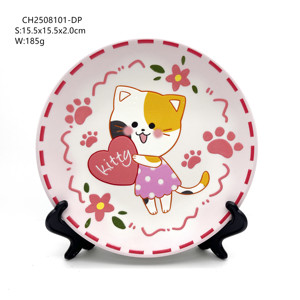
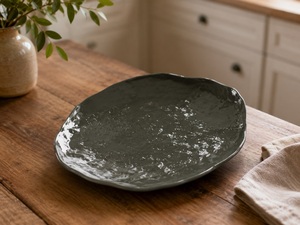
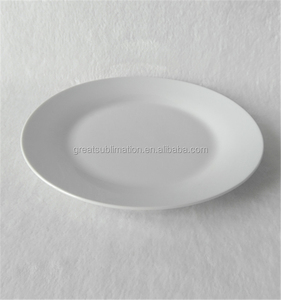
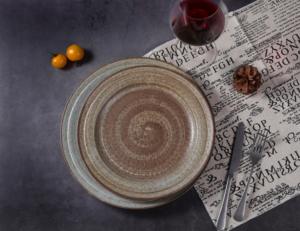
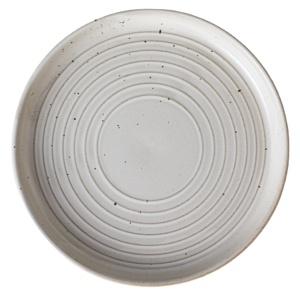
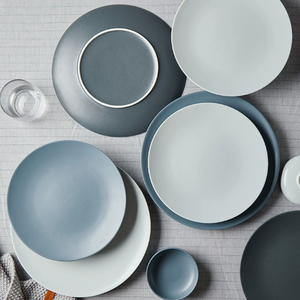
Selecting a top trusted ceramic plates factory requires evaluating material science, kiln technology, structural engineering, and environmental stewardship. Operating from Mortágua, Portugal—a region globally recognized for ceramic production excellence since 1993—our facility combines traditional craftsmanship with industrial automation under an ISO 9001:2015 Certified Quality Management System.
Unlike conventional earthenware suppliers, our factory specializes in high-temperature vitrified stoneware. Fired at controlled temperatures exceeding 1250°C to 1300°C, the clay body transitions into a quartz-dense microstructure with water absorption metrics under 0.5%. This vitrification process ensures structural impermeability, making our ceramic plates immune to moisture retention, bacterial growth, and micro-cracking caused by repeated thermal cycling.
| Technical Characteristic | Standard Earthenware | Cerages High-Fired Stoneware | B2B Sourcing Advantage |
|---|---|---|---|
| Firing Temperature | 950°C – 1050°C | 1250°C – 1300°C | Superior structural density and mechanical strength |
| Water Absorption Rate | 5% – 12% (Porous) | < 0.5% (Vitrified) | Zero liquid absorption, non-staining, food-safe hygiene |
| Thermal Shock Resistance | Up to 120°C ΔT | Up to 220°C ΔT | Freezer-to-oven safe without thermal crazing or fracture |
| Edge Glaze Hardness | 3 – 4 Mohs Scale | 6.5 – 7 Mohs Scale | Scratch-resistant against commercial cutlery in high-use venues |
| Heavy Metal Migration | Variable risk | 0.0 mg/L Lead & Cadmium | Strict compliance with US FDA, EU 1935/2004 & LFGB standards |
Our dedicated ceramic laboratory maintains an active formulation database of over 1,300 propriety glazes. From matte cement textures and gloss crystalline sheens to organic reactive glazes, every batch undergoes spectrophotometer color matching to ensure absolute batch-to-batch consistency across high-volume production runs.
We operate strictly on an OEM and private label model. Client branding is seamlessly integrated through sub-glaze stamping, laser engraving into production moulds, or high-temperature decal firing. Your brand identity remains permanently fused onto the base of each ceramic dish, enduring thousands of industrial wash cycles.
Leveraging in-house CAD modeling, 3D prototype printing, and master plaster mould fabrication, we transform design concepts, physical samples, or technical drawings into mass-producible ceramic shapes within short turnaround windows. Wall thickness and rim reinforcements are optimized specifically for commercial stacking efficiency.
As global supply chains navigate carbon compliance regulations, geopolitical re-shoring, and shifting consumer preferences, procurement executives must align with manufacturers adopting next-generation ceramic technologies:
Modern ceramic factories are shifting away from traditional fossil-intensive firing. Our Mortágua facility incorporates heat recovery systems that capture ambient thermal energy from continuous tunnel kilns, redirecting it to pre-dry greenware clay bodies. This closed-loop thermal cycle reduces natural gas consumption per unit by up to 28%.
Sustainability is now a core procurement metric. In our production line, 100% of unfired greenware clay trim and slurry wastewater solids are reclaimed, re-blended, and fed back into the raw slip formulation. Waste water is fully purified via filter presses, minimizing environmental footprint while ensuring material efficiency.
Hospitality and retail buyers are increasingly moving away from sterile white porcelain toward tactile, artisanal aesthetics. Reactive glazes—which derive color from natural iron, cobalt, and copper oxides interacting during high heat—allow every piece to exhibit subtle, unique surface variations while maintaining strict dimensional tolerances.
Sourcing ceramic tableware from European manufacturers like Portugal eliminates long transit times, reduces ocean freight emissions, and avoids punitive trade tariffs. Combined with strict EU environmental oversight, European ceramic manufacturing guarantees compliance with global ESG mandates.
Direct Manufacturing Transparency, Technical Rigor, and Uncompromising Quality Assurance
From raw clay refining, body compounding, and glaze synthesis to pressure casting, robotic glazing, and final kiln firing—every step takes place in one facility. This avoids third-party subcontractor delays and maintains strict control over material purity.
Every batch undergoes thermal shock testing (heated to 220°C then plunged into 20°C water), edge-impact resistance testing, dishwasher chemical abrasion testing, and optical surface flaw inspection prior to palletizing and packing.
We supply drop-ship ready, ISTA-certified protective packaging, including drop-test proven corrugated inserts, custom inner color boxes, barcoding, and master carton bundling engineered for international logistics channels.
Everything You Need to Know About OEM Customization, MOQs, Testing, and Factory Audits
Yes. We operate exclusively on an OEM (Original Equipment Manufacturer) and private label framework. The finished ceramic plates, backstamps, glazes, inner retail boxes, and master packaging are produced according to your brand's specifications. We do not compete with our customers by selling direct-to-consumer products under our own name.
Stoneware is fired at higher temperatures (1250°C–1300°C) than earthenware (950°C–1050°C), vitrifying the clay matrix into a dense, non-porous structure with water absorption below 0.5%. Earthenware remains porous and prone to chipping. While bone china offers delicacy, stoneware provides superior thermal retention, mechanical strength, and chip resistance required for commercial hospitality and daily residential use.
Absolute food safety is engineered into our glazes. Our raw materials are completely free of lead, cadmium, and hazardous heavy metals. All products comply with US FDA CPG 7117.06/07, EU Regulation 1935/2004, German LFGB, and California Proposition 65 regulations. Project-specific laboratory test reports from accredited third parties (e.g., SGS, Bureau Veritas) are supplied upon request.
Standard MOQs typically range from 500 to 1,000 units per item/color for standard shapes, and 2,000 to 3,000 units for fully custom moulds, depending on piece dimensions. Sample prototyping takes approximately 2 to 3 weeks. Upon pre-production sample approval, bulk manufacturing lead times generally range between 45 and 60 days.
Yes. Our in-house chemical laboratory utilizes mineral oxide pigments to formulate custom glazes based on physical reference samples, ceramic swatches, or Pantone color codes. We can execute gloss, semi-matte, full matte, reactive speckled, and metallic luster finishes engineered to withstand heavy dishwasher cycles.
We formulate our clay and glaze recipes with closely matched Coefficients of Thermal Expansion (COE). By ensuring the glaze contracts at the exact rate of the clay body during cooling, internal tensile stress is eliminated. As a result, our ceramic plates are rated safe for microwave heating, commercial high-temp dishwashers, and oven usage up to 250°C.
We welcome third-party factory audits, technical inspections, and social compliance evaluations from authorized agencies (such as Intertek, SGS, or TUV) as well as direct visits from buyer quality engineering teams to our manufacturing facility in Mortágua, Portugal.
We employ standardized export packaging protocols: individual cardboard dividers, bubble/foam wrapping, heavy-duty double-wall corrugated cartons, and heat-treated ISPM-15 compliant wooden pallets wrapped in stretch film with edge protectors. Ocean container loading plans are optimized to equalize weight distribution and eliminate void spaces.
Whether you are launching a new tableware line, sourcing for a global hotel group, or seeking a reliable private label partner in Europe, our engineering team in Mortágua is ready to realize your vision.