Engineered for thermal shock stability, commercial dishwasher durability, and food-grade compliance (FDA, EU 1935/2004, LFGB).
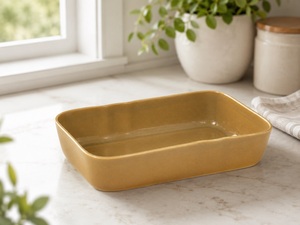
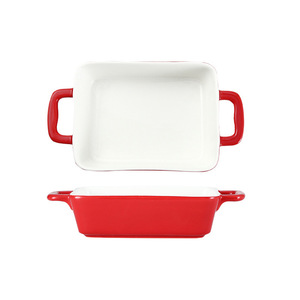
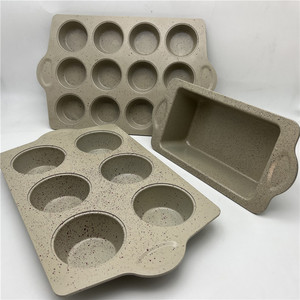
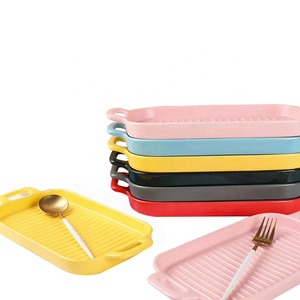
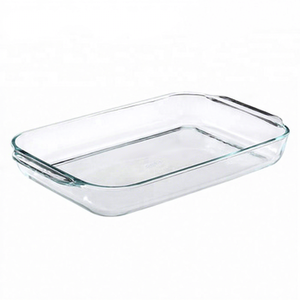
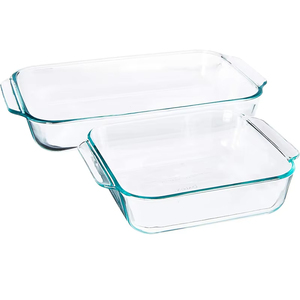
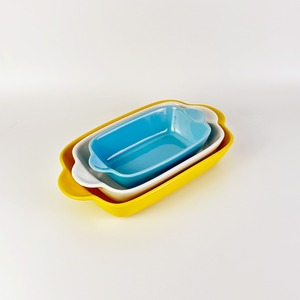
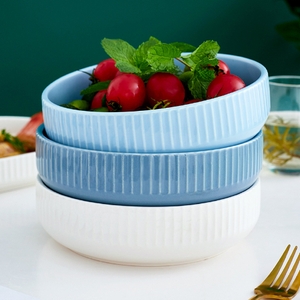
In the evolving global retail and hospitality supply chains, ceramic bakeware has transitioned from traditional, utility cookware into high-value, aesthetic oven-to-table culinary solutions. Professional B2B buyers, brand owners, commercial importers, and procurement directors require more than basic manufacturing capacity—they demand technical consistency, material vitrification purity, strict compliance with food-safety standards, and robust thermal shock resistance.
Operating from established ceramic centers like Mortágua, Portugal, specialized B2B ceramic manufacturers have set the benchmark for international porcelain and stoneware bakeware production. Combining advanced automated tunnel kilns with decades of ceramic clay craftsmanship, high-grade exporters supply retail brands across North America, Europe, Asia, and Oceania. This whitepaper analyzes the core engineering parameters, quality assurance protocols, material classifications, and market trends essential for global ceramic bakeware procurement.
The operational lifespan of ceramic bakeware in both residential kitchens and high-intensity commercial foodservice environments is governed by clay formulation and firing temperatures. Earthenware, stoneware, porcelain, bone china, and high-borosilicate ceramics exhibit starkly different mechanical and thermal characteristics:
| Ceramic Body Type | Firing Temp (°C) | Water Absorption | Thermal Shock ($\Delta T$) | Primary Commercial Use |
|---|---|---|---|---|
| High-Fired Stoneware | 1250°C – 1300°C | < 0.5% | Up to 200°C | Oven-to-Table Retail & Hospitality Bakeware |
| Bone China Kiln-Glaze | 1220°C – 1260°C | < 0.2% | Up to 180°C | Luxury Retail & Gourmet Culinary Sets |
| High-Borosilicate Ceramic | 1280°C – 1340°C | < 0.1% | Up to 240°C | Freezer-to-Oven Casseroles & Roasters |
| Standard Earthenware | 1000°C – 1150°C | 3.0% – 7.0% | Up to 120°C | Low-Cost Decorative Tableware (Not Ideal for Heavy Baking) |
Glaze crazing occurs when the thermal expansion coefficient of the glaze layer mismatches that of the underlying clay body. Premium ceramic bakeware suppliers utilize dilative computerized laser inspection and thermal expansion matched glazes to ensure the glaze contracts at the exact rate of the body during cooling, guaranteeing zero microscopic cracking over thousands of thermal cycles.
Exporting ceramic bakeware globally requires compliance with stringent regulatory frameworks. Established exporters maintain comprehensive ISO 9001:2015 quality management systems and conduct mandatory batch testing to ensure zero heavy metal leaching:
Providing global brand owners, importers, and private labels with end-to-end custom manufacturing control.
In-house ceramic laboratories capable of developing bespoke solid, reactive, glossy, matte, or translucent glazes matched precisely to Pantone or physical buyer standards.
Complete private-label integration. Logotypes, origins, care instructions, and SKU barcodes engraved into base molds or under-glaze stamped before kiln firing.
Eco-optimized firing cycles, 100% recycling of unfired greenware clay, heat-recovery kilns, and closed-loop process water filtration meeting modern EU environmental protocols.
As consumer behavior tilts toward eco-conscious home cooking and upscale culinary presentation, the global ceramic bakeware market is experiencing structural technological shifts. Sourcing directors must align their procurement strategies with four key macro trends:
Modern consumers demand bakeware that transitions seamlessly from kitchen ovens to dining tables. Nordic minimalism, organic reactive glazes, matte earth tones, and ergonomic "binaural" (double-ear) handles have become market requirements. Handles must offer secure grip geometry even when utilizing thick thermal oven mitts.
Growing public scrutiny surrounding synthetic non-stick coatings (PFAS, PFOA, PTFE) has accelerated the migration toward naturally non-stick vitrified ceramic surfaces and high-temperature mineral glazes. Smooth, non-porous glazed stoneware prevents food adhesion naturally, offering health-conscious consumers a safe, chemical-free baking vessel.
Once restricted to small artisan studios, high-temperature reactive glazes—which create subtle, randomized color gradients during firing—are now produced at scale by industrial ceramic suppliers. By combining computerized temperature profiles with mineral glaze layering, factories deliver mass-produced uniformity while retaining handcrafted visual charm.
With direct-to-consumer (D2C) ceramic sales surging globally, exporters must engineer packaging capable of passing ISTA 3A and 6-AMAZON drop testing. Double-wall corrugated cartons, custom molded EPE/EPS foam inserts, and eco-friendly molded pulp buffers ensure zero-breakage rates during international parcel transit.
A disciplined, 4-stage engineering pathway from initial concept drawings to packed container delivery.
3D modeling, capacity evaluation, thermal stress simulation, shrinkage calculation (typically 8–12%), and master plaster mold creation.
In-house laboratory formulates color standards, glaze viscosity, and surface sheen. Physical pre-production samples delivered within 14 days.
High-pressure slip casting or jiggering followed by precise continuous tunnel kiln firing. Laser dimensional check and thermal shock batch testing.
Custom backstamp verification, barcode labeling, ISTA drop-tested retail packaging, and export container loading with moisture absorbers.
Direct technical answers regarding factory capabilities, OEM logistics, material testing, and order management.
Yes. The factory operates almost exclusively on an OEM/ODM and private label basis. All shapes, sizes, glazes, packaging designs, and backstamps (base markings) are customized to match your exact brand guidelines and legal destination market requirements.
Stoneware and bone china hybrid bodies are fired at significantly higher temperatures (1,200°C–1,300°C), achieving full vitrification with water absorption rates below 0.5%. Earthenware remains porous, absorbs grease/water, chips easily, and cannot handle intense oven heating or commercial dishwashers.
Yes. Standard vitrified stoneware and high-borosilicate ceramic items are formulated to withstand extreme thermal ranges (typically $-20^\circ\text{C}$ to $+250^\circ\text{C}$). Formal test certificates (BS EN 12875, BS EN 15284) can be issued per production batch upon request.
For standard existing catalog shapes with custom glazes, MOQs typically start at 1,000 to 2,000 units per colorway. Fully custom OEM shapes requiring new plaster molds generally require an initial run of 3,000 units, depending on overall item dimensions and mold yield.
All glazes are synthesized using refined mineral oxides and lead-free frits. Batch samples undergo third-party laboratory testing (SGS, TUV, Intertek) to verify zero lead and cadmium leaching, fully complying with FDA, California Prop 65, and European LFGB standards.
Pre-production sampling requires approximately 10 to 14 days. Once samples and artwork are approved, mass production typically spans 35 to 45 days, depending on kiln capacity schedules and order volume complexity.