Top China Ceramic Ovenware Manufacturer & Factories

Industrial-Scale Stoneware Vitrification, Custom Reactive Glazing, and OEM/ODM Supply Chain Excellence for Global Brands & Retailers

B2B Product Showcase

Featured Commercial Ceramic Ovenware & Tableware

Engineered for extreme thermal endurance ($\Delta T \ge 200^\circ\text{C}$), high mechanical strength, and zero-porosity food safety compliance. Explore our factory-direct OEM/ODM collections.
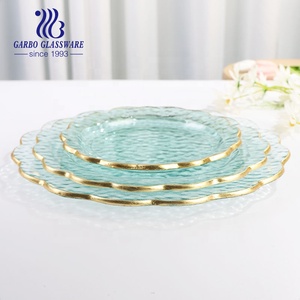
Elegant Glass Serving Tray & Platter Set With Gold Rim Home Kitchen Glass Dinner Plates Chargers Serveware Dishes Wedding Plates

Elegant Glass Serving Tray & Platter Set With Gold Rim Home Kitchen Glass Dinner Plates Chargers Serveware Dishes Wedding Plates

Luxury Gold Rim High Clarity OEM Custom
Get a Quote
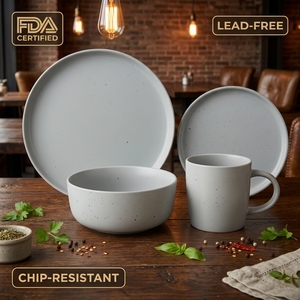
Modern Ceramic Stoneware Dinnerware Set | 4-Piece Grey Plates Bowls | Hotel Restaurant Use Leak-Proof Dishwasher Safe Heat

Modern Ceramic Stoneware Dinnerware Set | 4-Piece Grey Plates Bowls | Hotel Restaurant Use Leak-Proof Dishwasher Safe Heat

Matte Grey Glaze Vitrified Body Commercial Grade
Get a Quote
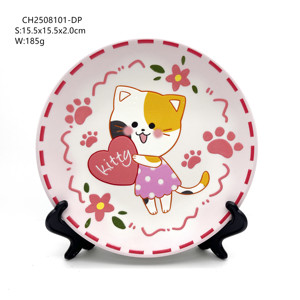
3D UV printting Durable Round Ceramic Stoneware Plate Dish Set of 2

3D UV Printting Durable Round Ceramic Stoneware Plate Dish Set of 2

Precision Printing Chip Resistant Custom Patterns
Get a Quote
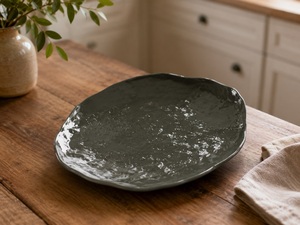
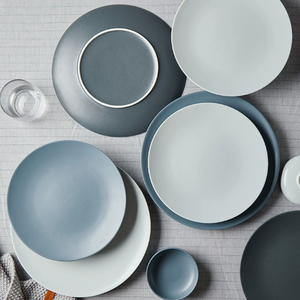
Grey Stone-Look Plate 23.2cm, Matte Cement Grey Stoneware, Rectangular Ceramic Serving Plate for Tableware

Grey Stone-Look Plate 23.2cm, Matte Cement Grey Stoneware, Rectangular Ceramic Serving Plate for Tableware

Cement Texture Scratch Resistant Oven-to-Table
Get a Quote
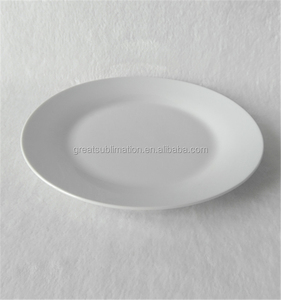
10'' White Sublimation Ceramic Plates Eco-Friendly Stoneware Dishware Pack of Plates Party Food Printed Pattern Type Cheap Price

10'' White Sublimation Ceramic Plates Eco-Friendly Stoneware Dishware Pack of Plates Party Food Printed Pattern Type

Sublimation Blank Eco Clay Body Bulk Supply
Get a Quote
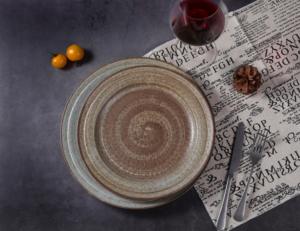
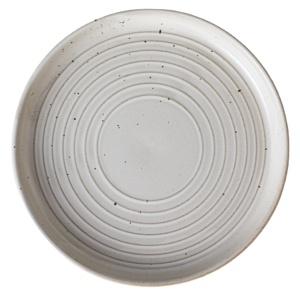
2025Luxury Textured Stoneware Dinner Plate | Handcrafted Ceramic, Durable, Rustic Elegant, Modern Restaurant Tableware Plate

2025 Luxury Textured Stoneware Dinner Plate | Handcrafted Ceramic, Durable, Rustic Elegant Modern Restaurant Tableware

Artisanal Feel Reactive Glaze Hotel Standard
Get a Quote
Factory Eco-Friendly Stoneware Circle Line Salad Yellow Stoneware Plate Restaurant Stoneware Plate Set

Factory Eco-Friendly Stoneware Circle Line Salad Yellow Stoneware Plate Restaurant Stoneware Plate Set

Hand-Painted Line Low Porosity Stackable
Get a Quote
High Quality Ceramic Stoneware Dinner Plates Solid Handpainted Customized Eco-Friendly Microwave Safe Dishwasher Safe Food Grade

High Quality Ceramic Stoneware Dinner Plates Solid Handpainted Customized Eco-Friendly Microwave Safe Dishwasher Safe

High Temp Fired Microwave Safe Custom Backstamp
Get a Quote
30+
Years Manufacturing Excellence
1,300+
Custom Formulated Glazes
1280°C
Vitrification Firing Temp
ISO 9001
Quality Management Certified
Technical Whitepaper

Material Engineering & Thermal Shock Dynamics in Ceramic Ovenware

Understanding the pyrochemical transformations, phase changes, and mechanical stress mitigation strategies required for high-performance commercial ceramic bakeware.

Vitrification Kinetics & Porosity Control

True commercial ovenware requires near-zero open porosity ($<0.5\%$). Fired at temperatures between $1250^\circ\text{C}$ and $1320^\circ\text{C}$, the clay matrix undergoes full vitrification. The liquid phase dissolves free quartz crystals, generating needle-like secondary mullite ($3\text{Al}_2\text{O}_3 \cdot 2\text{SiO}_2$) networks. This crystalline web provides structural rigidity, preventing micro-fracturing under rapid heating cycles.

Thermal Shock Resistance ($\Delta T \ge 200^\circ\text{C}$)

Thermal shock failure occurs when differential thermal expansion creates tensile stress exceeding the modulus of rupture. Our engineered stoneware bodies incorporate low-expansion mineral flux systems (spodumene/petalite substitutions), reducing the coefficient of thermal expansion ($\alpha$) to $3.5 \times 10^{-6}/\text{K}$. This enables direct transition from $-20^\circ\text{C}$ deep freeze to $220^\circ\text{C}$ conventional oven environments without micro-crazing.

Glaze Compression & Fit Dynamics

To prevent structural degradation over hundreds of commercial dishwashing and baking cycles, the glaze expansion coefficient ($\alpha_g$) is engineered to be slightly lower than the underlying body coefficient ($\alpha_b$). Upon cooling, the glaze remains under residual compressive stress, enhancing mechanical rim strength by up to 40% compared to unglazed or mismatched ceramic bodies.

Industrial Material Benchmark: Ovenware Substrates

Ceramic Body Type Firing Temp (°C) Water Absorption (%) Thermal Shock ($\Delta T$) Edge Impact Resistance Commercial Suitability
High-Fired OEM Stoneware 1280°C – 1320°C < 0.2% 200°C – 240°C High (Mullite Reinforced) Oven, Microwave, Freezer, Dishwasher
Fine Porcelain 1350°C – 1400°C < 0.1% 160°C – 180°C Medium-High (Brittle) Tableware, Light Ovenware
Earthenware / Terracotta 1000°C – 1150°C 3.0% – 10.0% 100°C – 120°C Low (Prone to Chipping) Decorative Decorative Only
Borosilicate Glass 1500°C (Melt) 0.0% 220°C Medium (Stress Sensitive) Pure Ovenware / Bakeware
Factory Capabilities

Why Leading Brands Partner with China's Premier Stoneware Facilities

Integrating vertical manufacturing, proprietary chemistry, and automated quality control under one roof to deliver global private-label solutions.

In-House Plaster Shop & 3D Tooling

Rapid prototyping from initial 2D CAD sketches to functional 3D ceramic samples within 7 working days. Our internal mould shop produces high-density plaster working moulds with precise volumetric shrinkage compensation (typically 10-14% depending on clay body formulation).

1,300+ Proprietary Glaze Library

Our chemical laboratory specializes in complex glaze reactions—including matte cement finishes, rustic speckled granites, crystalline micro-effects, and brilliant metallic lusters. All formulations are certified 100% lead and cadmium free under FDA 7117.06/07 and LFGB guidelines.

Custom Backstamping & Branding

Complete brand identity integration. We offer debossed bottom moulds, laser-etched stamps, and high-temperature underglaze decal transfers that withstand industrial chemical sanitization without fading or wearing off.

Automated Tunnel Kiln Consistency

Utilizing computer-controlled 100-meter continuous tunnel kilns equipped with multi-zone oxidation/reduction monitoring. This eliminates cold spots and guarantees color uniformity across 50,000+ unit production runs.

ISTA-6A Drop Test Packaging

Engineered e-commerce packaging design. From drop-tested molded pulp inserts to double-wall corrugated mailer boxes, we ensure zero transit damage for direct-to-consumer and retail distribution channels.

Full Regulatory & Audit Compliance

Operating under strict ISO 9001:2015 quality management systems, BSCI social accountability standards, and SEDEX SMETA certifications. Fully compliant with California Prop 65, EU Directive 2005/31/EC, and GB 4806.4-2016.

Strategic Outlook 2025–2030

Emerging Trends in Global Ceramic Ovenware Procurement

Key industry shifts shaping product design, environmental standards, and procurement strategies for wholesale buyers and hospitality groups.

1. Multi-Functional "Oven-to-Table" Versatility

Modern consumer lifestyles and high-density restaurant kitchens demand items that seamlessly transition from food preparation to presentation. Sourcing is shifting rapidly toward organic rim designs, ergonomic heat-resistant handles, and satin-matte reactive glazes that double as premium serving platterware.

2. Decarbonized Kiln Tech & Sustainable Clays

Global retailers are prioritizing suppliers with verified carbon reduction roadmaps. Chinese Tier-1 manufacturers are pioneering natural gas / electric hybrid firing technologies, heat recovery systems that preheat drying chambers, and recycling 100% of unfired greenware clay slurry back into production.

3. Advanced Reactive Glazing Formulations

Standard solid colors are giving way to dynamic, multi-layered reactive glazes that simulate artisanal handcrafting at commercial scale. Controlled elemental oxide reactions (iron, copper, cobalt, rutile) yield unique surface variations on every piece while maintaining strict dimensional tolerances.

Operational Excellence

The 5-Stage Private Label Production Framework

A disciplined engineering workflow ensuring sample accuracy, chemical safety, and flawless mass manufacturing from initial brief to final loading.

Stage 01

Design & CAD Modeling

Technical review of draft dimensions, volumetric requirements, wall thickness distribution, and finite element stress analysis for thermal strain.

Stage 02

Prototyping & Lab Firing

Creation of master plaster blocks, precision casting of prototype samples, and pilot kiln test firing to verify glaze fit and thermal absorption.

Stage 03

Mass Shaping & Drying

Automated pressure casting or RAM pressing for complex ovenware geometries, followed by humidity-controlled drying to prevent warping.

Stage 04

High-Temp Vitrification

Precision glazing via robotic spray or hand immersion, followed by single or double firing in tunnel kilns up to $1300^\circ\text{C}$.

Stage 05

QC & Pallet Integration

100% pinhole, warp, and rim check. Thermal shock quench testing on batch samples ($\Delta T = 220^\circ\text{C}$). E-commerce pack-out and containerization.

Procurement Guidance

Frequently Asked Questions for B2B Ceramic Sourcing

Direct answers to crucial commercial, technical, and logistical queries raised by global procurement officers and brand directors.

What is the key technical difference between earthenware ovenware and vitrified stoneware ovenware?

Earthenware is fired at lower temperatures ($1000^\circ\text{C}-1150^\circ\text{C}$), leaving a porous clay body (3% to 10% water absorption) that relies entirely on glaze for moisture resistance. If the glaze crazes, moisture enters the body, leading to structural degradation, bacteria buildup, and catastrophic cracking under heat. Vitrified stoneware is fired at $1280^\circ\text{C}-1320^\circ\text{C}$, closing clay pores to less than 0.5% water absorption. This creates a dense, non-porous, high-strength body inherently resistant to thermal shock, micro-crazing, and mechanical chipping—making it the essential standard for commercial food service and premium retail bakeware.

How does your factory ensure compliance with heavy metal leachability limits (Lead & Cadmium)?

All our glaze chemistry is formulated in-house using raw mineral oxides free from toxic heavy metals. Every batch undergoes rigorous leaching tests using 4% acetic acid solutions at $22^\circ\text{C}$ for 24 hours (FDA CPG 7117.06/07 protocol) and elevated temperature testing for food contact under EU Directive 2005/31/EC and California Proposition 65. Official lab test reports (SGS, TUV, or Intertek) are issued per production run.

What are the standard Minimum Order Quantities (MOQs) and lead times for OEM projects?

For existing tooling shapes with custom glaze finishes, our standard MOQ is 1,500 to 3,000 units per colorway. For fully customized 3D shapes requiring bespoke plaster tooling, the baseline MOQ is typically 5,000 units per item. Prototyping and 3D sample approval take 10 to 14 days; mass production lead time is generally 45 to 60 days following sample sign-off and deposit receipt.

Can you manufacture ovenware designed specifically for direct flame or induction cooktops?

Standard stoneware is engineered for convection ovens, microwaves, and broilers, but not for direct stovetop open flames or induction hobs due to extreme localized gradient thermal stress. However, we manufacture a specialized flame-proof ceramic body formulated with high percentages of lithium-aluminosilicate minerals (flameproof cordierite-petalite matrix) capable of withstanding direct burner flames and induction metal-plate encapsulation upon request.

How are custom backstamps applied, and will they survive heavy dishwasher usage?

We employ three primary branding methods: (1) Debossed or embossed logo integration directly into the plaster production mould, (2) In-glaze high-temperature ceramic decal firing at $1200^\circ\text{C}$, and (3) Underglaze ceramic stamping prior to clear glazing. All three methods permanently fuse the mark into the silicate matrix, guaranteeing 100% resistance against harsh commercial dishwasher detergents, abrasion, and thermal degradation.

Ready to Launch Your Custom Ceramic Ovenware Line?

Partner with China's leading stoneware specialists. Request technical spec sheets, custom glaze samples, or an immediate engineering feasibility assessment for your OEM project.