Engineered for global brand owners, hospitality distributors, and industrial buyers. Fired under stringent ISO 9001:2015 quality standards.
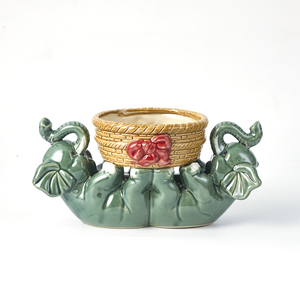
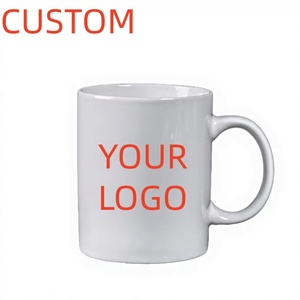
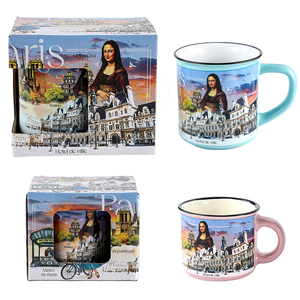
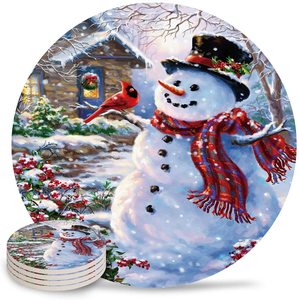
Combining three decades of traditional ceramic artistry with automated continuous tunnel kilns and advanced material science.
Our specialized chemical lab houses over 1,500 fully developed glaze recipes. From complex reactive glazes with unpredictable artistic aesthetic control to satin matt and high-gloss commercial coatings, we precisely control elemental ratios for lead-free, cadmium-free food-grade durability.
We operate as an invisible, high-capacity backend for global retailers. Shapes, backstamps, bottom logos, customized gift packaging, and barcoding are executed to customer specifications, maintaining strict intellectual property confidentiality under non-disclosure agreements.
Our ceramics are fired in high-temperature computer-controlled kilns at 1280°C to 1380°C. This converts the raw clay body into a dense, vitrified structure with water absorption rates below 0.2%, providing extraordinary thermal shock tolerance and chip resistance.
Every batch of table top porcelain, stoneware baking dishes, and promotional mugs is rigorously tested for FDA CPG 7117.06/07, EU Regulation (EC) No 1935/2004, and California Proposition 65 compliance, guaranteeing 100% heavy-metal safety.
We collapse product development cycles from months to days. Utilizing state-of-the-art 3D CAD modeling and rapid plaster master mold tooling, we provide physical reference samples with exact volumetric and shrinkage calculations prior to mass casting.
Navigating global ocean and air logistics with engineered export packaging. From ISTA-certified drop-test retail boxes to heavy-duty ocean freight palletization, we ensure zero-breakage rates for high-volume order fulfillment.
An authoritative analysis of technical ceramic innovation, global supply chain dynamics, and sustainability metrics for professional procurement teams.
The global B2B ceramic tableware and technical stoneware market is undergoing a structural paradigm shift. Sourcing directors from enterprise retail chains, commercial hospitality suppliers, and premium architectural brands are moving away from standardized off-the-shelf catalogues toward fully bespoke OEM/ODM partnerships. This change is driven by the necessity for market differentiation, brand identity preservation, and stringent international compliance requirements.
Modern ceramic sourcing is no longer merely about aesthetic appeal; it involves rigorous material engineering. Key global buying criteria have shifted toward verified thermal shock resistance (capable of withstanding temperature swings exceeding ΔT=180°C to 220°C), micro-scratch glaze hardness, zero-porosity vitrification, and microwave/dishwasher commercial longevity. China’s premier ceramic manufacturers are leading this evolution by integrating automated slip casting, iso-static pressing, and closed-loop environmental controls into their production lines.
Choosing the optimal ceramic body formulation is critical for product functionality, unit cost optimization, and durability. China's ceramic manufacturing sector leverages rich natural mineral deposits—including kaolin clay, feldspar, quartz, and high-purity alumina—to craft specialized ceramic bodies customized for specific enterprise applications.
| Ceramic Body Type | Firing Temperature | Water Absorption Rate | Key Performance Characteristics | Primary Industrial / Commercial Use |
|---|---|---|---|---|
| Fine Stoneware | 1250°C – 1280°C | < 0.5% (Vitrified) | Exceptional mechanical strength, artisanal reactive glaze capabilities, organic tactile feel. | Oven-to-table cookware, high-end retail dinnerware, artisan cafe mugs. |
| High-Grade Porcelain | 1320°C – 1380°C | < 0.1% (Fully Vitrified) | Translucency, high chip resistance, pristine white body, extreme surface hardness. | Commercial hospitality dinnerware, fine dining, promotional giftware. |
| 96%+ Alumina Ceramic | 1600°C – 1700°C | 0.00% (Impenetrable) | Extreme thermal resistance, chemical inertness, high dielectric strength, high density. | Industrial crucibles, semiconductor parts, high-wear lab apparatus. |
For example, industrial crucibles require 96% High-Purity Alumina Ceramics to survive severe chemical environments and intense temperature gradients up to 1600°C without mechanical distortion. Conversely, promotional drinkware and custom giftware prioritize surface smooth glaze application, exact silk-screen decal transfer capability, and vibrant color fidelity under lower-energy firing schedules.
Historical challenges in bespoke ceramic manufacturing frequently centered around batch-to-batch color variance, particularly when producing complex reactive glazes. Reactive glazes rely on multi-stage chemical reactions involving metallic oxides (such as iron, copper, cobalt, and titanium) within the kiln flame atmosphere to create organic, multi-tonal surface variations.
Top-tier Chinese ceramic exporters have revolutionized reactive glaze manufacturing by substituting traditional manual glaze application with robotic dual-fluid spray systems and computer-monitored shuttle kilns. By precisely regulating the oxygen-to-gas atmosphere ratios during the reduction firing stage, manufacturers achieve artistic, individual character on every piece while keeping batch color variation strictly within acceptable CIELAB color-space tolerances (ΔE < 1.2).
Environmental sustainability has transitioned from a corporate option to an imperative qualification standard for global retail buyers. Leading Chinese ceramic manufacturers have modernized facilities to satisfy European ESG (Environmental, Social, and Governance) criteria and US clean-supply mandates:
Key Eco-Manufacturing Directives Include:
Clear, direct answers to common questions from enterprise buyers, brand managers, and global supply directors.
MOQs depend on the ceramic body type and production method. For standard customized coffee mugs or existing shapes with custom silk-screen logos, MOQs typically range from 1,000 to 3,000 units. For completely custom 3D sculpted shapes or specialized reactive glazes requiring dedicated plaster molds, standard MOQs are 3,000 to 5,000 units per shape/color run.
Reputable manufacturers use strictly unleaded glazes and non-toxic metallic oxides. Every batch destined for export undergoes third-party laboratory testing (SGS, TUV, Bureau Veritas) to verify complete compliance with US FDA (CPG 7117.06/07), California Proposition 65, EU Directive 84/500/EEC, and LFGB standards prior to vessel departure.
The typical sampling timeline is 7–12 business days for 3D modeling, plaster mold production, and physical sample firing. Once samples are approved by the client, mass production lead times generally range between 35 and 45 days, depending on order volume, kiln scheduling, and packaging complexity.
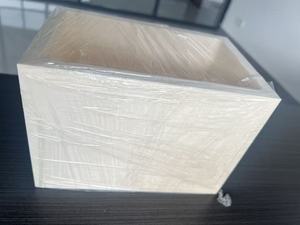
We utilize engineered protective packaging tailored for fragile items. This includes high-density corrugated dividers, individual bubble wrapping, custom EPE foam inserts, drop-tested mail-order retail boxes (ISTA-1A/3A standards), and heavy-duty shrink-wrapped wooden pallets with protective corner guards to eliminate container shifting.
Yes. Our glaze chemical laboratory matches physical Pantone (PMS) reference colors or physical fabric/color swatches. Because ceramic glazes undergo chemical vitrification at high temperatures, we produce physical glaze trial tiles for customer sign-off before commencing full production runs.
The distinction lies in raw clay formulation and firing temperature. Earthenware/Ceramic is fired at lower temperatures (1000°C–1150°C) and remains porous. Stoneware is fired at 1200°C–1280°C, achieving low porosity and high durability. Porcelain is fired at 1300°C–1380°C using refined kaolin clay, resulting in a fully vitrified, non-porous, translucent structure.