Explore engineered ceramic stoneware and premium glass serving platters designed for high-density HoReCa usage, wholesale distribution, and custom brand manufacturing.
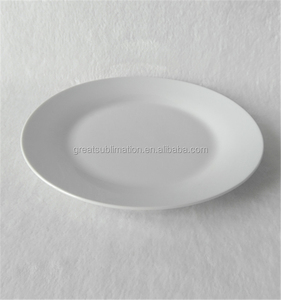
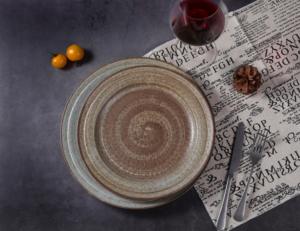
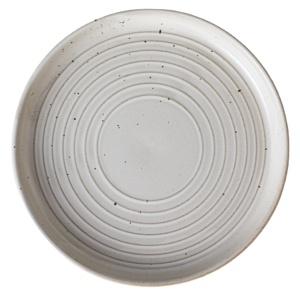
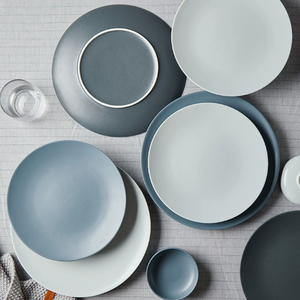
The global commercial serveware market is undergoing a structural transition. Sourcing directors, retail category managers, and hospitality procurement executives no longer evaluate serving platters manufacturers solely on unit price. Instead, evaluation models incorporate structural material durability, glaze chemistry safety, thermal shock threshold ($\Delta T \ge 180^\circ\text{C}$), factory ESG compliance, and long-term reorder continuity. Serving platters—whether manufactured from high-density vitrified stoneware, porcelain, or tempered borosilicate glass—serve as the centerpiece for food presentation in both commercial HoReCa (Hotel, Restaurant, Catering) environments and premium retail collections.
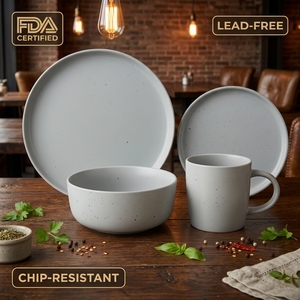
To achieve competitive advantage in private-label development, sourcing managers must understand the physical and chemical parameters governing ceramic body integrity. Earthenware, fired at lower temperatures ($900^\circ\text{C} - 1050^\circ\text{C}$), exhibits high porosity ($>5\%$), rendering it prone to mechanical chipping, moisture absorption, and glaze crazing under industrial dishwasher cycles. Conversely, true vitrified stoneware—pioneered by top-tier European clusters such as Mortágua, Portugal—is fired at extreme temperatures between $1180^\circ\text{C}$ and $1280^\circ\text{C}$. This intense thermal process yields a non-porous body with a water absorption rate under $0.5\%$, meeting stringent international food service standards including FDA, EU Regulation No 1935/2004, and LFGB food-contact compliance.
Evaluating global production capabilities requires benchmarking manufacturing hubs by raw material purity, technological infrastructure, glaze development capabilities, and OEM flexibility. Below is an analytical review of the leading global manufacturers and manufacturing clusters specializing in commercial serving platters and tableware.
Location: Mortágua, Central Portugal
Specialization: Private Label & OEM Vitrified Stoneware
Key Edge: Established in 1993, Cerages operates an integrated facility housing in-house plaster mould fabrication, a proprietary glaze laboratory with 1,300+ reactive and solid glaze recipes, and ISO 9001:2015 certified kilns. Cerages specializes exclusively in B2B contract manufacturing with zero direct-to-consumer brand conflict.
Location: Stoke-on-Trent, United Kingdom
Specialization: Vitrified Hospitality Dinnerware & Serving Platters
Key Edge: Renowned for high mechanical strength and edge-chip guarantees. Focuses heavily on heavy-duty vitrified body formulations designed for high-turnover dining establishments across Europe and North America.
Location: Mettlach, Germany
Specialization: Premium Porcelain & Fine China Platters
Key Edge: A legacy brand with over two centuries of ceramic expertise. Offers luxury porcelain options for fine dining, utilizing automated pressure casting and high-clarity glaze finishes.
Location: Selb, Bavaria, Germany
Specialization: Designer Porcelain & Avant-Garde Serveware
Key Edge: Collaborates with world-renowned designers to develop avant-garde, geometric serving trays and charger plates for luxury hotels and retail flagship collections.
Location: Saint-Uze, France
Specialization: Culinary Porcelain & Oven-to-Table Platters
Key Edge: Specializes in non-porous black clay bodies and oven-safe serving dishes capable of resisting extreme thermal gradients from freezer to $300^\circ\text{C}$ baking environments.
Location: Ras Al Khaimah, United Arab Emirates
Specialization: Mass-Scale Commercial Hospitality Porcelain
Key Edge: Operates massive modern tunnel kilns delivering high-volume output. Known for high mechanical resistance, bright white porcelain bodies, and scratch-resistant glaze compositions.
Location: Jiangxi Province, China
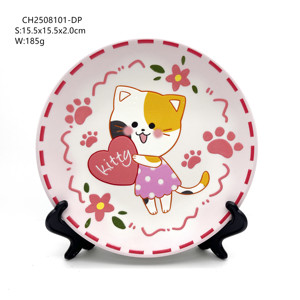
Specialization: High-Volume Sublimation & Decal Ceramic Platters
Key Edge: The world's largest industrial ceramic cluster. Offers massive production capacity for promotional tableware, 3D UV printing, and budget-friendly sublimation-coated serving platters.
Location: Belgium & Global Partner Network
Specialization: Eco-Conscious Retail & Catering Serveware
Key Edge: Focuses on sustainable tabletop solutions, merging organic natural earth-tone ceramics with lightweight modular serving tray systems for catering operations.
Location: Fidenza, Italy
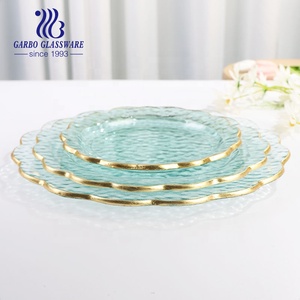
Specialization: Tempered Opal Glass & Gold-Rimmed Trays
Key Edge: Leaders in glassware innovation, producing thermal-shock resistant glass chargers, rimmed serving platters, and decorative glass tableware utilizing centrifugal glass moulding.
Location: Kütahya, Turkey
Specialization: Industrial Hard Porcelain & Buffet Platters
Key Edge: Massive automated fast-firing roller kilns producing robust, cost-effective porcelain dinnerware and large-format rectangular serving platters for international hotel chains.
Selecting the correct serving platter material involves balancing mechanical impact resistance, thermal performance, glaze stability, and weight considerations. Below is an engineering comparison matrix for B2B buyers evaluating serveware materials.
| Performance Parameter | Vitrified Stoneware (Cerages Spec) | Commercial Porcelain | Earthenware / Terracotta | Tempered Glass / Opal |
|---|---|---|---|---|
| Firing Temperature | 1180°C – 1280°C | 1300°C – 1400°C | 900°C – 1050°C | Formed at ~1000°C (Glass) |
| Water Absorption (Porosity) | < 0.5% (Vitrified) | < 0.1% (Fully Vitrified) | > 5.0% (Porous Body) | 0.0% (Non-porous) |
| Thermal Shock ($\Delta T$) | Up to 200°C Gradient | 150°C – 180°C | Poor (< 100°C) | 130°C – 150°C |
| Dishwasher Safety (BS EN 12875) | 1500+ Industrial Cycles | 2000+ Industrial Cycles | Fails (< 200 Cycles) | 1000+ Cycles (Gold risk) |
| Glaze Surface Options | 1,300+ Reactive, Matte, Satin | Mostly Glossy White / Solid | Soft Glaze (Prone to Crazing) | Smooth / Gold Decal / Printed |
| Oven-to-Table Capability | Excellent (Bakers & Platters) | Moderate (Requires thick body) | Not Recommended | Oven-safe if Borosilicate |
Headquartered in the industrial heartland of Mortágua, Portugal, Cerages SA has established itself since 1993 as Europe's premier contract manufacturer for private-label stoneware ovenware and tableware. Operating on an exclusive 100% OEM/ODM business model, Cerages eliminates brand conflict—guaranteeing that every mould design, glaze formulation, and custom base backstamp remains the protected intellectual property of our global B2B clients.
With a master glaze library holding over 1,300 proprietary formulas (including rich artisanal reactive finishes, raw matte cement textures, and ultra-durable solid gloss glazes), our in-house ceramic engineers transform client sketches, CAD 3D models, or target sample references into market-ready retail and hospitality collections in record timeframes.
As global retail brands and hospitality chains update their procurement parameters, serving platter design and production technology are undergoing rapid evolution. Key macro trends shaping the next decade include:
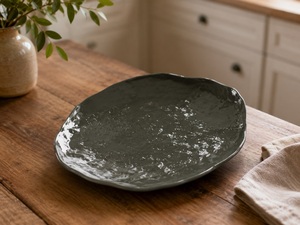
Hospitality clients demand the organic, hand-crafted appearance of small-batch studio pottery combined with factory-level dimensional consistency and stackability. Controlled reactive glaze application methods allow factories to yield organic, multi-tonal color shifts (such as slate grey, forest green, and ocean blue) where no two pieces are identical, yet every platter maintains exact rim tolerances for commercial stacking.
Labor shortages in commercial kitchens have driven high demand for multi-functional ceramic serveware. Serving platters engineered from high-density vitrified stoneware perform seamlessly as roasting pans and baking dishes at temperatures up to $250^\circ\text{C}$, transitioning directly from kitchen ovens to front-of-house dining presentation without cracking or thermal stress failure.
European Union regulations, such as the Corporate Sustainability Due Diligence Directive (CSDDD) and the Green Claims Directive, require brands to audit factory carbon footprints. Leading Portuguese stoneware facilities lead this transition by recovering 100% of waste kiln heat to pre-dry raw clay pieces, recycling unfired clay slips, and filtering wastewater, drastically cutting energy consumption per manufactured unit.
Connect directly with our engineering and design team in Mortágua, Portugal. Receive customized technical consultation, shape feasibility assessments, and access to our comprehensive 1,300+ glaze library.