
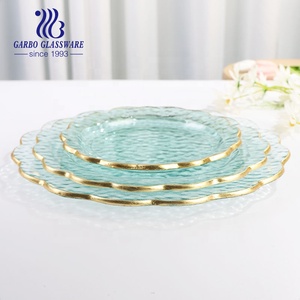
Factory-direct commercial grade tableware engineered for high thermal shock resistance, zero porosity, and superior edge durability in heavy hospitality environments.
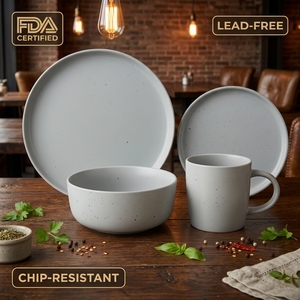
Selecting the right restaurant crockery manufacturer requires evaluating strict ceramic physics parameters, kiln thermal profiling capabilities, body composition standards, and continuous compliance under heavy-use HoReCa conditions.
In modern commercial hospitality, restaurant crockery is subjected to rigorous operational stress: commercial dishwashers performing hundreds of thermal shock cycles per day, high-velocity plating environments, thermal gradients in heat pass units, and abrasive handling during service. Standard consumer earthenware or low-temperature ceramics quickly exhibit micro-crazing, glaze scratching, structural cracking, and rim chipping. To eliminate replacement overhead and ensure compliance with global hygiene standards, procurement directors must evaluate manufacturers based on fully vitrified stoneware body formulations and high-strength glazed ceramic technology.
Vitrification occurs when clay bodies are fired at intense thermal curves exceeding 1250°C (2282°F), causing silica components to melt and fill every interstitial void within the ceramic matrix. The result is a non-porous body with a water absorption rate under 0.5%, preventing water ingress, bacterial absorption, and thermal degradation over years of service.
Below is a comparative technical analysis of the top global crockery manufacturing leaders, detailing their production specs, material specializations, and contract manufacturing capabilities for commercial procurement teams.
| Manufacturer / Hub | Primary Location | Core Material Expertise | Thermal Shock Rating | Custom OEM/Private Label Support |
|---|---|---|---|---|
| Cerages SA | Mortágua, Portugal | Vitrified Stoneware & Ovenware | Up to 250°C Delta T | 100% Private Label Focus |
| Churchill China PLC | Stoke-on-Trent, UK | Alumina Vitrified Body | High Thermal Tolerance | Standard Catalog / Select OEM |
| Steelite International | Stoke-on-Trent, UK / USA | Alumina Vitrified Ceramic | Industrial Dishwasher Safe | Catalog Distribution Focus |
| Villeroy & Boch AG | Mettlach, Germany | Premium Porcelain & Bone China | High Scratch Resistance | Luxury Custom Branding |
| Rosenthal Hotel & Restaurant | Selb, Germany | Hard Porcelain & Fine Dining Ceramics | High Mechanical Strength | Bespoke Fine Dining Lines |
| Schönwald (BHS Tabletop) | Selb, Germany | Duracream & Hard Porcelain | High Impact Resistance | Commercial Hotel Sourcing |
| Rak Porcelain | Ras Al Khaimah, UAE | High-Density Porcelain | Oven & Microwave Safe | Global Hotel Supply Chain |
| Revol Porcelaine | Saint-Uze, France | Culinary Black Porcelain & Slate | Oven-to-Table Rated | Artisanal Contract Lines |
| Bauscher Commercial | Erkerreuth, Germany | High-Fired Commercial Porcelain | Extreme Edge Durability | Mass Hospitality Solutions |
| Chaozhou Ceramic Cluster | Guangdong, China | Mass Stoneware & UV Printed Ceramic | Standard Hospitality Grade | High-Volume OEM Manufacturing |
Portugal and Germany lead the world in sustainable stoneware and hard porcelain production. Factories in regions like Mortágua (Portugal) leverage centuries of ceramic tradition alongside automated tunnel kilns, guaranteeing tight dimensional tolerances and superior glaze clarity.
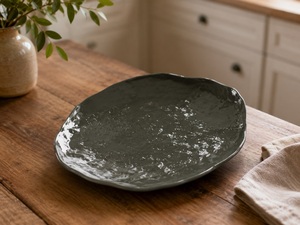
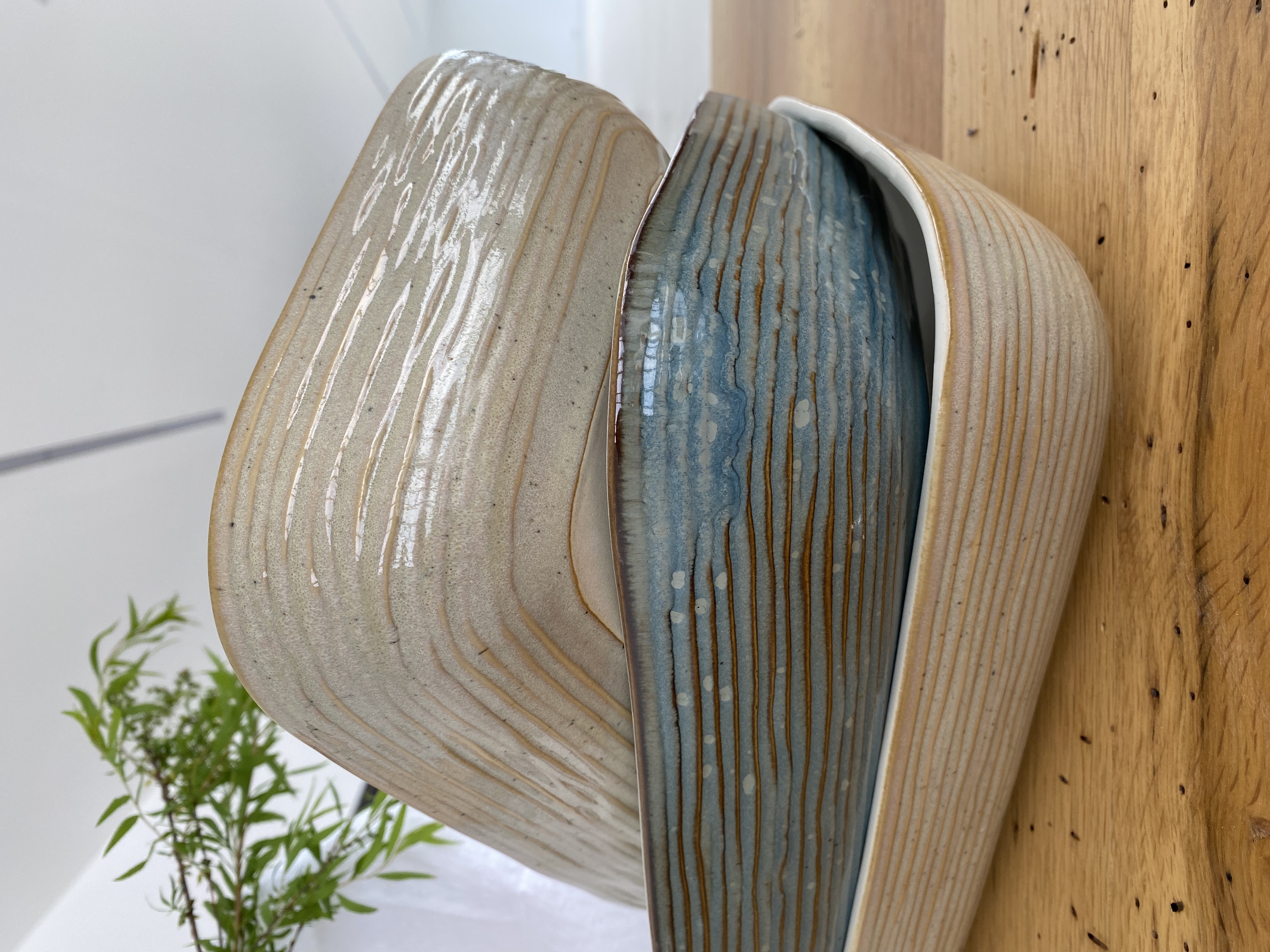
Modern dining concepts demand organic, handcrafted aesthetics without sacrificing commercial durability. Advanced chemical labs enable over 1,300 reactive glaze formulations where minerals crystallize naturally during firing, rendering every single plate visually unique yet structurally identical.
A primary driver of crockery replacement cost is edge damage. Leading factories utilize high-density clay formulas enriched with alumina, coupled with reinforced rim profiles, drastically increasing mechanical impact resistance under heavy commercial dishwasher loading.
As sustainability directives tighten globally and restaurant brand identity becomes paramount, crockery manufacturing is shifting rapidly toward closed-loop production, zero-toxic glaze chemistry, and custom OEM private labelling.
Environmental management standards (such as ISO 14001) are moving from optional credentials to mandatory sourcing prerequisites. Forward-thinking factories recover 100% of unfired clay waste back into the raw slip, purify and recirculate process water, and utilize heat-recovery systems from tunnel kilns to preheat drying chambers, cutting carbon intensity per unit produced by up to 35%.
Generic catalog tableware is rapidly losing market share to custom private label lines. Chain restaurants and luxury hotel groups require bespoke backstamps permanently vitrified into the base of each piece. This ensures brand authenticity, origin verification, and seamless batch traceability for multi-property replenishment contracts.
Modern culinary workflows favor dishes that transition directly from prep and oven baking (-20°C to +250°C) to front-of-house table presentation. Stoneware formulations engineered for extreme thermal fatigue resistance reduce kitchen pass handling steps, maintain food heat retention, and streamline washing overhead.
Stringent food safety regulations (FDA 21 CFR 175.300 and EU Directive 84/500/EEC) demand absolute chemical stability in glazes. Advanced laboratory testing ensures heavy metals cannot leach into acidic culinary ingredients (lemon juice, tomatoes, sauces), even under prolonged contact at high serving temperatures.
Operating from the industrial ceramic heartland of Mortágua, Portugal since 1993, Cerages SA is an ISO 9001:2015 certified manufacturer specializing exclusively in private label and OEM stoneware tableware and ovenware solutions.
Unlike traditional distributors operating from standard catalogs, Cerages operates entirely around client-driven engineering. Featuring an in-house mould shop, advanced glaze laboratory with over 1,300 documented formulations, and state-of-the-art firing technology, Cerages handles the complete product lifecycle under one roof—from initial 3D sketch and sample development to high-volume container shipments.
Key technical considerations for hotel purchasing managers, restaurant group directors, and commercial ceramic distributors.
Stoneware is crafted from dense clay bodies fired between 1200°C and 1300°C, yielding high thermal shock resistance, rich organic glazes, and robust mechanical weight ideal for contemporary dining and oven-to-table applications. Porcelain is fired at slightly higher temperatures (1300°C–1400°C) with kaolin-heavy clays, producing translucent white bodies. High-fired vitrified stoneware offers comparable non-porous performance with vastly broader options for organic reactive glazing.
Custom backstamps are applied prior to final firing or fused into the glaze via high-temperature decal firing (800°C–1250°C). This locks the brand logo, origin text, or batch number beneath or within the vitrified glaze layer, making it completely immune to harsh detergent chemical etching, high water pressure, and mechanical abrasion.
Because commercial stoneware manufacturing involves specialized mould production, glaze formulation balancing, and dedicated kiln tunnel scheduling, typical MOQs range from 500 to 1,500 units per shape/glaze variation. For large hotel groups or established private label brands, full container load (FCL) orders optimize freight efficiency and unit production economics.
Yes. When formulated by professional ceramic laboratories, reactive glazes undergo rigorous chemical bonding during high-temperature firing. They are fully vitrified, non-porous, 100% lead and cadmium-free, and thoroughly compliant with European Regulation (EC) No 1935/2004 and U.S. FDA food contact standards.
Thermal shock failure happens when rapid temperature shifts cause differential expansion between the surface glaze and internal clay body. Commercial vitrified stoneware features engineered low coefficients of thermal expansion (CTE), allowing dishes to transition safely from refrigeration straight into high-heat ovens or salamanders without structural failure.
Consult directly with our ceramic engineering and design laboratory in Mortágua, Portugal. Receive tailored technical proposals, custom glaze samples, and complete OEM pricing for your commercial collection.
Contact Us