Engineered for high-volume wholesale, hospitality durability, and custom private-label specifications.
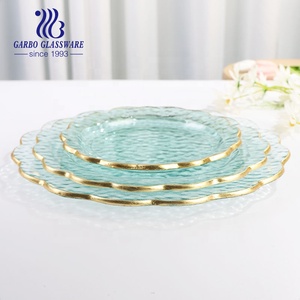
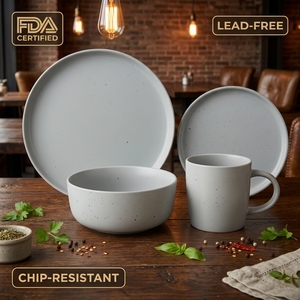
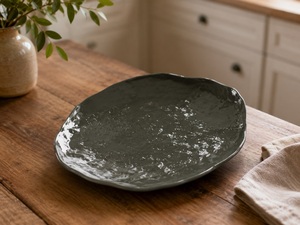
The global ceramic dinnerware and ovenware market is undergoing a structural realignment. Supply chain vulnerability, carbon-border tariffs, and shifting consumer preferences toward artisan aesthetics have transformed Portugal into the premier B2B manufacturing hub for European and North American brands. Renowned for its rich geological deposits of kaolin, feldspar, and silica, Portugal combines century-old potting traditions with state-of-the-art continuous tunnel kilns and robotic dipping arms.
This industrial guide presents a rigorous evaluation of the top 10 Portuguese stoneware factories, analyzing key selection criteria including high-temperature vitrification capabilities, chemical safety compliance (EU Regulation EC 1935/2004, US FDA compliance), thermal shock resistance thresholds, and custom OEM development timelines. Whether you are an procurement executive for a global hotel chain, an importer building a private-label retail collection, or a lifestyle designer developing signature reactive glazes, understanding the operational landscape in industrial hubs like Mortágua, Aveiro, and Caldas da Rainha is critical to securing long-term operational advantages.
"Stoneware produced in central Portugal, particularly in specialized clusters like Mortágua, achieves vitrification at temperatures exceeding 1180°C to 1280°C. This converts raw clay into a non-porous, stone-like dense body capable of withstanding severe commercial dishwashing and high-degree thermal shifts."
At the center of Portugal's stoneware excellence sits Cerages, SA, located in the Industrial Park of Mortágua. Established in 1993, Cerages has operated exclusively as an OEM and private-label manufacturer, avoiding direct consumer-facing brand conflict. This single-minded focus on white-label partnership makes it an ideal model for assessing the capabilities of top-tier Portuguese ceramic factories.
Over 1,300 proprietary glaze formulas maintained in-house. Capable of developing custom pantone matches, stable matte textures, and complex multi-layered reactive glazes under strict batch-to-batch colorimetric controls.
Fully audited manufacturing line with rigorous dimensional checking, acoustic vitrification testing, and automated stress testing to ensure micro-crack prevention before packaging.
End-to-end prototype tooling, custom backstamp engraving directly into master plaster moulds, bespoke packaging configurations, and retail-ready barcode compliance.
Sourcing directors must evaluate the structural physics of ceramic bodies before placing bulk purchase orders. Portuguese stoneware represents the optimal equilibrium between mechanical durability, thermal versatility, and artistic glaze expression.
Unlike earthenware, which is fired at lower temperatures (900°C–1050°C) and remains porous requiring a surface glaze to prevent water absorption, Portuguese stoneware undergoes high-temperature vitrification (1180°C–1280°C). During firing, the body fusion reduces water absorption to under 0.5%. This makes Portuguese stoneware inherently freezer-to-oven, microwave, and commercial dishwasher safe.
When auditing prospective manufacturing partners in Portugal, global procurement teams evaluate five core operational pillars:
Leading factories maintain dedicated master molders capable of translating 3D CAD models or hand sketches into plaster working moulds within 10–14 working days, drastically accelerating sample sign-off cycles.
Heavy metals such as Lead (Pb) and Cadmium (Cd) must be non-detectable under leaching tests. Top Portuguese suppliers perform continuous XRF analysis and third-party laboratory audits for LFGB, FDA, and California Proposition 65 compliance.
For commercial roasting pans, baker dishes, and food-service plates, ceramics must endure sudden temperature gradients (ΔT ≥ 180°C to 220°C) without micro-crazing or structural fracture.
Hospitality buyers require standardized rim geometry and foot profiles that prevent glaze scratching during transport and maximize storage density in restaurant pass-throughs.
As the international ceramic market evolves, Portuguese stoneware factories are pioneering several critical advancements that dictate future B2B purchasing decisions:
Global logistics volatile ocean freight rates and long lead times have driven North American and European distributors toward Portuguese nearshoring. Lead times from Portugal to Western Europe average 3-5 days by road freight, compared to 35-45 days by sea from Asia, granting brands unprecedented inventory elasticity.
Environmental standards are reshaping factory operations. Leading Portuguese facilities have integrated heat recovery loops from kilns to clay drying chambers, installed solar photovoltaic arrays across factory roofs, and formulated eco-stoneware bodies containing up to 40% recycled unfired clay scrap and water reclamation sludge.
Modern consumers actively reject uniform, plastic-looking mass production. The procurement trend favors handcrafted organic edges, dual-tone reactive glazes, matte cement finishes, and exposed raw clay rims that offer tactile authenticity while maintaining commercial dishwasher durability.
Yes. Top Portuguese stoneware producers like Cerages operate predominantly on a private-label basis. Branding, logos, origin marks, and SKU codes can be permanently debossed directly into the clay base via plaster master moulds or applied via ceramic decals prior to final firing.
Standard factory MOQs generally range from 500 to 1,500 pieces per shape/color, depending on body weight, dimensions, and glaze complexity. Flexible production lines can accommodate lower trial quantities for strategic hospitality or premium retail launches.
Stoneware's high firing temperature (above 1180°C) fully vitrifies the clay matrix, yielding a dense, non-porous structure with high mechanical strength and exceptional thermal shock tolerance. Earthenware remains porous and prone to moisture absorption, crazing, and cracking under oven heat.
Factories receive physical samples, Pantone references, or digital renderings. In-house glaze technicians match color standards, evaluate thermal expansion co-efficients between glaze and clay body, and supply physical master samples for customer approval within 2 to 3 weeks.
Absolutely. High-grade Portuguese stoneware complies with stringent European Union Directive 84/500/EEC, EC Regulation 1935/2004, US FDA compliance, and California Proposition 65 standards, guaranteeing zero lead or cadmium leaching.
Discuss your private-label collection, request technical glazes samples, or submit your project drawings directly to our engineering team in Mortágua.
Inquire Now