Engineered for high-volume commercial hospitality, luxury retail brands, and global private label distributors. Fully customizable in body clay formulation, glaze aesthetics, and branded backstamps.
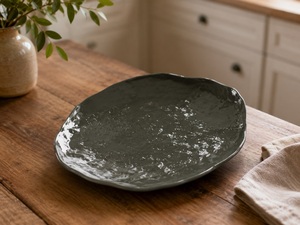
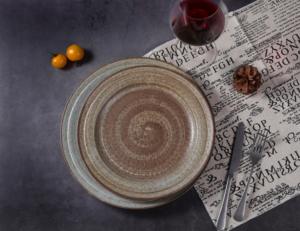
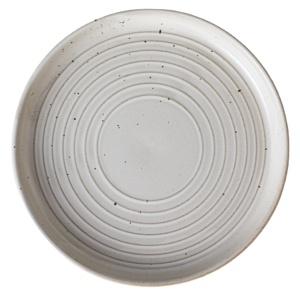
Understanding the material physics, thermal shock resilience, and chemical stability parameters required for tier-1 international retail brands and commercial hospitality procurement.
In global B2B ceramic procurement, selecting the correct ceramic matrix defines product lifespan, operational failure rates, and brand reputation. Stoneware occupies a premier strategic middle ground—offering the structural density and non-porous vitrification of porcelain combined with superior thermal mass retaining properties and rich organic glaze versatility.
Our industrial facilities in Mortágua, Portugal, utilize proprietary clay blends composed of refined secondary kaolin, quartz grains, and fluxing feldspars. When kiln-fired through precise atmospheric reduction curves between 1250°C and 1300°C (2282°F – 2372°F), the ceramic body undergoes near-complete mullite phase transformation and glass phase matrix fusion.
| Performance Metric | Earthenware (Low-Fired) | Industrial Stoneware (Our Standard) | Hard Commercial Porcelain |
|---|---|---|---|
| Firing Temperature Range | 950°C – 1100°C | 1250°C – 1300°C (High Vitrification) | 1350°C – 1400°C |
| Water Absorption Rate | 5.0% – 12.0% (Porous body) | < 0.5% (Vitrified / Hydrophobic) | < 0.1% (Glassy body) |
| Thermal Shock Resistance (ΔT) | Moderate (100°C – 120°C) | High (180°C – 250°C Gradient) | High (Requires high COE control) |
| Mechanical Chipping Resistance | Low (Prone to rim fracturing) | Superior (Elasticity-Density Balance) | High Density (Can be brittle on edges) |
| Glaze Depth & Reactive Potential | Flat, low-temperature glazes | Extensive (1,300+ Reactive Mineral Options) | Predominantly Mono-Tone / White Glazes |
| Commercial Dishwasher Cycle Life | < 100 cycles before crazing | 500+ Industrial Cycles (BS EN 12875-1) | 1000+ Industrial Cycles |
Because our fired stoneware body achieves an ultra-low water absorption rate of strictly below 0.5%, moisture is chemically prevented from penetrating the underlying ceramic core. This eliminates the root cause of glaze crazing, bacterial retention, and cracking caused by localized steam expansion during commercial microwave and high-temperature dishwashing cycles.
Glaze formulation is where aesthetic design meets chemical durability. Our factory maintains an internal library containing over 1,300 proprietary glaze formulations, encompassing silk mattes, high-gloss vitrics, tactile textured finishes, and metallic mineral glazes.
From initial design concept rendering to production-ready plaster working moulds, our in-house mould workshop reduces private label development lead times from months to weeks.
Key market vectors driving B2B procurement decisions for global hospitality chains, retail buyers, and private label brand managers.
Global brand owners and EU/North American retail buyers are under escalating ESG mandate pressure to audit supply chain Scope 3 carbon emissions. Modern ceramic procurement prioritizes manufacturing facilities that implement closed-loop resource recovery systems.
Our OEM operations incorporate 100% internal raw clay waste recycling prior to firing, zero-wastewater discharge filter pressing, and heat-exchanger recovering technology that harvests excess heat from cooling kilns to supply energy for greenware drying chambers. This circular model reduces embodied energy per piece while lowering production costs.
Commercial kitchens are streamlining equipment footprints and dishware inventories. Sourcing specifications increasingly demand versatile stoneware collections capable of moving seamlessly from cold storage (-20°C freezer environments) directly into high-heat convection ovens (+250°C roasting cycles) and immediately to guest tables.
This operational trend mandates high thermal shock endurance, structural thermal retention to keep served food hot, and food-grade non-stick glazed surfaces that reduce chemical usage during back-of-house warewashing.
Consumer preferences have shifted dramatically away from sterile, flat-white porcelain towards organic, tactile, and natural aesthetic narratives. Matte textures, cement-look finishes, raw exposed ceramic bases, and earth-toned reactive glazes dominate contemporary dining experiences.
The core B2B challenge is scaling these handcrafted aesthetics without incurring high rejection rates. Our factory solves this by combining automated body forming (roller-head jiggering and pressure casting) with proprietary mineral glazes that yield organic visual depth while preserving strict stackability tolerances.
Geopolitical volatility, rising transoceanic freight costs, and unpredictable shipping delays have exposed the risks of over-concentrated Asian sourcing routes. Sourcing directors are actively diversifying production by partnering with established European manufacturing hubs.
Operating out of Mortágua, Portugal, our factory provides international buyers with shorter transit lead times to European and North American ports, transparent labor compliance under EU regulations, stable energy infrastructure, and zero risk of sudden tariff shocks.
A rigorous five-stage manufacturing framework engineered to deliver absolute sample fidelity, consistent bulk quality, and on-time shipment.
Evaluation of client 2D/3D files, target wall thickness, stacking geometry, capacity requirements, and fired shrinkage calculation (typically 10-14%).
CNC machining of master models, plaster working mold casting, laboratory glaze matching against Pantone standards or physical control samples.
Physical sample firing. Full suite testing including dimensional verification, thermal shock cycling, rim impact tests, and backstamp inspection.
Automated shaping, controlled drying cycles, glaze application via dipping/spraying, and high-temperature tunnel kiln firing at 1280°C.
100% visual and acoustic rim inspection, ISTA-compliant e-commerce/retail drop testing, custom barcoding, and container loading.
Direct technical answers to common inquiries raised by retail buyers, hotel supply managers, and global procurement officers.
Yes. We operate predominantly as an OEM/ODM contract manufacturer. We do not compete with our customers in retail channels. All shapes, specialized glazes, retail packaging artwork, and underglaze backstamps stamped onto the base of each piece are manufactured under strict non-disclosure agreements (NDAs) to build and protect your proprietary brand identity.
Our stoneware body formulations and glazes are continuously lab-tested and verified compliant with global food contact directives. This includes US FDA 21 CFR 175.300, California Proposition 65 (Lead & Cadmium leaching limits), European Union Regulation (EC) No 1935/2004, and German LFGB standards. Detailed compliance documentation is provided per shipment batch.
Because our stoneware is fired at high temperatures (1250°C – 1300°C) until vitrified (<0.5% absorption), it absorbs no moisture during washing cycles. It exceeds the requirements of BS EN 12875-1 for commercial warewashing durability (withstanding over 500 intensive high-alkaline industrial dishwashing cycles without surface hazing) and is 100% safe for high-wattage microwave heating.
Absolutely. In addition to our existing library of 1,300+ glazes, our in-house ceramic chemistry lab formulates custom glazes based on physical reference samples, ceramic swatches, or target Pantone color numbers. We match solid tones, semi-transparent glosses, satin mattes, and multi-layered reactive glazes.
MOQs depend on item dimensions and shaping method. Generally, standard dinnerware items (plates, bowls, mugs) require an MOQ of 1,000 to 2,500 pieces per shape/color. For larger specialized bakeware or complex serving platters, MOQs start at 500 pieces. Flexible batching can be arranged when ordering complete multi-piece collection sets.
Standard lead times are: 2D/3D design and technical drawing approval (3–5 working days); master mold and sample firing (2 to 3 weeks); mass production upon sample sign-off (4 to 6 weeks, depending on total volume and kiln schedule loading).
Edge chipping is minimized through targeted mechanical design and body formulation. We engineer rolled or reinforced rim geometry on high-wear dinnerware items. Furthermore, high-temperature vitrification binds the ceramic core into a crystalline mullite network, imparting elasticity and impact energy dissipation superior to low-fired ceramics.
Consult with our ceramic engineering team in Mortágua, Portugal. Receive detailed technical guidance, glaze samples, custom mold quotes, and complete product catalogs tailored to your market specifications.