
Serveware
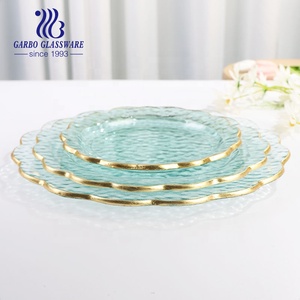
Engineered for high thermal durability, food safety compliance, and bespoke aesthetic finishes for tier-1 global importers.
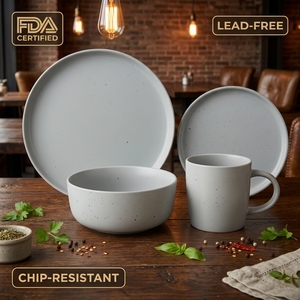
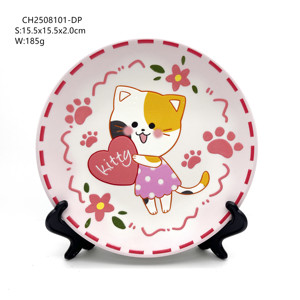
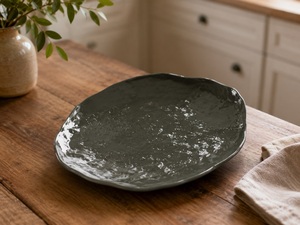
Combining heritage craftsmanship from Mortágua, Portugal with rigorous ISO 9001:2015 quality management systems.
We translate 2D CAD drawings, 3D renderings, and physical samples into precise plaster production molds. Our integrated tooling shop ensures swift rapid-prototyping cycles (7–14 days) while retaining exact volumetric capacities across mass production runs.
Our dedicated glaze research laboratory holds over 1,300 developed formulations including reactive glazes, matte cement finishes, high-gloss crystalline coatings, and scratch-resistant commercial coatings. Custom Pantone and RAL matching are conducted in-house.
Fired at high kiln temperatures exceeding 1250°C, our stoneware bodies achieve a dense ceramic structure with water absorption rates below 0.5%. This ensures exceptional resistance to thermal shock, enabling seamless freezer-to-oven-to-table functionality without micro-cracking.
We provide comprehensive private label customization. From deep laser-engraved mould backstamps to underglaze decal transfers and metallic foil stamping, your brand identity, country of origin, and care instructions become a permanent part of the product.
All raw materials and glazes are 100% lead-free, cadmium-free, and non-toxic. Our products strictly comply with FDA food-contact standards, EU Regulation 1935/2004, LFGB, and California Proposition 65. Our plant features zero-wastewater discharge and heat recycling loops.
To support modern omnichannel distribution—including e-commerce drop-shipping and bulk container freight—we offer customized, drop-test certified ISTA-3A packaging, recyclable corrugated boxes, molded pulp inserts, and retail-ready color boxes.
Understanding physical properties to make optimized procurement decisions for high-volume retail and commercial foodservice environments.
| Material Metric | High-Fired Stoneware (Our Standard) | Standard Porcelain | Commercial Earthenware |
|---|---|---|---|
| Firing Temperature | 1200°C – 1280°C | 1300°C – 1400°C | 1000°C – 1150°C |
| Body Water Absorption | < 0.5% (Vitrified) | < 0.1% (Vitrified) | 5.0% – 12.0% (Porous) |
| Thermal Shock Resistance | High (Up to 250°C Delta) | Moderate to High | Low (Prone to crazing) |
| Mechanical Chip Resistance | Exceptional Edge Strength | High (Brittle on impact) | Low (Easily chipped) |
| Aesthetic Versatility | Reactive, Matte & Textured Glazes | Monochromatic / Smooth Glazes | Bright painted, low-fire glazes |
| Commercial Dishwasher / Oven | 100% Safe (Heavy Duty) | Safe | Limited lifespan |
| Cost-to-Performance Ratio | Optimal for Retail & Hospitality | Premium / High Unit Cost | Low Initial / High Replacement |
As consumer lifestyle habits shift toward home cooking, host entertainment, and sustainability, product developers and procurement directors must align their supply chains with evolving market dynamics. Our strategic research highlights key trends driving purchasing decisions through 2030.
Modern urban households seek space-efficient cookware that eliminates the need for transferring food between cooking vessels and serving dishes. Stoneware roasting pans, baking dishes, and pie pans featuring refined tactile glazes allow home chefs to bake at 220°C and present directly on the dining table, saving cleanup time while enhancing table presentation.
Uniform, mass-produced ceramic finishes are increasingly giving way to artisanal, hand-crafted aesthetics. Reactive glazes—where metal oxides react within the kiln during high-temperature firing—create unique color gradients, speckled textures, and subtle rim variations. Every piece feels custom-made, providing high visual gain for premium retail catalogs.
European and North American retailers now enforce stringent ESG parameters across their overseas supplier networks. Factories capable of recycling unfired clay scrap, filtering and re-using process water, and reducing kiln carbon emissions through heat recovery systems offer a clear competitive advantage during vendor audits.
With hospitality operators facing rising labor costs and frequent dishwashing cycles, commercial stoneware must feature reinforced rolled rims, stackable bases, and high resistance to glaze abrasion. Private label brands catering to hotels and restaurants require certified scratch resistance to withstand commercial cutlery abuse.
The global ceramic manufacturing landscape has undergone a major transformation over the past decade. Traditional manual methods have evolved into highly automated, data-driven production environments that maximize yield while drastically lowering defective rates.
Our research and development team actively refines the chemical ratios of ball clay, kaolin, quartz, and feldspar in our clay formulations. By precisely balancing fluxing agents, we achieve complete body vitrification at optimal kiln firing curves. This structural density prevents liquid absorption, eliminating odors, bacteria harboring, and moisture-induced cracking under microwave excitation.
For complex hollowware, deep roasting pans, and ergonomic handles, our facility utilizes modern hydraulic pressure casting machines. Liquid clay slip is injected under high pressure into porous resin molds, reducing cycle times from hours to minutes while ensuring uniform wall thickness across every batch. This consistency is essential for even heat distribution during roasting and baking.
Achieving shade consistency across multi-thousand unit orders requires precise atmosphere control. Our computer-monitored tunnel kilns adjust oxygen levels and temperature zones dynamically. Coupled with digital spectrophotometers, our lab technicians verify color consistency within ΔE < 0.8 tolerance standards between initial samples and repeat production runs.
From initial design consultation to final landed container delivery, our structured project management lifecycle guarantees smooth execution for brand managers, product developers, and global sourcing agencies.
Our engineering team reviews your design concepts, CAD models, or physical samples. We evaluate key structural parameters—such as kiln shrinkage factors (typically 10–12%), weight distribution, rim reinforcement, and thermal expansion compatibility—to prevent warping and failure.
Within 10 to 14 days, we engineer prototype plaster molds and fire sample pieces featuring your chosen glaze, color scheme, and custom backstamp. Master samples are dispatched via express courier for client sign-off and lab testing verification.
Upon sample approval, production scales via automated shaping, robotic glaze dipping, and continuous tunnel kiln firing. In-line quality inspectors perform acoustic ping tests, dimension checking, visual surface audits, and rim strength verification on every batch.
Products are packed according to your specification: from multi-pack retail boxes with barcoding to bulk palletization for distribution centers. We handle export customs documentation, FOB/CIF shipping arrangements, and compliance certification support.
Clear, direct technical answers regarding minimum order quantities, lead times, safety compliance, and customization options.