Custom-manufactured high-temperature stoneware and tableware collections built to withstand rigorous commercial and retail requirements.
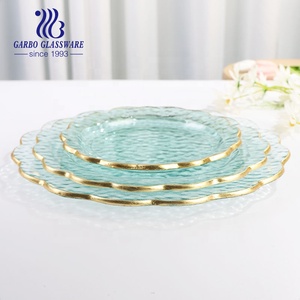
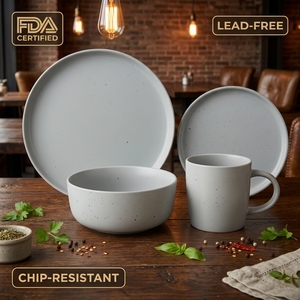
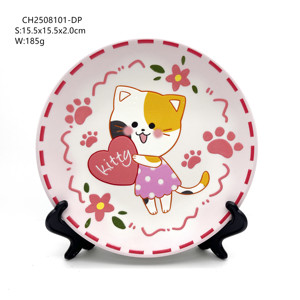
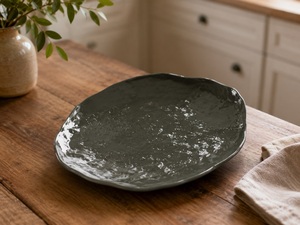
Decades of continuous R&D, high-temperature vitrification mastery, and private-label contract manufacturing.
In global B2B ceramic procurement, specifying the correct clay body and glaze matrix is paramount for durability, aesthetic consistency, and regulatory compliance. Unlike porous earthenware fired at lower temperature regimes (900°C–1050°C), professional-grade stoneware undergoes complete thermal vitrification at temperatures ranging from 1180°C to 1280°C (Pyrometric Cone Equivalent 5 to 9).
During this high-firing kiln cycle, the kaolin, feldspar, and quartz components within the clay matrix soften and fuse into a dense, semi-glassy structural lattice. The resulting ceramic body exhibits water absorption rates strictly under 0.5%, fulfilling international commercial standards for thermal shock endurance, mechanical mechanical impact resistance, and micro-crack prevention during automated commercial dishwashing cycles.
A crucial consideration for procurement managers importing to North America, Europe, and Oceania is food-contact security under stringent regulatory frameworks such as FDA 21 CFR 175.300, California Proposition 65, and EU Directive 84/500/EEC. Glaze formulations developed in our in-house laboratory utilize lead-free and cadmium-free frit bases, thoroughly melted into silicate structures during firing. This eliminates microscopic pinholes and guarantees zero toxic leaching, even under acidic testing conditions using 4% acetic acid immersion.
An engineering benchmark for B2B buyers evaluating clay body choices for retail lines, hospitality projects, and custom promotional items.
| Technical Characteristic | Earthenware | Commercial Glazed Stoneware | Porcelain |
|---|---|---|---|
| Firing Temperature (°C) | 900°C – 1050°C | 1180°C – 1280°C | 1250°C – 1400°C |
| Porosity / Water Absorption | High (5% – 12%) | Vitrified (< 0.5%) | Non-porous (< 0.1%) |
| Thermal Shock Tolerance | Low (Prone to crazing) | High (Oven-to-Table Safe) | Moderate to High |
| Chipping Resistance | Low | Superior Edge Strength | High (Rigid Body) |
| Glaze Depth & Artistry | Standard Gloss | Reactive, Matte & Textured | Smooth Monochromatic |
| Ideal Applications | Decorative Accentware | Hospitality & Premium Retail | Fine Dining & High-Volume Commercial |
Leveraging central European ceramic manufacturing traditions combined with state-of-the-art technological quality control systems.
Our database features over 1,300 proprietary glazes—ranging from satin matte, metallic sheen, to complex multi-layered reactive reactions. We formulate custom color matches against Pantone or physical swatches.
Every production batch undergoes strict dimensional check, thermal shock testing (freezer to oven thermal jump up to 220°C), rim impact analysis, and automated dishwasher degradation simulation.
Complete OEM customization: permanently fired backstamps, engraved logo moulds, specialized retail packaging, barcode printing, and customized display boxes ready for international logistics hubs.
We reclaim 100% of un-fired scrap clay, filter and recycle operational wastewater, and utilize heat-recovery kiln technology to reduce carbon intensity per ton of fired ceramic product.
Our rapid prototyping facility translates 2D sketches or 3D STEP/IGES CAD models into precision plaster moulds, ensuring exact volume, nesting capabilities, and ergonomic stackability for food services.
Shipping seamlessly to over 40 countries across Europe, North America, Middle East, and Asia. Experienced in handling multimodal shipping, customs compliance, and palletized drop-testing standards.
As the international housewares and commercial food service markets evolve, sourcing managers are adapting to shifting consumer demands, ecological regulations, and operational constraints. Key macro trends reshaping ceramic manufacturing include:
Modern consumers and high-end restaurant concepts are stepping away from sterile, flat monochromatic tableware. The market demand has surged toward reactive glaze ceramics—where metallic oxides (titanium, iron, cobalt, and copper) interact unpredictably inside the kiln to create handcrafted, organic surface variations. Sourcing teams are relying on advanced suppliers who can maintain industrial consistency in body density while delivering artisanal uniqueness on glaze surfaces.
With operational efficiency becoming vital for hospitality venues, servingware must serve double duty. The trend heavily favors dual-purpose stoneware capable of transitioning seamlessly from cold storage (-20°C) into convection ovens (+220°C) and straight to guest dining tables. Flat-bottom design engineering and reinforced rim profiles are being standardized to prevent thermal shock fractures and rim chipping.
Scope 3 carbon emission compliance is becoming mandatory for major global retailers and European hotel groups. Ceramics production is traditionally energy-intensive; therefore, global buyers are prioritizing suppliers operating with clean-energy kilns, localized raw clay sourcing, closed-loop water treatment systems, and 100% plastic-free pulp packaging solutions.
A structured, transparent engineering process turning your design concept into mass-produced certified ceramic inventory.
Technical evaluation of 2D/3D design files, capacity specs, target unit weight, stackability requirements, and glaze finish selection.
3D printing of master models, initial plaster mould production, and clay shrinkage calculation (typically 10%–14% during vitrification).
Custom chemical glaze blending to achieve target pantone colors, matte/glossy texture, or reactive optical effects with non-toxic frit compositions.
Physical sample firing and delivery for client verification, laboratory food-contact compliance testing, and backstamp inspection.
Automated pressing/jiggering shaping, automated dip/spray glazing, and continuous kiln firing under computer-regulated thermal profiles.
100% visual inspection, sound testing for hidden fractures, ISTA drop-tested packaging, and container consolidation for global shipment.
Crucial answers regarding order parameters, technical standards, factory capabilities, and customization options.
Connect directly with our engineering and technical glaze team in Mortágua to receive comprehensive product catalogs, custom quotation matrices, or physical material samples.
Get Catalog