
Engineering Excellence in Custom OEM Roasting Pans Manufacturing
In the high-stakes global cookware market, international retailers, department stores, and hospitality procurement agencies face a persistent challenge: sourcing custom roasting pans and ceramic ovenware that flawlessly combine high thermal shock resistance, non-toxic food-contact glaze compliance, structural durability, and distinctive design aesthetics. As a premier Custom OEM Roasting Pans Exporter, Cerages SA (operating from Mortágua, Portugal since 1993) has engineered a closed-loop ceramic manufacturing ecosystem dedicated exclusively to B2B private label production.
Unlike standard commercial earthenware or low-temperature ceramics that crack under severe oven-to-table heat differentials, high-fired vitrified stoneware roasting pans represent the pinnacle of culinary ceramics. Fired at controlled temperatures exceeding 1250°C, the raw clay body undergoes full vitrification, transforming into a non-porous, high-density matrix. This technical architecture ensures zero liquid absorption (water absorption rates < 0.5%), eliminating risks of microbial growth, flavor retention, or glaze crazing across repeated industrial dishwasher cycles and thermal shock transitions from freezer to high-heat convection ovens.
Information Gain Metric: Structural density and thermal expansion matching between the ceramic stoneware clay body and the inorganic surface glaze dictate an ovenware pan’s lifespan. Cerages’ laboratory formulates custom glazes with exact thermal expansion coefficients (CTE), preventing micro-fractures under rapid temperature shifts exceeding ΔT 220°C.
Material Engineering Benchmark: Stoneware OEM vs. Alternative Cookware Materials
When enterprise sourcing managers evaluate custom OEM roasting pan suppliers, selecting the correct substrate material determines both product positioning and operational return-on-investment. Below is an engineering comparison evaluating technical metrics across common B2B roasting pan materials:
| Performance Specification | Vitrified Stoneware (Cerages OEM) | Cast Iron / Enamelled Steel | Low-Tier Earthenware | Commercial Aluminum |
|---|---|---|---|---|
| Firing Temperature | 1250°C - 1280°C (High Vitrification) | N/A (Metals Melt / Enamelled ~800°C) | 900°C - 1050°C (Porous Body) | N/A (Metal Forming) |
| Thermal Shock Resilience (ΔT) | Superior (> 220°C Instant Delta) | Moderate (Prone to Enamel Chipping) | Poor (High Thermal Cracking Risk) | High (Subject to Warping) |
| Water Absorption Rate | < 0.5% (Hygienic & Dishwasher Safe) | 0.0% (Sub-metal Surface) | > 5.0% (Absorbs Moisture/Bacteria) | 0.0% |
| Glaze & Surface Chemistry | 1,300+ Reactive, Matt & Glossy Glazes | Synthetic Enamels / Seasoning Required | Basic Lead-Free Frits | PTFE/PFOA Coatings (Wears Off) |
| Custom Brand Personalization | Deep Mould Embossing & Underglaze Stamps | Laser Etch / Cast Lettering (High MOQ) | Surface Decals | Stamped Metal Logos |
| Food Safety Compliance | FDA, LFGB, EU 1935/2004 Certified | Varies by Enamel Supplier | Risk of Heavy Metal Leaching | Acid Reactive without Coating |
Global Macro Sourcing & Future Procurement Trends (2025–2030)
As global retail groups and restaurant chain procurement directors restructure their supply chains, four fundamental macro trends are dictating the future of OEM custom roasting pan manufacturing and distribution:
1. European Nearshoring & Supply Chain Resilience
Importers across North America, the UK, and Northern Europe are shifting strategic production away from Asian freight bottlenecks to European manufacturing hubs like Mortágua, Portugal. Portugal offers duty-free European Union shipping, reduced transit carbon emissions, and strict ISO quality oversight.
2. "Oven-to-Table" Aesthetic Demand
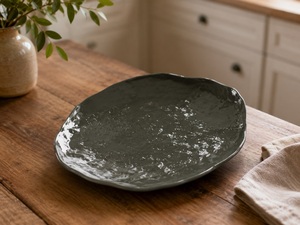
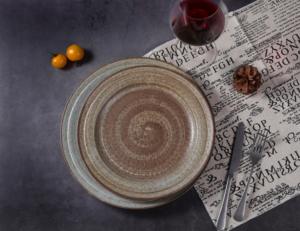
Modern consumers and hospitality operators demand baking dishes and roasting pans that transition seamlessly from thermal oven prep directly to dining presentation. Handcrafted reactive glazes, matte cement textures, and custom ceramic tones eliminate the need for secondary serving platters.
3. Zero Toxic Chemicals & Clean Food Contact
With increasing regulatory scrutiny around PFAs, Lead, Cadmium, and microplastic shed from non-stick metal cookware, 100% natural vitrified ceramic stoneware has emerged as the premier non-toxic, eco-friendly cooking material globally.
4. Full Customization & Private Label Branding
Private label buyers demand complete branding integration: custom-molded ergonomic handles, engraved bottom backstamps, signature Pantone-matched glazes, and bespoke retail packaging engineered for e-commerce drop-shipping resilience.
The 5-Stage OEM Manufacturing Protocol at Cerages Portugal
Executing high-volume private label orders for custom stoneware roasting pans requires absolute technical control at every phase of production. Cerages integrates mold engineering, raw material preparation, glaze compounding, and automated firing under one state-of-the-art facility in Mortágua:
Every OEM roasting pan starts with technical 2D/3D CAD drawings. Our ceramic engineers calculate precise volumetric shrinkage rates (typically 10% to 14% during high-temperature vitrification) to ensure final fired pieces comply exactly with customer length, depth, width, and volume specifications.
We craft high-durability plaster and polymer working molds inside our dedicated toolroom. Customer logo backstamps are deeply recessed into the base mold, ensuring permanent brand identification fired into every piece.
Utilizing refined Portuguese stoneware clay bodies, pieces are formed via hydraulic slip pressure casting or automatic roller-jiggering. This guarantees uniform wall thickness throughout the roasting pan body—a vital structural requirement for even thermal conduction.
Clients can choose from our existing chemical library of over 1,300 glazes—including organic reactive finishes, smooth satin mattes, and vibrant high-gloss colors—or request custom laboratory color matching to physical Pantone standards.
Pieces undergo pre-drying before entering computer-controlled tunnel kilns. The precise thermal curve fuses clay and glaze into a unified, non-porous vitrified stoneware pan certified for oven, microwave, freezer, and dishwasher safety.