
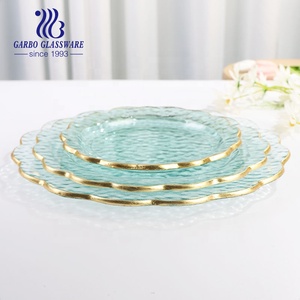
Explore our export-grade vitrified tableware engineered for high-durability retail and hospitality demands.
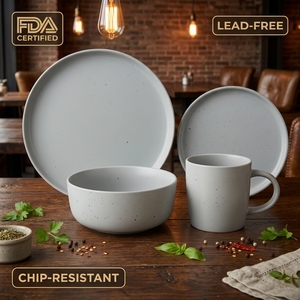
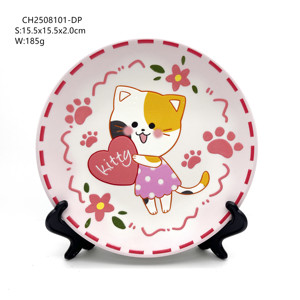
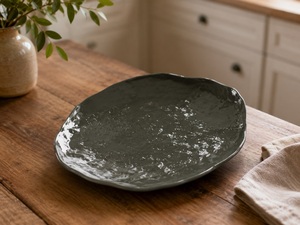
A comprehensive analysis of glaze chemistry, thermal expansion matching, and OEM private-label manufacturing excellence.
In modern industrial tableware production, achieving an ultra-durable, micro-scratch-resistant glossy glaze requires precise chemical compatibility between the ceramic substrate and the molten glass matrix during high-temperature vitrification (1250°C – 1280°C). As a leading European B2B original equipment manufacturer based in Mortágua, Portugal, Cerages SA combines over three decades of material science research to formulate lead-free, cadmium-compliant, and craze-resistant gloss finishes. This technical document provides procurement managers, brand directors, and hotel equipment specification teams with actionable technical insights into ceramic glaze chemistry, performance standards, and future procurement paradigms.
The high-gloss aesthetic is derived from a balanced silica-to-alumina ratio optimized with alkaline earth fluxing oxides (CaO, MgO, K₂O, Na₂O). Our in-house chemical formulation guarantees an amorphous vitreous layer with zero micro-porosity, preventing bacterial absorption and staining in heavy-duty commercial food service environments.
Crazing—the formation of fine hairline cracks in the glaze—occurs when the Coefficient of Thermal Expansion (CTE) of the glaze exceeds that of the underlying stoneware clay body. Cerages engineers calculate CTE curves precisely between 20°C and 800°C, inducing a controlled compressive stress state in the glaze layer upon cooling to maximize impact and shock strength.
All glossy glazes synthesized at Cerages undergo strict ICP-MS atomic emission testing to ensure lead (Pb) and cadmium (Cd) release levels fall well below EU Directive 84/500/EEC, FDA CPG Sec. 545.400, and California Proposition 65 requirements. Glazes are 100% inert, non-reactive to acidic foodstuffs, and safe for high-temperature oven-to-table applications.
Comparing high-fired vitrified glossy stoneware against standard commercial ceramic grades.
| Physical / Chemical Parameter | Cerages High-Fired Glossy Stoneware | Standard Earthenware | Commercial Low-Temp Glaze |
|---|---|---|---|
| Firing Temperature Range | 1250°C – 1280°C (Single/Double Firing) | 1000°C – 1100°C | 1050°C – 1150°C |
| Water Absorption Rate | < 0.5% (Fully Vitrified) | 5% – 12% (Porous) | 3% – 7% |
| Surface Hardness (Mohs Scale) | Mohs 6.5 – 7.0 (Scratch Resistant) | Mohs 4.0 – 5.0 | Mohs 5.0 – 5.5 |
| Thermal Shock Tolerance (ΔT) | Resistant up to ΔT 220°C (Freezer to Oven) | Fails at ΔT > 120°C | Fails at ΔT > 140°C |
| Dishwasher Chemical Corrosion | Zero Dulled Gloss after 1500+ Cycles | Glaze degradation after 200 cycles | Loss of sheen after 400 cycles |
| Heavy Metal Migration (Pb/Cd) | Non-Detectable (< 0.05 mg/L) | Risk of leaching if poorly fired | Requires fritted additions |
Key technological and market shifts shaping global ceramic tableware sourcing.
B2B buyers are moving away from monochromatic flat glazes toward semi-predictable reactive glazes. Utilizing phase-separation technology during high-temperature firing, our laboratory creates multi-tonal depth where every piece displays unique fluid aesthetics while retaining identical structural specs.
Environmental standards in Europe and North America demand reduced carbon footprints. Cerages utilizes high-efficiency heat recovery kilns and eco-friendly raw mineral fluxes that reduce firing soak times while improving glaze clarity and mechanical body density.
Post-pandemic hospitality procurement prioritizes hygiene. High-density glass glazes infused with sub-micron titanium dioxide (TiO₂) and silver ions offer enhanced surface self-cleaning properties under standard washing regimes, preventing bacterial biofilm build-up.
Global brands require rapid prototyping. Leveraging 3D CAD modeling and automated plaster mould casting, our Mortágua facility takes custom dinnerware concepts from physical sample to volume production in under 6 weeks, supporting low-MOQ trials for private labels.
How Cerages transforms your brand vision into certified, market-ready ceramic collections.
Send us a Pantone reference, physical chip, or sample plate. Our glaze laboratory utilizes X-Rite spectrophotometers to match target color coordinates (L*a*b*) within a strict ΔE < 0.5 margin, formulating custom glossy or semi-gloss recipes.
Stoneware contracts between 10% and 14% during drying and 1280°C firing. Our engineers model digital plaster expansion tooling to guarantee final dimensional tolerance, lip radius stability, and stackability across all SKUs.
Utilizing pressure casting, roller-head jiggering, or RAM pressing, pieces are formed from refined Portuguese clays. A 980°C bisque firing removes organic matter, creating a porous body ideal for uniform liquid glaze absorption.
Depending on geometry and glaze rheology, glazes are applied via robotic multi-axis spray booths or hand-dipping techniques. Backstamps and custom logos are permanently under-glazed or fired-on during this phase.
Fired in computer-controlled shuttle kilns at 1250°C–1280°C under oxidizing or reducing atmospheres. Every batch undergoes thermal shock testing, pinhole inspection, edge-impact testing, and barcode packaging integration.
Combining European craftsmanship, strict quality governance, and scalable industrial capacity.
Our entire operational plant in Mortágua operates under rigorous quality control standards, ensuring consistent batch-to-batch color stability, precise weight distribution, and zero warping.
Access our vast library of proprietary reactive, glossy, matte, satin, and metallic glazes, eliminating long R&D delays and allowing fast-track seasonal collection launches.
We do not sell consumer brands. We dedicate 100% of our capacity to private-label manufacturing for retail chains, luxury brands, and hospitality distributors worldwide.
Direct answers to critical sourcing, production, and compliance inquiries.
Our standard production MOQ typically starts at 1,000 to 3,000 pieces per shape/color, depending on the complexity of the body geometry and glaze chemistry. For existing shapes utilizing glazes from our 1,300+ formula library, lower pilot quantities can be evaluated upon project request.
Yes. All of our stoneware bodies are high-fired above 1250°C until fully vitrified (water absorption < 0.5%). Combined with our hard silica glaze formulations, our dinnerware withstands high-temperature commercial dishwasher cycles, detergent alkalinity, microwave heating, and thermal shock up to ΔT 220°C without crazing or dulling.
Absolutely. Our in-house ceramic chemistry laboratory specializes in custom glaze formulation. We utilize advanced spectrophotometry to analyze sample targets and formulate precise oxide recipes. We provide physical pre-production lab swatches and sample proofs for your approval prior to full mold tooling and mass firing.
We perform regular batch testing via certified third-party laboratories (such as SGS and TÜV) to verify that lead and cadmium extraction levels remain far below statutory maximums mandated by FDA CPG Sec. 545.400, EU Regulation 1935/2004, and German LFGB standard. Compliance certificates are provided with shipment documentation.
Initial 3D design and plaster mold prototyping generally takes 2 to 3 weeks. Glaze matching and sample delivery requires 2 weeks. Upon sample sign-off, full production lead times range between 6 to 8 weeks, depending on order volume, kiln scheduling, and custom backstamp/packaging requirements.
All products are manufactured at our facility in the Industrial Park of Mortágua, Portugal. Located near major European shipping ports (Leixões and Lisbon), we regularly export containerized freight (FCL/LCL) under Incoterms including FOB, CIF, DDP, and EXW to North America, Europe, Asia, and Oceania.
Connect directly with our Mortágua engineering team for technical consultations, glaze swatches, factory audits, and OEM price quotes.