Explore our premium factory direct collections engineered for high-volume commercial, retail, and hospitality procurement. Each collection features customized chemical crystallization dynamics, high thermal shock resistance, and certified food-contact safety compliance (FDA, LFGB, EU 2005/31/EC).
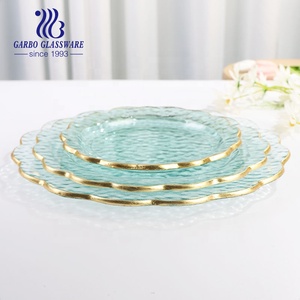
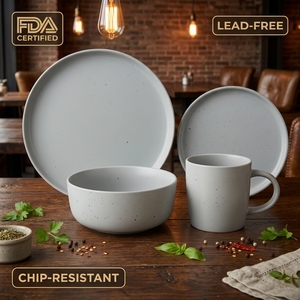
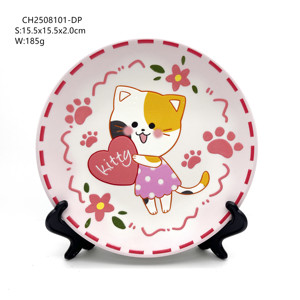
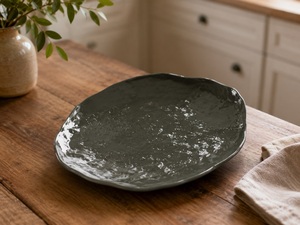
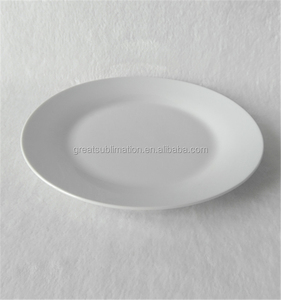
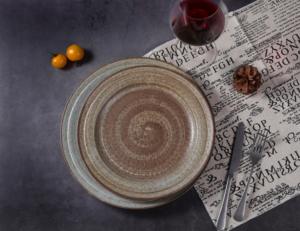
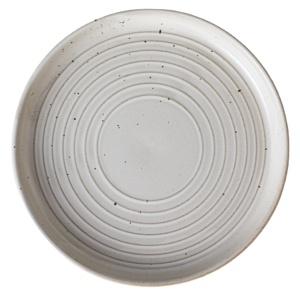
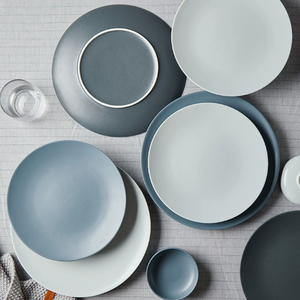
In modern ceramic manufacturing, reactive glaze stoneware represents the optimal fusion of metallurgical chemistry and thermal dynamics. Unlike standard mono-color ceramic glazes—which rely on inert, uniform synthetic pigments—reactive glazes are dynamic, liquid mineral compounds containing inorganic metallic oxides such as iron (Fe₂O₃), copper (CuO), titanium (TiO₂), cobalt (CoO), and rutile.
During the vitrification cycle inside continuous tunnel kilns at temperatures ranging between 1250°C and 1320°C, these oxide formulations undergo controlled phase separation, liquid-liquid immiscibility, and crystalline precipitation. As the glaze reaches peak temperature and subsequently undergoes controlled cooling curves, crystals germinate within the silicate matrix. This chemical metamorphosis ensures that no two pieces are identical, granting mass-produced B2B dinnerware the prized aesthetic of hand-thrown studio pottery while maintaining uniform dimensional tolerances necessary for commercial food-service stacking.
Precise control over flux oxides (CaO, MgO, BaO) creates micro-emulsions during molten phases, yielding distinct floating visual depth, iridescent hues, and tactile contrast.
Firing past 1280°C fuses kaolin, quartz, and feldspar into a dense body with zero open porosity (<0.5%), preventing moisture absorption, bacterial growth, and crazing.
Formulated without lead or cadmium. Glaze frits are engineered to lock metal ions permanently inside insoluble glass matrices, fulfilling US FDA, California Prop 65, and EU standards.
For B2B buyers, sourcing managers, and private-label ceramic brands, technical specifications dictate product longevity and reduced return rates. Below is a comparative performance analysis of China top factory stoneware versus standard commercial ceramics.
| Performance Property | China Top Reactive Stoneware | Standard Earthenware | Bone China / Porcelain |
|---|---|---|---|
| Firing Temperature Range | 1250°C – 1300°C (High Fire) | 1000°C – 1150°C (Low Fire) | 1200°C – 1250°C (Mid-High) |
| Water Absorption Rate | ≤ 0.3% – 0.5% (Vitrified) | > 3.0% – 7.0% (Porous) | ≤ 0.1% (Fully Vitrified) |
| Thermal Shock Resistance (ΔT) | 180°C to 20°C Water Quench (No Crack) | 120°C (Prone to Crazing) | 140°C – 160°C |
| Edge Chipping Resistance | High (Reinforced Rim Geometry) | Low (Brittle Body) | Moderate to High |
| Surface Hardness (Mohs Scale) | 6.5 – 7.0 (Scratch Resistant) | 4.5 – 5.0 | 6.0 – 6.5 |
| Glaze Uniformity Consistency | Controlled Reactive Variation (Bespoke) | Flat Mono-color | Flat Mono-color / Decal |
As international tableware buyers recalibrate supply chains to balance aesthetic differentiation with operational stability, several macro-level procurement trends are restructuring the ceramic manufacturing landscape in China:
Global retail conglomerates and hospitality chains are mandating carbon transparency. Leading Chinese stoneware factories are transitioning from conventional coal-gas generators to computerized continuous roller hearth kilns powered by natural gas and photovoltaic solar arrays. Heat recovery systems reclaim thermal exhaust from cooling zones to preheat drying chambers, reducing energy consumption per ceramic unit by up to 34%.
The marketplace is demanding enhanced tactile experiences. The synthesis of 3D UV print embossing, relief carving molds, and organic reactive glazes allows factories to create deep slate, basalt, and organic timber textures under a glassy protective glaze layer. This dual-technology application offers the visual depth of natural mineral stone with the hygienic washability of vitrified stoneware.
Space efficiency in hotel and restaurant kitchens requires precise rim-to-base tolerances. Advanced factory tooling utilizes CNC-machined plaster and aluminum dies to achieve ultra-consistent foot-ring concentricity. This prevents wobbling, reduces rim contact friction, and minimizes breakage during automated high-pressure dishwashing cycles.
Operating as a premier OEM/ODM manufacturer in China involves providing a fully integrated, turnkey development infrastructure. From raw clay formulation to final container shipping, our manufacturing pipeline guarantees strict execution of client specifications.
Our in-house R&D laboratory houses over 1,300 archived glaze recipes. Utilizing X-ray fluorescence (XRF) spectrometers, our technicians can match target Pantone colors or physical ceramic swatches while ensuring reactive flow control.
Using 3D CAD models and 5-axis CNC machining, we generate master plaster models within 72 hours. Prototype sampling cycles are compressed to 10–14 days, allowing fast market testing prior to mass tooling production.
Complete private-label integration includes logo backstamps applied via underglaze stamping, laser engraving inside the bottom mold die, or high-temperature silk-screen decal firing that will never wear off.
Consult directly with our ceramic engineering team in China. Send us your CAD drawings, mood boards, or target color references to receive rapid technical feasibility analysis, prototype quotes, and factory direct volume pricing.
Get a QuoteWhile reactive glazes are inherently variable due to microscopic mineral oxidation, we control consistency through strict technical parameters: 1) Automated raw mineral weighing with computerized micro-dosing; 2) Specific gravity and viscosity testing of liquid glaze prior to application; 3) Microprocessor-controlled kiln temperature zones within ±2°C variance across the entire firing curve. This ensures batch-to-batch variance remains within strictly defined visual tolerance bands agreed upon with the client.
Our standard MOQ for custom reactive glaze shapes is typically 1,200 to 2,400 pieces per item/color depending on piece dimensions. For existing factory shapes featuring custom glaze finishes, lower MOQs can be accommodated. Prototype sampling takes 10–15 days, while full production lead times range from 35 to 45 days post-sample approval.
Yes. All of our high-fired stoneware pieces are vitrified at temperatures exceeding 1280°C, yielding water absorption levels below 0.5%. This high density prevents moisture absorption that leads to thermal cracking in microwaves or ovens. Our glazes pass 500-cycle commercial dishwasher testing without dulled glazes, clouding, or surface degradation.
Our manufacturing facility is audited and certified under ISO 9001:2015 quality management systems and BSCI/SEDEX social compliance standards. All finished ceramic products comply fully with US FDA CPG 7117.06/07, California Proposition 65 (Lead and Cadmium free), EU Directive 84/500/EEC, and German LFGB requirements.
Absolutely. We provide full packaging engineering including 5-ply corrugated mail-order drop boxes, ISTA-6A transit test compliant EPE foam enclosures, color gift boxes with foil stamping, and plastic-free molded paper-pulp trays for eco-conscious retail lines.
Selecting the right ceramic manufacturing partner is a strategic decision that directly impacts brand equity, customer satisfaction, and margin performance. By combining century-old Chinese ceramic artisanship with state-of-the-art chemical engineering, automated kilns, and rigorous Western quality control standards, our factory stands at the forefront of global stoneware production.
Whether you are expanding an established hospitality dinnerware brand, developing a private-label retail collection, or seeking high-durability promotional ceramicware, our engineering team provides the technical precision, scale, and aesthetic mastery required to bring your vision to market.