Engineered to rigorous global commercial standards, our high-fired stoneware and specialized glassware lines combine thermal shock resilience, food-grade glazing safety, and customizable aesthetic finishes tailored for tier-one brands, hospitality enterprises, and global procurement buyers.

In the highly competitive landscape of international ceramic procurement, discerning B2B buyers—ranging from major department store chains and commercial food service distributors to high-end lifestyle brands—require more than basic supplier relationships. They require an integrated engineering partner capable of translating complex design briefs into vitrified, high-performance ceramic products with zero compromise on structural integrity or chemical safety.
Information Gain Insight: Unlike standard earthenware factories firing below 1050°C, our facility exclusively operates high-temperature computer-controlled tunnel kilns executing firing curves between 1280°C and 1320°C. This vitrifies the silicate matrix, driving water absorption below 0.5% and creating superior thermal shock resistance (ΔT = 180°C).
We eliminate supply chain latency by hosting a dedicated tooling division. From 3D CAD modeling and plaster master creation to production mold casting, our lead time for custom physical prototypes is compressed to 10–14 working days.
Our internal R&D glaze laboratory formulates custom colors, matte, satin, high-gloss, and complex reactive finishes. Every glaze batch is tested using X-ray fluorescence (XRF) spectroscopy to guarantee total absence of lead, cadmium, and toxic heavy metals.
Products are batch-tested against EN 1183 thermal shock standards and subjected to 1,000+ cycle industrial dishwasher abrasion tests. Rims are structurally reinforced with engineered radii to mitigate mechanical chipping in high-traffic food service environments.
Understanding the physical properties of ceramic bodies is vital for global sourcing professionals evaluating landed cost versus total operational life cycle.
| Performance Metric | Standard Earthenware | Commercial Porcelain | Our Engineered Stoneware |
|---|---|---|---|
| Firing Temperature | 950°C – 1050°C | 1200°C – 1400°C | 1280°C – 1320°C (Optimized) |
| Water Absorption Rate | > 10% (Porous) | < 0.1% (Vitrified) | < 0.5% (Impermeable Matrix) |
| Thermal Shock Tolerance (ΔT) | 100°C – 120°C | 140°C – 150°C | 180°C – 200°C (Oven-to-Table Ready) |
| Mechanical Flexural Strength | ~ 20-30 MPa | ~ 65-80 MPa | ~ 50-65 MPa (High Impact Resistance) |
| Aesthetic Versatility | Limited Glazes | Predominantly White/Translucent | 1,300+ Reactive, Matte & Texture Finishes |
| Private Label Mold Flexibility | Moderate | High Tooling Cost | Optimal Cost-to-Complexity Ratio |
As global supply chains adjust to evolving regulatory metrics, geopolitical diversification, and consumer sustainability mandates, ceramic tableware procurement is undergoing structural transformations. Sourcing directors must align with factories capable of adapting to four micro-industry shifts:
Tier-one European and North American buyers are increasingly enforcing Scope 3 emissions reporting. Our facility leads China's ceramic sector by incorporating up to 25% post-industrial recycled clay slip back into body preparation, coupled with heat-recovery systems on tunnel kilns that reduce natural gas consumption per unit by 18.5%.
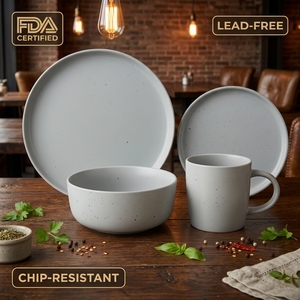
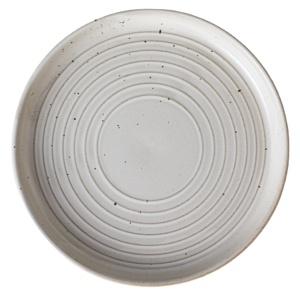
Clinical, perfectly uniform white porcelain is rapidly ceding market share to tactile, organic dinnerware featuring uneven edges, reactive speckled glazes, and matte stone textures. High-temperature stoneware provides the optimal physical canvas for these artisanal effects while retaining commercial dishwasher stability.
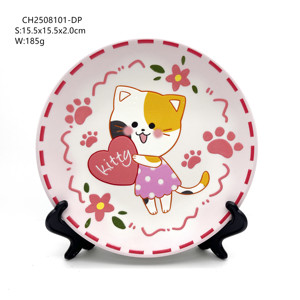
Traditional screen printing is being augmented by direct-to-ceramic 3D UV printing and high-definition digital glazing systems. This permits hyper-customized low-volume private label collections, shortens artwork sampling cycles, and enables complex multi-color patterns impossible via classic hand-painting.
To maintain product differentiation in crowded retail and e-commerce ecosystems, product managers must look beyond traditional rim silhouettes. Our engineering team has identified three critical product development vectors currently reshaping consumer preference:
Design Trend Analysis: Hybrid kitchenware—pieces designed seamlessly to transition from baking oven (up to 250°C) directly to high-end tabletop presentation—are experiencing a 34% year-over-year increase in wholesale inquiry volume. Stoneware's dense clay structure provides the precise thermal mass required for this dual functionality.
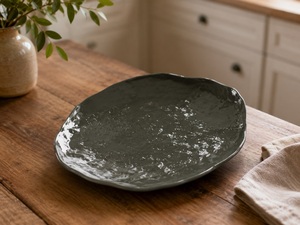
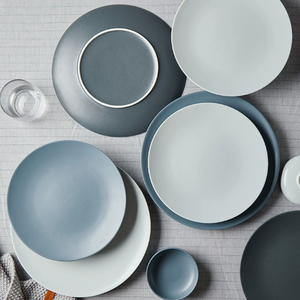
Architectural grey, charcoal, and cement finishes (as highlighted in our 23.2cm rectangular serving plate) utilize micro-textured matte glazes that resist cutlery scratching while offering a stark, contemporary background for modern culinary plating.
By adjusting kiln atmosphere cooling rates during the vitrification phase, metallic oxides within reactive glazes form unique crystalline structures. This guarantees that while every plate in a 2025 luxury line matches in baseline color palette, each individual piece possesses a distinct artisanal fingerprint.
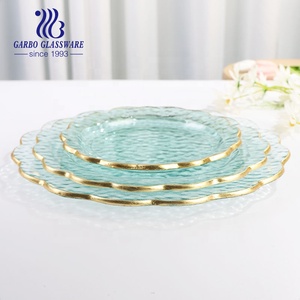
Future table settings are combining high-fired stoneware bases with complementary materials, such as electroplated gold rim glass accent platters, wooden underplates, and silicone storage seals, requiring strict dimensional tolerance controls during manufacturing.
Partnering with our China manufacturing facility ensures an audited, transparent workflow designed to mitigate risk at every stage of production:
Submission of client CAD files, 2D vector concepts, or reference physical samples. Our engineers perform volumetric calculations, shrink-factor adjustments (typically 10-12% for stoneware), and stackability analysis.
Custom glaze blending to target Pantone / RAL standards. Debossed, embossed, or underglaze laser-printed private label backstamps are applied directly to the foot of each piece prior to final high-temperature firing.
Mass production passes inline automated optical inspection for pinholes and warping. Final retail packaging undergoes ISTA 1A drop-testing to verify e-commerce transit protection before container loading.
Clear technical answers to critical questions commonly raised by global purchasing officers, supply chain directors, and retail category managers.
Whether you are expanding an existing commercial tableware line, launching a private label ceramic collection, or seeking cost-optimized OEM manufacturing, our engineering team is ready to analyze your technical specifications.
Get a Quote