Explore our export-grade tableware engineered for commercial durability, aesthetic versatility, and international compliance. Designed specifically for global brand owners, hospitality buyers, and wholesale distributors.
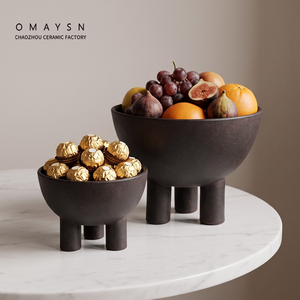
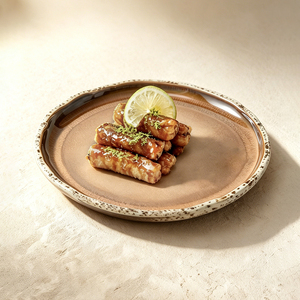
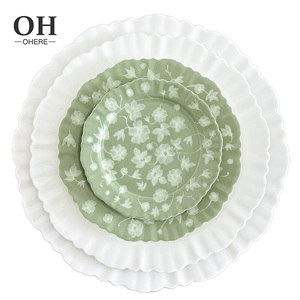
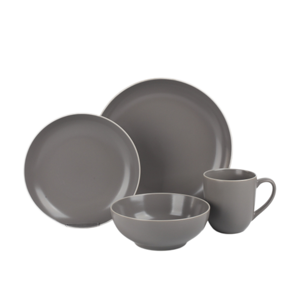
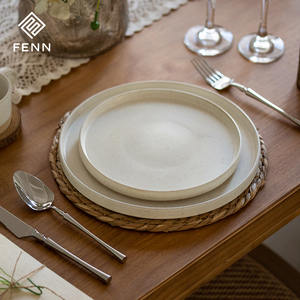
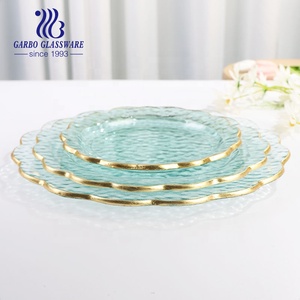
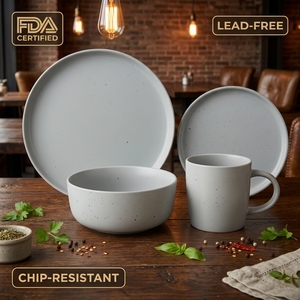
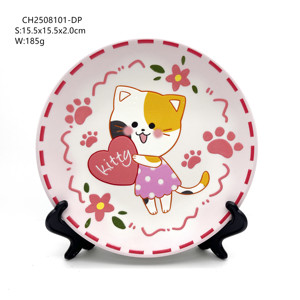
As the world's leading hub for advanced ceramic engineering, China's ceramic dinnerware manufacturing sector has undergone a profound transformation. Moving beyond traditional mass production, modern Chinese manufacturers utilize high-temperature vitrification, automated roller hearth kilns, eco-friendly slurry recovery, and sophisticated spectral glaze matching. This document serves as a technical B2B procurement guide for enterprise buyers, hospitality purchasing directors, and global brand managers seeking resilient, compliant, and cost-optimized ceramic tableware supply chains.
By blending pure kaolin clay, refined quartz, and selected feldspar, our raw ceramic bodies are engineered to eliminate impurities. In-house ball milling ensures micro-fine particle distribution for optimal density and mechanical strength.
Our central laboratory maintains an archive of over 1,300 custom-developed glaze recipes—ranging from deep reactive matte to high-gloss lead-free glazes. We precisely match physical Pantone standards or customer swatches.
Utilizing 3D CAD modeling and computer-controlled plaster matrix milling, we transition from concept sketches to physical prototype samples in as few as 7 business days, ensuring exact dimensional stability.
Selecting the ideal ceramic body requires balancing aesthetic requirements, edge-chip resistance, thermal tolerance, and target price points. Below is a comparative technical matrix for commercial procurement specification.
| Material Category | Firing Temperature | Water Absorption | Thermal Shock ΔT | Primary Commercial Use Case |
|---|---|---|---|---|
| High-Fired Stoneware | 1250°C – 1280°C | < 0.5% | 180°C Quench Safe | Rustic Retail, Casual Dining, Specialty Coffee, Oven-to-Tableware |
| Hard Commercial Porcelain | 1320°C – 1350°C | < 0.1% | 200°C Quench Safe | High-Traffic Hospitality, Banqueting, Hotel Buffet & Fine Dining |
| Fine Bone China (≥45% Bone Ash) | 1200°C – 1250°C | < 0.05% | 150°C Quench Safe | Luxury Retail, Executive Suites, Airline First Class, Wedding Registries |
| Glass & Opal Serveware | 1400°C Melting | 0.00% | 120°C Quench Safe | Catering Chargers, Festive Platters, High-Vibrancy Gold Rim Dishes |
Procurement directors must look beyond price-per-unit metrics to mitigate macro supply chain risks and align with evolving global consumer demands. Our industry analysis identifies four critical shifts reshaping ceramic tableware exports:
Modern consumers and boutique hospitality chains are moving away from monolithic, plain white tableware. Reactive glaze chemistry—where metallic oxides interact dynamically inside the kiln—creates unique, one-of-a-kind organic textures (such as speckled sesame, iron-dusted rims, and multi-tone reactive hues) at industrial production speeds.
Advancements in ceramic UV inkjet printing and high-relief glaze application allow manufacturers to recreate complex 3D wood, stone, or geometric textures directly on stoneware surfaces. This provides high aesthetic value without compromising dishwasher durability or food-contact safety compliance.
Global retailers (EU and North American markets in particular) now demand verifiable ESG parameters. Leading Chinese manufacturers are integrating heat-recovery systems from tunnel kilns to dry greenware, adopting zero-wastewater discharge filtration, and recycling 100% of unfired clay scrap into raw production lines.
For foodservice buyers, breaking plates equates to margin loss. Modern ceramic engineering incorporates rolled edges, reinforced rim profiles, and engineered coupe bases that reduce chipping risks by up to 40% while optimizing vertical storage density in commercial kitchens.
Exporting ceramic tableware into strict regulatory zones requires rigorous quality control across every stage of manufacture. Every batch leaving our facility is backed by third-party testing and physical inspection reports.
Fully compliant with FDA (CPG 7117.06/07), EU Directive 84/500/EEC, German LFGB, and California Proposition 65 standards. Glazes are formulated strictly lead-free and cadmium-free.
Subjected to autoclave testing for crazing resistance, thermal shock cycles (200°C oven directly into 20°C water bath), microwave heating safety, and 1,000+ cycle commercial dishwasher durability.
Our manufacturing complex operates under strict ISO 9001:2015 Quality Management Systems and maintains active BSCI (Business Social Compliance Initiative) and SMETA social audit certifications.
Whether you are expanding a global retail brand, outfitting a luxury hotel group, or developing a custom ceramic tableware collection, our technical engineers and export specialists are ready to turn your designs into market-ready products.
