Engineered for high-volume retail chains, hospitality supply networks, and private label brand expansion. High thermal stability, dishwash-safe, and food-grade compliance.
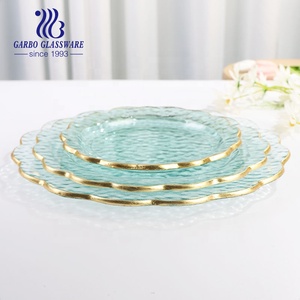
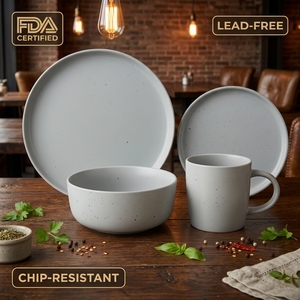
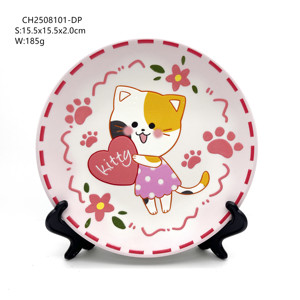
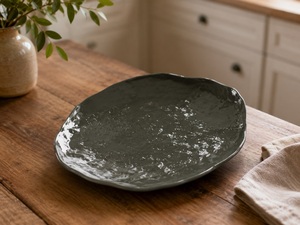
When global procurement directors and hotel chain developers evaluate potential partner factories in China for stoneware dinnerware production, the decision matrix extends far beyond simple per-piece FOB pricing. High-performance commercial ceramicware demands rigorous material engineering, exact thermal coefficient matching between glaze and clay body, and unwavering batch-to-batch color stability under industrial dishwashing stress.
China's strategic ceramic manufacturing hubs—specifically Chaozhou, Liling, and Zibo—have evolved from manual craft workshops into automated smart manufacturing clusters. Modern OEM/ODM factories utilize continuous tunnel kilns with digital zone temperature controls, robotic spray glazing arms, and automated slip-pressure casting systems. This infrastructure ensures that global brands receive high-density dinnerware that handles severe commercial usage environments seamlessly.
Understand the mechanical properties, durability metrics, and financial viability of different ceramic bodies for hospitality and retail channels.
| Material Metric | High-Fired Stoneware (China Best) | Commercial Porcelain | Traditional Earthenware |
|---|---|---|---|
| Firing Temperature Range | 1220°C – 1280°C | 1300°C – 1400°C | 1000°C – 1150°C |
| Porosity / Water Absorption | < 0.5% (Vitrified) | < 0.1% (Vitrified) | 3.0% – 10.0% (Porous) |
| Thermal Shock Resistance (ΔT) | High (≥ 140°C sudden drop) | Moderate to High | Low (≤ 100°C sudden drop) |
| Aesthetic Versatility & Glazes | Exceptional (Reactive, Silk Matte, Metallic) | Moderate (Mostly Solid/White) | High (Vulnerable to crazing) |
| Mechanical Edge Strength | Superior Impact Resistance | High Hardness / Chipping Risk | Low Impact Resistance |
| Optimal Commercial Application | Modern Retail, Boutique Hotels, Casual Dining | Fine Dining, Banquet Halls | Budget Decorative / Short Life-Cycle |
Our chemical engineering laboratories continuously pioneer custom reactive glazes, matte cement finishes, and satin-touch textures, allowing complete customization to meet brand identity standards.
Operating under strict international quality control systems, our production facilities are certified for social compliance, ethical workforce policies, and environmental sustainability standards.
Accelerate product development cycles with in-house 3D printing for master moulds. Move from preliminary sketch to physical glazed prototype in under 12 business days.
Every batch undergoes rigorous lead and cadmium extraction testing (FDA 21 CFR 175.300, California Prop 65, and EU Directive 84/500/EEC) ensuring 100% non-toxic dining surfaces.
From custom backstamps integrated directly into master moulds to transit-tested drop-box packaging for direct-to-consumer e-commerce, we manage end-to-end logistics.
Engineered clay body formulas withstand temperature transitions from freezer storage straight to convection ovens up to 250°C without thermal stress failure.
The global ceramic dinnerware market is undergoing a major structural shift driven by changes in consumer lifestyle preferences, sustainable supply chain legislation, and hospitality design trends. Professional procurement officers who align their sourcing strategies with these incoming macro-trends gain a measurable competitive edge.
Uniform, high-gloss mass-produced porcelain is increasingly losing market share to organic, artisan-look stoneware featuring reactive glazes. These special glazes interact dynamically with kiln heat variations, making each plate subtly unique while maintaining standard operational stackability for commercial dishwashers.
Environmental, Social, and Governance (ESG) mandates require suppliers to reduce carbon emissions. Leading Chinese factories now employ closed-loop water filtration systems, recycle 100% of unfired greenware clay waste, and utilize clean natural-gas kilns equipped with waste-heat recovery technology.
Modern commercial food service prioritizes operational speed and versatility. Future dinnerware ranges eliminate transferring food between kitchen cookware and plating dishes. Durable stoneware roasters and baking dishes designed with refined table-ready glazes streamline kitchen operations directly to front-of-house service.
We implement an Acceptable Quality Limit (AQL 1.5 Major / 4.0 Minor) standard on every production run to guarantee compliance before shipment.
Purity testing of mineral composition, moisture content calibration, and magnetic separation to eliminate iron spots prior to shaping.
Laser profiling during greenware drying to compensate for the standard 12% firing shrinkage, preventing warping or uneven stacking rims.
Thermal expansion matching between body and glaze to completely eliminate crazing, micro-cracking, or glaze shivering during hot washing cycles.
Edge impact pendulum testing and automated 500-cycle commercial dishwasher simulation testing for glaze dullness resistance.
Clear answers to critical technical questions asked by international buyers, procurement specialists, and brand managers.
China stoneware offers an ideal combination of mechanical durability and creative glaze flexibility. While porcelain provides high translucency and hardness, its firing constraints limit design aesthetics mostly to white or plain solid glazes. High-fired stoneware vitrifies under temperatures reaching 1280°C, producing low porosity (<0.5%) equal to porcelain in stain resistance, while accommodating rich reactive glazes, matte stone textures, and organic handcrafted profiles highly sought after by modern consumers and restaurant designers.
Our standard MOQ for custom-moulded OEM dinnerware ranges is typically 1,000 to 3,000 pieces per shape/color, depending on item dimensions. Existing factory shapes with custom glazes can be produced at lower MOQs starting from 500 sets. Production lead times generally follow a structured timeline: 10–14 days for initial 3D design and physical sample production, followed by 35–45 days for mass manufacturing after final sample approval.
All glazes used in our facilities are strictly formulated without toxic heavy metals like lead or cadmium. Every finished production batch undergoes leaching analysis tested in compliance with FDA 21 CFR 175.300, California Proposition 65, and European Commission Directive 84/500/EEC. Official test certificates issued by third-party testing laboratories (such as SGS, Bureau Veritas, or TÜV Rheinland) are provided prior to export dispatch.
We provide multiple options for custom backstamping based on budget and aesthetic goals: 1) Engraved or embossed logos integrated directly into the master plaster mould; 2) Underglaze high-firing stamped logos that never fade under dishwashing; 3) Overglaze decal stamps fired at 800°C. Furthermore, we provide full retail packaging solutions, including drop-test certified mail-order color boxes, custom barcodes, and branded inner sleeves.
Export packaging is engineered for rigorous multi-modal transport. Dinnerware items are individually layered with high-density EPE foam or corrugated dividers, packed into 5-ply double-wall outer cartons, and consolidated onto fumigated wooden pallets with corner protectors and moisture-proof stretch wrapping. We routinely conduct ISTA 1A / 3A drop testing to guarantee breakage rates remain well below the 0.5% industry baseline.
Reactive glazes achieve their organic look through mineral phase separation inside high-temperature kilns. While slight natural variations are inherent to authentic reactive firing, our computerized raw material dosing, automated spray thickness controls, and digital kiln temperature mapping reduce batch-to-batch color variation to within strict E-delta tolerance limits accepted by major international retailers.
Collaborate with China's leading stoneware manufacturing specialists. Request technical product specifications, custom glaze swatches, factory audit documentation, or immediate FOB pricing.