Engineered for high-volume foodservice operations: ISO-certified thermal shock resistance, zero-porosity vitrification, and scratch-resistant glazes.
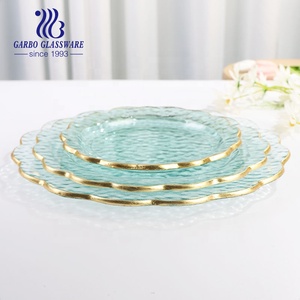
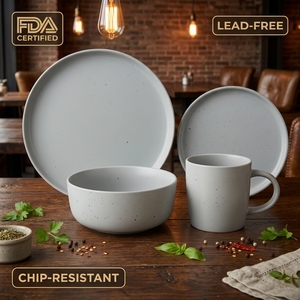
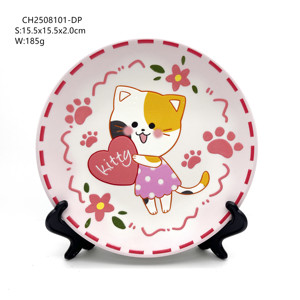
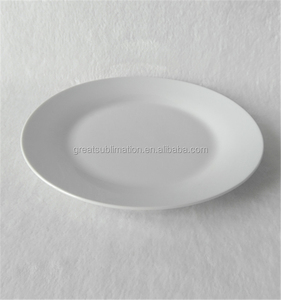
A Technical Evaluation of Ceramic Mineral Composition, Thermal Stress Thresholds, and Global OEM Contract Manufacturing Capabilities
Executive Summary for Procurement Directors: Modern hospitality and commercial dining environments subject tableware to severe operational stresses—including industrial conveyor dishwashers (exceeding 85°C chemical sanitization), thermal shock cycles from salamanders to walk-in freezers, and mechanical impact from high-volume service. Partnering with top-tier Chinese ceramic manufacturers who possess in-house glaze laboratories, precision tunnel kilns, and strict raw material control is vital to lowering total replacement costs.
The structural integrity of commercial dinnerware is dictated by its underlying chemical formulation. Unlike residential tableware, which relies heavily on porous earthenware or basic soft-paste porcelain, high-grade commercial stoneware produced in tier-one Chinese manufacturing centers (such as Chaozhou, Liling, and Zibo) utilizes refined kaolin clay enriched with quartz, feldspar, and aluminum oxide (Al₂O₃).
By elevating the alumina content to 18%-24%, the ceramic matrix undergoes complete vitrification during high-temperature firing (typically between 1280°C and 1350°C). This process transforms the raw clay into a dense, non-porous glass-crystalline structure. The resultant material exhibits a water absorption rate under 0.2%—far surpassing the ASTM C373 standard for vitreous dinnerware. Low porosity prevents moisture absorption, which is the primary cause of internal steam expansion, micro-cracking, and bacterial retention during high-pressure thermal dishwashing.
| Material Classification | Firing Temp (°C) | Porosity (Water Abs.) | Thermal Shock Delta (ΔT) | Primary Commercial Application |
|---|---|---|---|---|
| High-Alumina Vitrified Porcelain | 1320°C – 1380°C | < 0.1% | 180°C to 200°C | Luxury Hotels / High-Impact Fine Dining |
| Heavy Commercial Stoneware | 1250°C – 1280°C | < 0.5% | 140°C to 160°C | Casual Dining / Bistro / Farm-to-Table |
| Reinforced Opal & Tempered Glass | 1400°C (Melt) | 0.00% | 130°C to 150°C | Banquet Halls / Catering & Buffets |
| Standard Residential Earthenware | 1000°C – 1150°C | 3.0% – 7.0% | < 100°C | Not Recommended for HoReCa |
A dinnerware plate’s service life is limited by its glaze surface. Cutlery marking—caused by the deposition of soft metal particles from stainless steel knives onto a hard, micro-textured glaze—is one of the leading aesthetic failure modes in commercial dining rooms. Advanced Chinese manufacturers utilize customized glaze formulas containing zirconia, zinc oxide, and silica to create hard, non-porous surface coatings that reach 6.5 to 7.0 on the Mohs Hardness Scale.
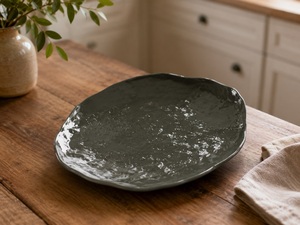
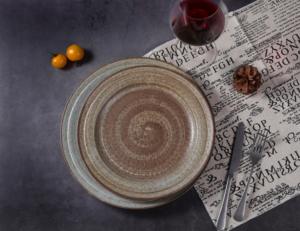
Furthermore, reactive glaze technologies have revolutionized modern restaurant table settings. By manipulating iron oxide, copper oxide, and cobalt trace elements inside computerized atmospheric kilns (reducing oxygen during key cooling phases), manufacturers achieve individual artistic variations without sacrificing structural strength. Each plate exhibits a unique organic pattern, while maintaining strict dimensional tolerances for stacking alignment.
Why leading global hospitality brands, contract importers, and retail distributors source directly from specialized Chinese OEM/ODM production lines.
Our dedicated ceramic chemistry laboratory maintains an extensive library of over 1,300 proprietary glaze formulations—ranging from silk matte, reactive crystalline, to high-gloss antimicrobial surfaces matched to Pantone color standards.
Every production batch undergoes strict quality control protocols certified under ISO 9001:2015. Fully compliant with US FDA, California Proposition 65, EU Directive 84/500/EEC, and German LFGB regulations for heavy metal leaching (Lead and Cadmium free).
Complete custom branding capabilities: custom-engraved base molds, underglaze logo backstamps, laser etching, and tailored retail packaging (drop-test certified for e-commerce and bulk palletized container shipping).
Engineered structural profile designs feature reinforced rim curves and optimized wall thickness distribution, reducing mechanical edge-chipping by up to 65% in back-of-house busing and conveyor wash cycles.
Utilizing energy-efficient 100-meter automated continuous tunnel kilns ensures uniform heat distribution, strict color consistency across multi-thousand piece runs, and scalable output to meet tight contract deadlines.
Our facilities integrate closed-loop water recycling systems, green ceramic sludge re-injection, and heat recovery channels that capture kiln heat to pre-dry raw greenware, lowering carbon intensity per unit produced.
Key Strategic Shifts Shaping Commercial Tableware Procurement for International Hotel Chains and Import Distributors
As kitchen real estate costs rise globally, commercial foodservice operators demand dinnerware designed specifically for vertical space efficiency. Contemporary factory designs incorporate micro-nested bases and precise foot rings that prevent platter-to-platter sliding while optimizing storage footprint in waiter stations and dishwashing racks. High-density stacking capabilities allow hospitality venues to increase storage capacity by up to 35% without increasing shelf footprint.
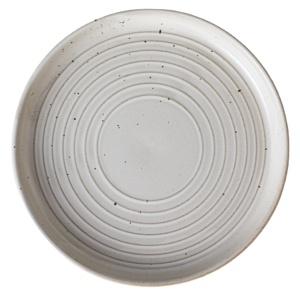
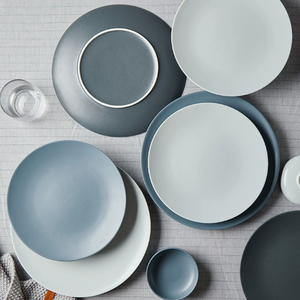
Driven by the global rise of artisanal, farm-to-table, and modern Asian fusion dining concepts, chef preference has shifted from ultra-glossy bright white porcelain toward matte, textured cement, and raw stone finishes. Advanced OEM factories achieve these tactile finishes by fusing micro-crystallized matte glazes at high temperatures. This ensures the tactile, unglazed aesthetic is entirely non-porous, oil-repellent, and stain-resistant under intensive kitchen use.
Traditional ceramic mold manufacturing required 4 to 6 weeks for physical plaster master sculpting. Modern Chinese factories utilize industrial 3D resin printing and CAD/CAM sculpting software to compress the initial sampling cycle to under 7 business days. Sourcing managers can now approve digital CAD models, receive 3D-printed physical mockups, and execute glaze testing in a fraction of traditional lead times, drastically shortening product time-to-market.
Supply Chain Insight: Sourcing directors should prioritize suppliers that possess fully integrated mold shops and digital prototyping. This integration prevents communication delays between third-party designers and kiln engineers, guaranteeing that structural stability is baked into the initial design phase.
Direct Answers to Common Purchasing, Technical, and Supply Chain Inquiries from Global Procurement Officers
Standard factory MOQ for custom shapes or bespoke glaze matching typically ranges from 1,000 to 3,000 pieces per item code, depending on size and glaze complexity. For standard catalog shapes featuring custom logo backstamps, MOQs can often be reduced to 500 pieces per item.
Reputable export manufacturers formulate glazes strictly with refined, non-toxic mineral frits. Every production batch undergoes acid-leaching testing via Atomic Absorption Spectroscopy (AAS) or Inductively Coupled Plasma (ICP) analysis to ensure full compliance with FDA 21 CFR 175.300 and EU Directive 84/500/EEC standards.
Hard porcelain is fired above 1350°C using kaolin and feldspar, yielding a brilliant white, highly translucent body optimized for fine dining. High-temp stoneware is fired between 1250°C and 1280°C, producing an opaque, earth-toned body with exceptional thermal mass retention—ideal for rustic presentations, oven-to-table applications, and casual dining.
Yes. Fully vitrified stoneware and high-alumina porcelain are engineered to withstand thermal shock temperature differentials (ΔT) of at least 140°C to 180°C. Pieces can transition directly from cold prep storage (5°C) to high-temperature finishing ovens or salamanders without cracking or crazing.
Logos are applied using underglaze printing or high-temperature decal firing at 800°C–1200°C. This fuses the ink beneath or directly into the molten glaze layer, making the logo completely impervious to commercial dishwashing detergents, mechanical cutlery scraping, and chemical abrasion.
Products are packaged in heavy-duty 5-ply corrugated inner cartons with custom-molded EPE foam or corrugated cell dividers. Master cartons are stacked on fumigated heat-treated wooden or plastic pallets, corner-boarded, and fully stretch-wrapped to endure transoceanic freight and rough port handling.
Connect directly with our ceramic engineering and export management team. Receive product samples, technical specifications, and factory-direct volume pricing within 24 hours.