Custom OEM/ODM private-label solutions precision-manufactured for international retail, hospitality chains, and commercial food-service brands.
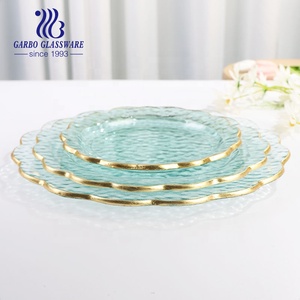
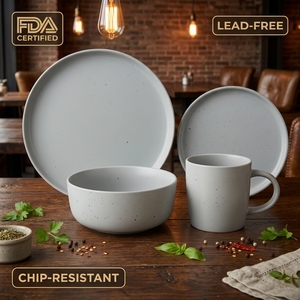
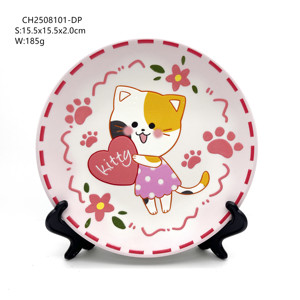
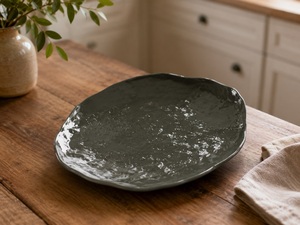
Evaluating China’s advanced silicate engineering, high-temperature vitrification, and B2B OEM manufacturing infrastructure.
In the contemporary B2B supply chain for cookware and tableware, procurement directors face a dual mandate: securing products that exhibit flawless thermal and mechanical properties while maintaining operational cost efficiencies. China’s ceramic manufacturing sector has undergone a profound technological transformation, evolving from traditional craft-based potteries into highly automated, lab-controlled silicate engineering hubs. As global brands, hotel supply groups, and D2C cookware pioneers look to expand private-label portfolios, partnering with an established China Best Ceramic Cookware Manufacturer & Exporter represents a strategic imperative.
Unlike standard consumer earthenware, professional-grade ceramic cookware—specifically high-fired vitrified stoneware and non-stick ceramic ceramic bodies—must withstand extreme environmental stress. Products operate across severe temperature gradients, transitioning directly from cold storage (-20°C) to high-heat convection ovens (+260°C) without micro-fracturing or glaze degradation. Achieving this level of structural integrity requires rigorous body formulation, precise particle-size distribution during slip preparation, and computer-controlled pyrometric cone firing schedules exceeding 1280°C.
Information Gain Insight: The core differentiator of premium Chinese ceramic cookware lies in zero-porosity body vitrification. By lowering clay body absorption below 0.5%, moisture ingress is eliminated, entirely preventing thermal shock cracking during rapid temperature swings, dishwashing cycling, and high-intensity commercial oven use.
Complete rapid prototyping capabilities from 3D CAD modeling and CNC plaster master molding to full production die fabrication within 14 calendar days.
Proprietary glaze laboratory housing solid, reactive, semi-matte, silk-matt, and high-gloss non-toxic surface treatments engineered for food-contact safety.
Full regulatory compliance with US FDA, European LFGB, California Proposition 65, and Directive 2005/31/EC regarding heavy metal (Lead/Cadmium) leaching limits.
Selecting the appropriate ceramic substrate is fundamental to commercial performance. The benchmark comparison table below outlines the physical and thermal parameters of high-fired stoneware versus alternative ceramic bodies commonly found in commercial cookware supply chains:
| Material Parameter | High-Fired Vitrified Stoneware | Commercial Earthenware | Fine Porcelain Cookware | Cast Aluminum Ceramic Coating |
|---|---|---|---|---|
| Firing Temperature Range | 1280°C – 1320°C | 1000°C – 1150°C | 1350°C – 1400°C | Curving Cured @ 400°C |
| Water Absorption Rate | < 0.5% (Non-porous) | 3.0% – 8.0% (Porous) | < 0.1% (Vitrified) | N/A (Substrate Base) |
| Thermal Shock Tolerance (ΔT) | 220°C to 260°C Sudden Delta | 120°C to 150°C Max | 180°C to 200°C | 180°C (Coating Degradation Risk) |
| Glaze Surface Hardness (Mohs) | 6.5 – 7.5 Mohs (Scratch-proof) | 4.5 – 5.5 Mohs | 7.0 – 8.0 Mohs | 3.5 – 4.5 Mohs (Soft Coating) |
| Heavy Metal Leaching Risk | Zero (Glaze Vitrified Bond) | Moderate (Porosity Leaching) | Zero (Inert Glass Matrix) | Risk of PFAS/PTFE Degradation |
| Commercial Dishwasher Cycles | > 2,500 Cycles Compliant | < 300 Cycles (Glaze Crazing) | > 3,000 Cycles Compliant | Handwash Recommended |
Anticipating market shifts, eco-design directives, and technological innovations shaping the next decade of culinary manufacturing.
Global brand owners increasingly demand ESG-compliant supply chains. Leading Chinese manufacturers are implementing closed-loop heat exchanger kilns, capturing exhaust heat to pre-dry raw greenware, cutting net carbon output per metric ton of ceramic fired by up to 34%.
Modern dining trends favor seamless transitions from culinary preparation to presentation. Contemporary product designs incorporate integrated thermal handles, stackable storage profiles, and aesthetic reactive glazes that double as high-end restaurant serveware.
Historically limited to conventional ovens and gas ranges, next-generation stoneware cookware integrates plasma-sprayed ferromagnetic stainless-steel base plates. This breakthrough permits direct use on induction cooktops while retaining ceramic's superior heat retention.
Consumer preferences have moved away from uniform flat colors toward unique, hand-crafted aesthetic finishes. Industrial application of reactive glazes creates subtle variation during high-fire fusion, yielding bespoke, artisanal appearances at mass-production scale.
From initial design concept to international logistics, our structured 6-phase engineering workflow ensures total risk mitigation and specification fidelity.
Technical evaluation of wall thickness, draft angles, shrinkage coefficients (12-15%), and volumetric capacity adjustments.
3D printed resin testing models followed by precision plaster master mold carving within our dedicated mold workshop.
Spectrophotometer color matching against Pantone/RAL references, formulating reactive or solid matte glaze samples.
Controlled pyrometric cone firing in computer-monitored tunnel kilns to verify structural density and glaze melt fit.
Thermal shock testing (260°C to 20°C ice bath immersion), microwave safety, heavy-metal extraction, and drop-test packaging.
Custom backstamping, retail packaging box assembly, ISTA-3A e-commerce drop packaging, and container loading logistics.
Combining decades of heritage craftsmanship with state-of-the-art ceramic automation in China.
Selecting a primary manufacturing partner demands rigorous verification of technical infrastructure, production throughput, and quality consistency. Our integrated manufacturing eco-system brings together clay body preparation, custom glaze development, tooling production, and multi-atmosphere firing facilities on a single centralized campus. This vertical integration eliminates third-party outsourcing dependencies, securing proprietary client designs and accelerating new product development cycles.
Engineered backstamping options include deep-in-mold logo engraving, underglaze decal transfer printing, and laser-etched brand identification that remains completely permanent throughout the lifetime of the cookware.
Every production batch undergoes systematic 100% visual inspection, sound-ring acoustic testing for internal voids, laser dimension verification, and batch lab leaching tests before receiving export shipping clearance.
From luxury drop-tested gift boxes to heavy-duty mail-order packaging featuring molded eco-friendly pulp inserts, our packaging engineering meets ISTA 3A transport reliability standards.
Expert technical answers regarding minimum order quantities, compliance, OEM customization, and production lead times.
Speak directly with our ceramic engineering team in China. Obtain technical design feedback, request glaze sample books, or submit your RFQ for immediate processing.
