Explore high-fired, food-safe stoneware tableware engineered for international retail brands and commercial hospitality networks.
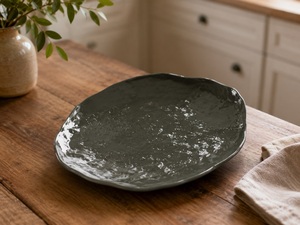
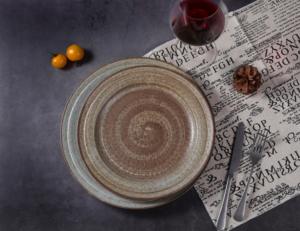
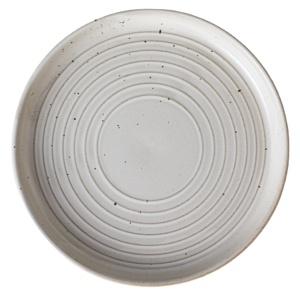
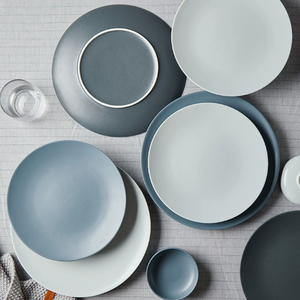
In the global B2B tableware, drinkware, and commercial hospitality ecosystem, procurement executives face an increasingly complex regulatory landscape and evolving consumer quality expectations. Sourcing high-performance stoneware mugs and dinnerware requires a deep understanding of ceramic chemistry, high-temperature vitrification, and strict regulatory compliance frameworks. As leading CE Certified Stoneware Mugs Manufacturers operating out of Mortágua, Portugal since 1993 under ISO 9001:2015 quality frameworks (Cerages, SA), we present this definitive technical whitepaper to guide global buyers, retail assortments, and hospitality distributors through optimal OEM manufacturing protocols.
This technical guide evaluates the critical engineering benchmarks that separate standard earthenware from industrial-grade vitrified stoneware, details the exact parameters of European Union CE certification and food-contact directives, analyzes future global procurement trends for 2025–2030, and provides actionable answers to complex manufacturing inquiries.
Full compliance with European Regulation (EC) No 1935/2004, Directive 84/500/EEC, and LFGB standard testing for heavy metal leaching (Lead & Cadmium).
High-temperature firing transforms natural clay into a high-density, non-porous body with <0.5% water absorption rate, preventing bacterial growth.
Integrated product design offering permanent base backstamps, 1,300+ reactive and solid glaze recipes, and specialized retail packaging.
When selecting a manufacturer for commercial stoneware mugs and tablewares, procurement officers must differentiate between raw clay body formulations. The performance of ceramic drinkware under heavy commercial use (industrial dishwashers, microwave heating, thermal shock cycles) depends entirely on firing temperature and quartz-feldspar matrix fusion.
| Material Property | Vitrified Commercial Stoneware | Standard Earthenware | Hard Porcelain |
|---|---|---|---|
| Firing Temperature Range | 1200°C – 1300°C (Cone 6 – 10) | 1000°C – 1150°C (Cone 06 – 04) | 1300°C – 1400°C+ (Cone 11 – 13) |
| Water Absorption Rate (EN 1217) | < 0.5% (Impermeable) | 5.0% – 12.0% (Porous) | < 0.1% (Vitrified) |
| Thermal Shock Tolerance (EN 1183) | High (ΔT ≥ 180°C - 200°C) | Low (ΔT ≤ 110°C) | Moderate (ΔT ≈ 150°C) |
| Chipping Resistance (BS 4034) | Exceptional Edge Durability | Prone to Fracturing | High Hardness / Brittle Edges |
| Glaze Surface Options | 1,300+ Reactive, Matte, Satin & Gloss | Limited Bright Solid Glazes | Predominantly Clear / Smooth Gloss |
| CE & EU Food Contact Safety | 100% Lead & Cadmium Free | Requires Strict Barrier Coatings | 100% Food Safe |
Stoneware manufactured at our Mortágua plant achieves a density that guarantees zero moisture retention. In commercial mug usage, porosity leads to microwave overheating (due to absorbed water boiling inside the body micro-fractures) and bacterial harboring. Vitrified stoneware eliminates this risk entirely, ensuring 100% microwave, dishwasher, and freezer safety across all product collections.
While the CE mark historically applies to electronics and medical devices, ceramic mugs and tableware entering the European Single Market must fulfill the fundamental safety requirements of European Regulation (EC) No 1935/2004 on Materials and Articles Intended to Come into Contact with Food. Furthermore, professional manufacturers adhere to standard specifications that buyers often bundle under the general compliance term "CE Certified Ceramic Manufacturers".
The global stoneware market is undergoing a structural shift driven by modern consumer values, restaurant aesthetics, and corporate sustainability metrics. Buyers seeking long-term manufacturing partners must align with these four prevailing trends:
Hospitality chains and homeware retailers are moving away from mass-produced monochromatic tableware. The market demands organic, hand-crafted aesthetics featuring dual-tone reactive glazes. Through controlled chemical oxidation and reduction in gas kilns, minerals like iron oxide and copper create unique surface variations while maintaining strict dimensional tolerances for commercial stacking.
ESG compliance is now a mandatory vendor qualification for tier-1 retailers. Modern stoneware facilities utilize high-efficiency eco-kilns equipped with waste-heat recovery systems. By recycling energy from the cooling zone back into the drying chambers, ceramic factories lower gas consumption by up to 30%, directly reducing the carbon footprint per mug produced.
Urban lifestyle spaces demand versatile cookware and serveware. Stoneware mugs, baking dishes, and soup bowls are now formulated with high thermal expansion matching between body and glaze. This allows culinary pieces to transition seamlessly from freezer storage (−20°C) to direct convection ovens (+250°C) without thermal shock cracking.
Private label brands require clear origin verification and customized brand identity. Modern manufacturing protocols integrate customer logos and compliance symbols (e.g., food-grade icon, dishwasher safe, country of origin) directly into the plaster casting moulds or via fired ceramic decals that fuse under the glaze layer at 1250°C, ensuring the mark never wears off.
Producing certified stoneware mugs and dinnerware at scale requires disciplined technical control at every manufacturing phase. At our facilities in Mortágua, Portugal, every order follows a standardized quality gate system:
Stage 1: Clay Body Formulation & Slip Preparation
High-purity ball clays, kaolin, quartz, and fluxing feldspar are wet-milled in ball mills to achieve optimal particle size distribution. The clay slip is filter-pressed and vacuum-extruded to eliminate air pockets, ensuring zero internal voids during firing.
Stage 2: Precision Shaping & Handle Attachment
Mugs and hollowware are produced via jiggering, ram-pressing, or slip-casting into custom plaster moulds. Mug handles are pressure-cast separately and joined using clay slurry (slip) at precise moisture percentages to prevent joint separation during shrinkage (typically 10-14% total linear shrinkage).
Stage 3: Glaze Development & Application
With a library of over 1,300 proprietary glaze formulations, our lab custom-matches color targets (Pantone, RAL, or physical samples). Glazes are applied via robotic dipping or automated spraying systems to guarantee uniform coating thickness (0.3mm – 0.5mm), critical for preventing surface pinholes and crazing.
Stage 4: High-Temperature Kiln Sintering
Pieces pass through continuous tunnel kilns or computerized shuttle kilns reaching peak temperatures of 1250°C to 1280°C. The precise pyrometric firing profile fuses the glaze directly into the body matrix, achieving a complete glass phase vitrification.
Stage 5: Quality Inspection, Testing & Packaging
Every single piece undergoes manual visual inspection for surface flaws, warp checks, and acoustic ring testing (confirming internal sound structural integrity). Random batch samples undergo thermal shock testing, dishwasher abrasion trials, and chemical leaching analysis before final packing into eco-friendly retail or e-commerce drop-test certified boxes.
Operating since 1993, Cerages SA stands as a premier Portuguese stoneware manufacturer specializing exclusively in 100% private label OEM and ODM solutions. Unlike trading companies or factories prioritizing stock items, our entire facility is designed for buyer-driven custom projects.
Located in the industrial region of Mortágua, our plant combines centuries of Portuguese ceramic mastery with modern automated kilns and digital glaze research.
From initial 3D design files to prototype plaster moulds and custom reactive glazes, our complete engineering cycle stays under one roof for rapid sampling.
Every shipment is backed by ISO certified quality protocols, providing batch traceability, material safety declarations, and global logistics support.
Clear, direct answers regarding certifications, MOQs, custom tooling, and product performance parameters.
Yes. All stoneware mugs and tableware manufactured at our factory comply fully with European Regulation (EC) No 1935/2004, EU Directive 84/500/EEC, and German LFGB standards. We issue formal Declarations of Compliance (DoC) and third-party laboratory test reports verifying zero lead and cadmium migration.
Absolutly. We operate on a 100% private label and OEM basis. Your brand logo, trademark, care icons, and origin statement can be stamped directly onto the base mould or applied via underglaze decals. We also support customized retail color boxes, mail-order packaging, and barcoded cartons.
Solid glazes deliver a uniform, consistent color across every piece, ideal for strict corporate pantone branding. Reactive glazes contain multiple mineral oxides that react dynamically to heat variations during firing, producing multi-tonal, artistic surfaces where no two pieces are identical.
Yes. Our high-firing temperature (1250°C–1280°C) results in a fully vitrified ceramic body with less than 0.5% water absorption. This low porosity prevents glaze cracking, edge chipping, and water seepage during aggressive commercial dishwasher cycles (EN 12875 compliant).
Projects begin with your technical drawing, 3D file, or sample reference. Our laboratory reviews feasibility (wall thickness, shrinkage factor, stacking rims) and creates a 3D model/plaster prototype. After sample approval (glaze and shape), pilot production and bulk manufacturing commence.
We regularly supply major retail chains, hospitality importers, and direct-to-consumer lifestyle brands across Europe, North America, Oceania, and Asia. Orders are shipped on reinforced EURO pallets via sea freight, road transport, or air shipment according to your incoterms (FOB, CIF, DDP).
Speak directly with our technical ceramic engineering team in Mortágua, Portugal. Submit your product designs, glaze specifications, or sample requirements today.