
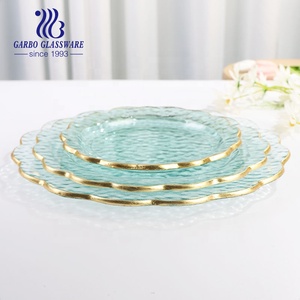
Rigourously batch-tested for high-temperature ovens, thermal shock resistance, and heavy commercial dishwashing cycles.
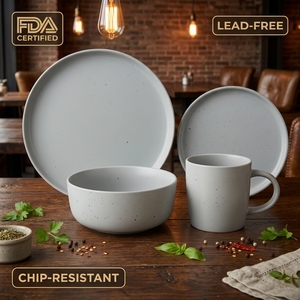
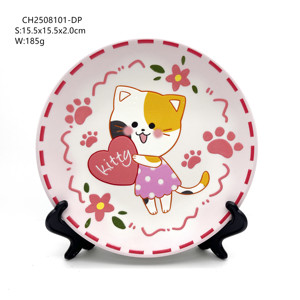
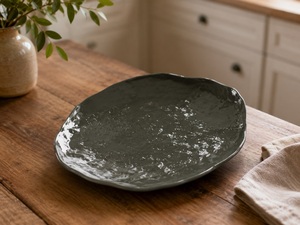
For international procurement managers, hotel supply chains, and bulk buyers, specifying commercial tableware is not merely an aesthetic choice—it is a critical compliance matrix. As a global CE certified restaurant dinnerware exporter, our production lines operate under strict European Union directives, ensuring that every batch of porcelain, stoneware, and decorated ovenware fulfills international food safety regulations.
The core of CE compliance for ceramic dinnerware centers on the prevention of chemical leaching, specifically toxic heavy metals like Lead (Pb) and Cadmium (Cd). Under EC Directive 84/500/EEC and its modern amendment 2005/31/EC, as well as Regulation (EC) No 1935/2004 on Materials and Articles intended to come into contact with food, dinnerware must withstand rigorous acid extraction testing. Standard testing protocols immerse pieces in a 4% acetic acid solution at 22°C for 24 hours to quantify metal release.
Beyond European CE mandates, global exports demand compliance alignment across multi-jurisdictional frameworks. Our manufacturing facilities in Mortágua, Portugal, maintain full traceability and compliance with:
| Material Metric | Vitrified Commercial Stoneware | Standard Earthenware | Fine Bone China |
|---|---|---|---|
| Firing Temperature | 1250°C – 1300°C | 1000°C – 1150°C | 1200°C – 1250°C |
| Water Absorption Rate | < 0.5% (High Vitrification) | > 3.0% to 10% (Porous) | < 0.5% (Vitrified) |
| Thermal Shock Tolerance ($\Delta T$) | Up to 180°C – 220°C | ≤ 110°C (High Fracture Risk) | Up to 150°C |
| Edge-Chip Resistance (MOR) | High (> 70 MPa) | Low (< 35 MPa) | Moderate to High |
| Dishwasher Lifecycle (EN 12875) | 5,000+ Cycles (Zero Crazing) | < 500 Cycles (High Crazing Risk) | 2,000+ Cycles |
| CE & EU 1935/2004 Status | Fully Certified / Heavy Duty | Requires Frequent Testing | Fully Certified |
In high-intensity restaurant environments, dinnerware undergoes thermal shock, mechanical impact, acidic exposure, and aggressive chemical abrasion. The material science underlying our stoneware manufacturing relies on complete mullite crystal phase formation achieved through precision high-temperature firing.
Unlike standard earthenware, which retains a porous clay matrix after firing, commercial stoneware is fired at temperatures reaching 1300°C. At this critical thermal threshold, the silica, feldspar, and refined ball clays undergo vitrification. The liquid phase glazes fill interstitial pores, yielding an exceptionally dense molecular structure with a water absorption rate under 0.5%. This non-porous structure offers three critical operational advantages for professional kitchens:
Capable of enduring immediate shifts from freezer storage (-18°C) directly to high-temp combination steam ovens (220°C) without micro-fracturing or structural failure.
High Modulus of Rupture (MOR) engineered body reduces operational chipping by up to 65% compared to conventional domestic ceramics, lowering replacement overheads.
Vitrified surfaces prevent liquid absorption, eliminating internal moisture trapping that causes bacteria proliferation, mold growth, or residual food odor transfer.
Operating from our historical production center in Mortágua, Portugal (Cerages SA), our facility specializes in 100% OEM and private-label manufacturing. Sourcing directors and brand managers are provided with end-to-end custom development capabilities without intermediate agent markups.
Glaze formulation is an exact chemical discipline. Our dedicated laboratory maintains an archival database of over 1,300 specialized glaze formulas, including:
To preserve brand integrity for hotels, retail chains, and private-label collections, every manufactured piece can be customized via three backstamping techniques:
The global hospitality market is experiencing a profound shift in dinnerware procurement requirements. Decision-makers are looking beyond upfront unit costs, prioritizing total lifecycle value, sensory dining experiences, and supply chain decarbonization.
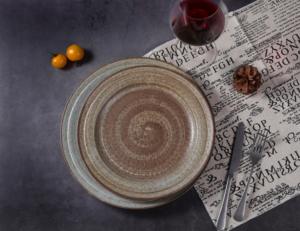
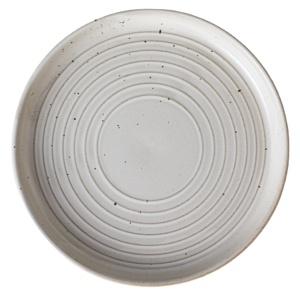
Modern fine dining and luxury hospitality groups are abandoning sterile, uniform white porcelain in favor of organic shapes, earth tones, and handcrafted tactile textures. Stoneware's weight and natural surface variation enhance perceived culinary value.
Buyers are evaluating Total Cost of Ownership (TCO). Investing in fully vitrified stoneware with reinforced rim edges reduces annualized breakage rates from 25% down to under 5%, significantly improving multi-year ROI for hotel chains.
Supply chain ESG auditing is now mandatory. Our Portuguese facility utilizes closed-loop waste heat recovery systems, recycles 100% of unfired greenware clay scrap, and filters process water to minimize environmental footprint.
Every production run is accompanied by a formal Declaration of Compliance (DoC) pursuant to Regulation (EC) No 1935/2004 and Directive 2005/31/EC. We supply batch-specific lab test reports from accredited third-party testing facilities (such as SGS or TÜV) confirming Lead and Cadmium migration values are below measurable detection limits.
Our commercial stoneware body is specifically formulated to pass EN 12875-1 commercial dishwasher standards. The vitrified glaze prevents alkali detergent attack, visual dulling, and surface crazing, even when subjected to rapid high-temperature wash and rinse cycles (85°C sanitize setting) up to 5,000 cycles.
Standard OEM production orders typically start at 1,000 to 3,000 pieces per shape/color combination depending on size. Initial sampling and master mould creation require 2 to 3 weeks. Upon sample approval, bulk mass production standard lead times range from 6 to 8 weeks, shipped directly from our export terminal in Portugal.
Yes. Our in-house chemical glaze laboratory can match physical ceramic samples, color chips, or Pantone/RAL standards. Once developed, the custom formula is assigned a unique laboratory identification code, locked into our system, and guaranteed for exact color matching across future repeat orders.
All bulk shipments follow ISTA-1A drop-test certified packaging standards. Inner cartons utilize high-density corrugated dividers, individual protective poly-wrapping, and corner guards. Outer master cartons are shrink-wrapped onto ISPM 15 heat-treated wooden pallets, engineered specifically to withstand heavy container sea-freight handling and cross-docking logistics.
While both materials are fully vitrified (<0.5% water absorption), stoneware utilizes richer ball clays fired between 1250°C–1300°C, offering superior organic texture depth, rustic tactile appeal, and better thermal mass retention. Porcelain relies on kaolin clays for translucent whiteness. Stoneware provides enhanced resistance to thermal shock breakage in oven-to-table applications.
Exporting high-volume ceramic shipments globally requires flawless supply chain management. Operating from Portugal, our location offers direct access to key European deep-water ports (Leixões and Sines), facilitating rapid container shipping to North America, the Middle East, Asia, and Oceania.
All export products are classified under International HS Codes 6911.10 (Porcelain Tableware) and 6912.00 (Ceramic/Stoneware Tableware), ensuring smooth customs clearance. Our dedicated export documentation division manages complete bill of lading generation, EUR.1 origin certification, CE declarations, and customized pallet packing lists tailored to your distribution center's warehouse management system (WMS).
Request technical specifications, sample kits, or custom mould estimates directly from our engineering team in Mortágua, Portugal.
Inquire Now