Engineered for global retail brands, hospitality chains, and industrial distributors. Tested for EU Food Contact Compliance, thermal stability, and commercial durability.

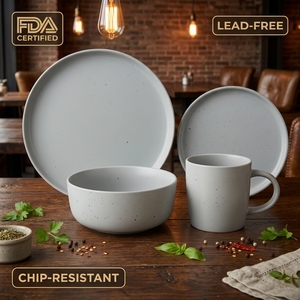
In international B2B ceramic mug procurement, identifying qualified CE Certified Ceramic Mugs Factories involves rigorous verification beyond standard cosmetic grading. For institutional buyers, importers, and private-label brands across Europe and North America, regulatory compliance dictates global market access. Ceramic drinkware intended for food and beverage contact is governed by strict chemical safety directives, thermal performance standards, and manufacturing traceability guidelines.
This technical whitepaper provides sourcing directors, supply chain heads, and product managers with an authoritative benchmark for evaluating ceramic mug manufacturing plants, understanding the chemistry behind compliance certification, and implementing robust quality assurance protocols from body preparation to final packaging.
Core Procurement Insight: CE marking and European Food Contact compliance (Regulation EC No 1935/2004 & Directive 84/500/EEC) require verified lead and cadmium leachability limits below 1.5 mg/L and 0.1 mg/L respectively, achieved through high-temperature vitrification above 1250°C and certified glaze formulations.
When procurement executives query search engines for CE-certified ceramic mug factories, they are seeking assurance that the manufacturing site operates under European Union compliance regimes for materials intended to come into contact with foodstuffs. The regulatory landscape comprises three distinct compliance pillars:
Mandates that ceramic articles do not transfer their constituents into food in quantities that could endanger human health, bring about an unacceptable change in food composition, or cause deterioration in organoleptic characteristics.
Specifies analytical testing methods (using 4% acetic acid for 24 hours at 22°C) to quantify Heavy Metal Extraction (Lead Pb and Cadmium Cd) across hollowware, mugs, and cooking vessels.
International standard protocols regulating the permissible limit of released toxic metals from ceramic ware, glass ceramic, and glass dinnerware in contact with food.
Understanding the body density, water absorption rate, and firing cycle is fundamental when auditing a manufacturing plant. Ceramic mugs generally fall into three structural categories: Earthenware, Fine Porcelain, and High-Fired Stoneware. Below is an engineering benchmark table comparing key physical parameters across factory types:
| Material Classification | Firing Temperature Range | Water Absorption Rate | Thermal Shock Resistance (ΔT) | Commercial Suitability |
|---|---|---|---|---|
| Earthenware | 1000°C – 1150°C | > 5.0% | Up to 110°C | Promotional / Decorative Only |
| Fine Bone China / Porcelain | 1200°C – 1300°C | < 0.5% | 140°C – 160°C | Luxury Retail & Dining |
| High-Fired Vitrified Stoneware | 1250°C – 1320°C | ≤ 0.2% (Vitrified) | 180°C – 220°C | Heavy-Duty Hotel & Restaurant (HORECA) |
Vitrification occurs when clay silicas melt and fuse into a non-porous crystalline structure at temperatures exceeding 1250°C. For commercial clients (such as Starbucks, Costa Coffee, or major hotel chains), vitrified stoneware eliminates micro-cracks where bacteria can harbor. It minimizes water penetration during high-temperature commercial dishwashing cycles, dramatically reducing chipping, thermal shock fracturing, and glaze crazing.
The global ceramic drinkware market is undergoing structural shifts driven by environmental legislation, automated manufacturing technologies, and changing consumer preferences. Procurement teams must align with factories capable of supporting these modern demands:
European and international buyers are actively prioritizing production facilities operating gas-recuperative tunnel kilns and solar-supplemented plant powering systems. Heat recovery systems capture exhaust energy from 1280°C kilns to preheat drying chambers, cutting carbon intensity per unit produced by up to 35%.
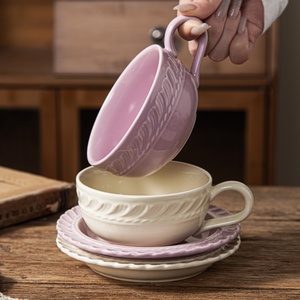
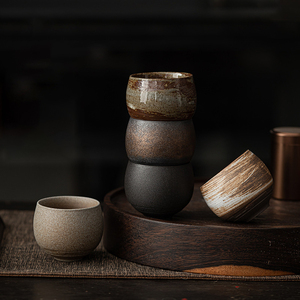
Modern consumers demand tactile, organic visual aesthetics. Advanced glaze research labs now formulate over 1,300+ lead-free reactive glaze profiles. Reactive glazes undergo chemical phase separation during firing, producing unique color variations on every mug without using toxic heavy metal fluxes like lead oxide or cadmium pigments.
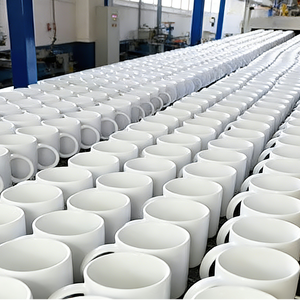
Bulk blank sublimation mugs represent a multi-billion dollar market segment. Leading OEM factories apply ultra-durable polymer coatings engineered to withstand over 3,000 industrial dishwashing cycles without image degradation or peeling, certified under BS EN 12875-4.
When selecting a target factory, distant desktop evaluations must be augmented by systematic on-site or third-party auditing (SGS, TUV, Bureau Veritas). Use this 5-stage verification model during supplier evaluation:
Verify that kaolin, feldspar, and quartz slurries are processed through magnetic separators to remove iron particles (preventing black spots) and tested for heavy metal impurities prior to body slip preparation.
Check greenware dimensional uniformity, handle joint structural integrity, and seam line finishing. Handle pull tests must exceed 25 kg of force prior to bisque firing.
Ensure dipping or robotic spraying processes maintain uniform glaze thickness (0.15mm – 0.25mm). Inconsistent thickness leads to pinholes, glaze crawling, and uneven thermal stress distribution.
Verify that continuous tunnel kilns use Orton cones and multi-point thermocouples across all zones to ensure consistent firing heat work across every sagger and cart location.
Final packing must adhere to ISO 2859-1 (AQL 1.5 for critical defects, 2.5 for major, 4.0 for minor). Testing must cover microwave spark testing, thermal shock testing (200°C to 20°C water immersion), and impact strength.
Operating from state-of-the-art facilities with over 30 years of specialized stoneware and porcelain expertise, our manufacturing infrastructure delivers turnkey solutions for international brands, hospitality groups, and high-volume distributors.
Essential guidance for procurement managers sourcing ceramic mugs from certified manufacturing plants.
Work directly with certified engineers and ceramic specialists. Submit your design drawings, target specifications, or volume requirements for a comprehensive technical proposal and instant pricing response.
