
CE Certified
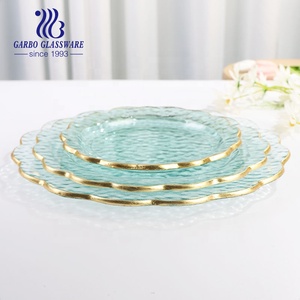
Engineered for commercial food service, hospitality groups, and international retail brands requiring rigorous EU compliance and thermal performance.
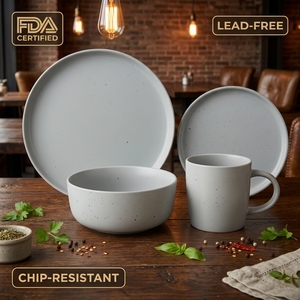
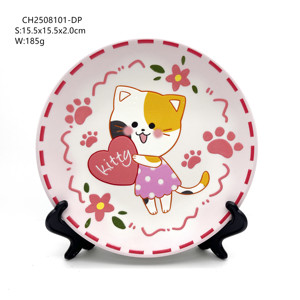
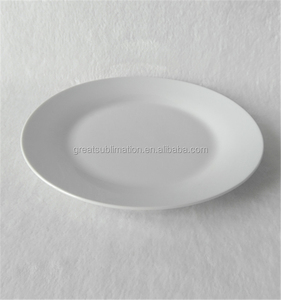
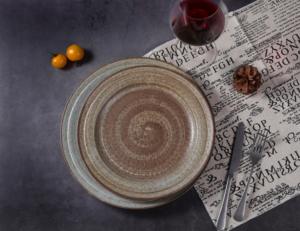
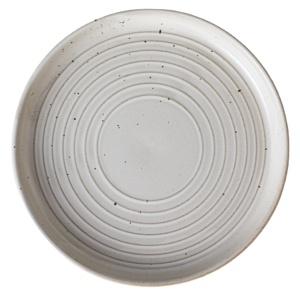
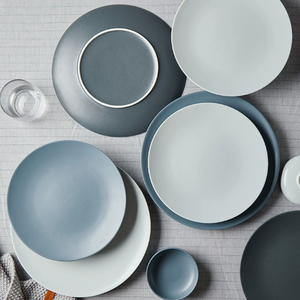
Since 1993, operating from Mortágua, Portugal, Cerages SA has specialized in industrial OEM and private-label stoneware manufacturing under strict ISO 9001:2015 quality protocols.
Unlike standard earthenware tableware fired at temperatures between 950°C and 1050°C (yielding high porosity of 5–12%), our CE certified stoneware bodies undergo high-temperature firing exceeding 1250°C. This intensive thermal profile completely vitrifies the silicate clay body, reducing water absorption to under 0.5%. The structural density eliminates risk of moisture-induced crazing, ensures zero bacterial retention, and guarantees full compliance with European Food Contact Material (FCM) regulations.
Navigating European Safety Directives, Heavy Metal Extraction Limits, and Commercial Hospitality Durability Standards.
Commercial tableware imported into the European Economic Area (EEA) must adhere to Regulation (EC) No 1935/2004, which mandates that materials do not transfer constituents to food in quantities that endanger human health or bring about an unacceptable change in food composition. Ceramic crockery exporters must provide declarations of compliance backed by laboratory test protocols under Directive 84/500/EEC and its amending Directive 2005/31/EC.
CE certification mandates strict testing via 4% (v/v) acetic acid immersion at 22°C for 24 hours. The allowable maximum limits for heavy metal migration are strictly enforced based on article category:
| Category Classification | Description / Article Type | Lead (Pb) Maximum Limit | Cadmium (Cd) Maximum Limit |
|---|---|---|---|
| Category 1 | Articles which cannot be filled & articles whose internal depth ≤ 25 mm | 0.8 mg/dm² | 0.07 mg/dm² |
| Category 2 | All other articles which can be filled (bowls, serving dishware) | 4.0 mg/L | 0.3 mg/L |
| Category 3 | Cooking ware; packaging & storage vessels > 3 Liters capacity | 1.5 mg/L | 0.1 mg/L |
Validated for rapid thermal cycles ($\Delta T \ge 180^\circ\text{C}$). Ceramic pieces can transition seamlessly from freezer storage (-20°C) into preheated commercial ovens (+230°C) without micro-fracturing.
Glaze hardness scored on the Mohs scale (6–7). Formulated to endure over 1,500 continuous industrial dishwasher cycles utilizing aggressive caustic detergents without glaze dulling or color fading.
Vitrified non-porous stoneware prevents internal moisture absorption. Plates remain cool to the touch during microwave reheating while maintaining low risk of localized thermal expansion stress.
Key structural shifts impacting global B2B procurement, design aesthetics, and factory compliance agendas through 2030.
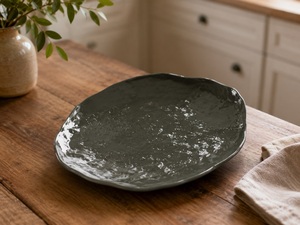
Global hospitality buyers are pivoting away from plain monochrome porcelain toward rustic, artisanal reactive glazes. Utilizing complex chemical interplay between metal oxides (iron, copper, cobalt) during single-fire or double-fire cycles, factories produce tactile surfaces where every piece exhibits unique variation under mass production stability.
Sustainability is no longer optional in CE compliance. Leading Portuguese and European ceramic exporters integrate 100% wastewater recovery systems, recycle unfired clay scraps (greenware scrap) directly back into slip preparation, and utilize waste heat recovery from kilns to dry plaster moulds and raw pieces.
The integration of high-definition 3D UV printing and digital ceramic ink jetting allows factories to apply hyper-realistic textures (stone, cement, organic grain) directly onto durable stoneware plates, combining luxury aesthetics with industrial-grade dishwashing resilience.
Full control over moulding, material science, custom backstamping, and global B2B logistics.
Our dedicated chemical engineers match physical color samples, Pantone references, or customer target boards, locking proprietary glaze recipes for exact consistency across repeat production runs.
Permanent high-temperature decal backstamping, custom mould embossing, retail-ready barcodes, drop-test verified e-commerce packaging, and specialized palletization for sea/rail transport.
Every production batch undergoes multi-stage inspections checking dimensional tolerances, rim distortion, glaze thickness, color deviation ($\Delta E < 0.5$), and mechanical rim strength.
Direct export fulfillment across Europe, North America, Middle East, Asia, and Oceania with complete customs documentation, Certificate of Origin (COO), and CE compliance files included.
Essential technical and regulatory answers for international purchasing directors, hospitality groups, and distributors.
Consult directly with our ceramic technicians and glaze specialists in Mortágua. Receive technical feasibility reviews, MOQs, and tailored pricing estimates within 24 business hours.