A ceramic piece can carry a brand before anyone reads the menu. The underside can carry it longer. Custom Backstamp Ceramics places a fired maker’s mark beneath each plate, cup, or serving piece. It can show a logo, collection name, origin, or small production code. This detail remains visible during unpacking, cleaning, and replacement ordering.
Market evidence supports stronger investment in branded tableware. Grand View Research’s Tableware Market Size, Share & Trends Analysis Report estimates the global tableware market will expand steadily through 2030. IMARC Group also reports continued growth in tableware demand, driven by hospitality, gifting, and premium home dining. These reports do not measure Custom Backstamp Ceramics directly. That limitation matters. Still, they indicate a larger commercial appetite for distinctive, durable dining products. A custom mark can help connect those products with one recognizable identity.
Ceramic artist and author Edmund de Waal describes ceramics as “a way of thinking with your hands.” His observation fits the backstamp’s quiet role. It turns a physical object into evidence of care, origin, and continuity. A restaurant guest may never see it. A buyer, collector, or chef often will. That small oval mark can sit beneath a matte white plate, beside a kiln-fired date, or under a hand-glazed rim. It is not magic. Poor artwork, weak firing, or inconsistent placement can damage credibility. Careful sampling remains essential. For brands seeking memorable tableware, Custom Backstamp Ceramics offers a practical identity system, not merely decoration.
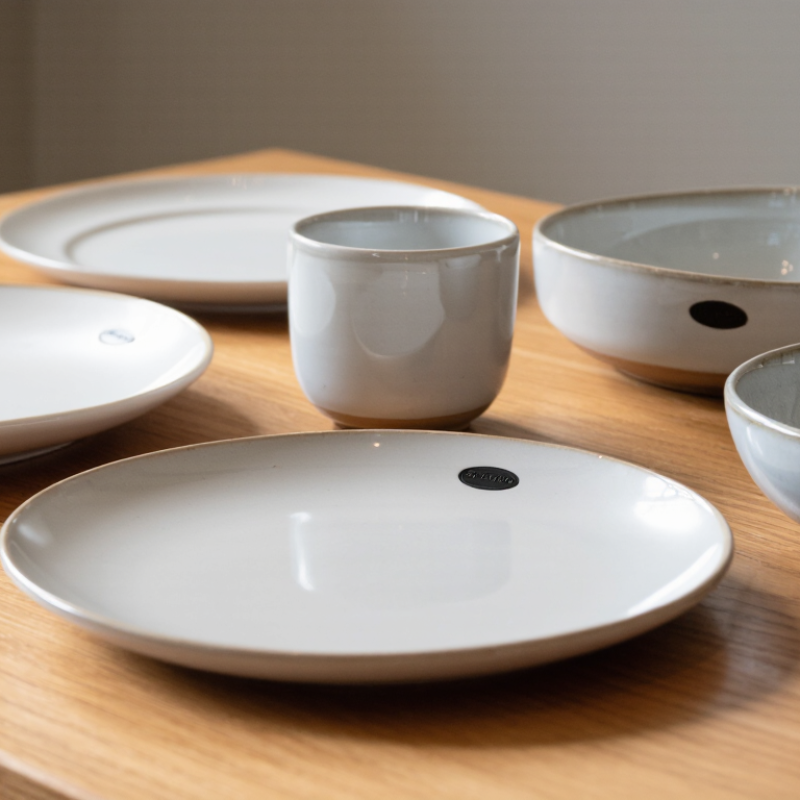
Custom backstamp ceramics are ceramic pieces with a personalized mark on the underside. This mark may include a logo, collection name, date, place, or short message. It is applied with ceramic transfers, screen printing, engraving, or hand decoration. The piece is then fired, helping the design bond with the surface.
Look underneath the cup. That small mark can reveal useful detail. It can identify a product series, support inventory checks, and strengthen recognition during daily use. The Global Ceramic Tableware Market Report by Grand View Research estimates continued market growth through 2030, driven partly by hospitality and premium dining demand. Custom backstamps can support this shift by making ordinary tableware feel more considered.
Personalization also influences buying behavior. McKinsey & Company reported that 71% of consumers expect personalized interactions, while 76% feel frustrated when they do not receive them. A backstamp offers a quiet form of personalization, especially on plates, mugs, and hotel tableware. It does not interrupt the design with large graphics. It stays beneath the piece, like a maker’s signature.
Production still needs care. Small text may disappear after firing. Fine lines can blur. Colors may change slightly. Samples should be tested before a full order. Honestly, a custom mark is not a magic sales device. Poor spacing or weak contrast can make it look inexpensive. Experienced ceramic suppliers review artwork, firing temperatures, glaze behavior, and packing conditions before production. That practical control helps turn a small underside detail into a reliable part of the product experience.
Why Choose Custom Backstamp Ceramics for Your Brand?
How Custom Backstamps Strengthen Brand Identity
A custom backstamp is more than a mark beneath a cup. It is a quiet brand signal customers notice during daily use. A carefully drawn emblem, collection code, or origin statement can make plain tableware feel intentional. The mark appears when a customer lifts the piece. That small reveal creates recognition without interrupting the dining experience. In my experience, consistent placement matters as much as the artwork. Crooked marks can weaken trust. They happen.
Strong identity depends on repeatable details. Backstamp artwork should match the tone of packaging, photography, and product names. A refined serif may suggest heritage, while a simple line mark feels modern and practical. Ceramic production adds technical limits. Glaze color, firing temperature, and stamp depth can change the final result. Requesting a fired sample is essential. Digital approval is not enough. Production teams should check legibility after washing, stacking, and repeated handling. Those tests reveal problems early.
Reliable customization also requires documented specifications. Record dimensions, position, transfer method, clay body, and approved color references. This creates a useful trail for future production. Small batches deserve the same care. A backstamp that fades or shifts between shipments damages recognition. I have also seen overly detailed marks lose clarity on small bases. Simpler designs often perform better, though this is not universal. Review the physical sample under ordinary room light. Then question what feels unnecessary.
Why Choose Custom Backstamp Ceramics for Your Brand?
Key Design and Production Options to Consider
Custom backstamp ceramics create a subtle, lasting identity on each piece. The mark may sit beneath the base, inside the rim, or along a visible side. Placement changes how customers discover it. A hidden stamp feels personal, while an exterior mark supports stronger shelf recognition.
Design should match the ceramic form. Small lettering often loses clarity after firing, especially on textured clay. Use sturdy lines and balanced spacing. Keep artwork bold enough. Relief stamps add texture, while printed marks offer finer detail and more color choices. In production reviews, I always check the stamp on the actual shape, not only on a flat drawing.
Glaze selection also affects the result. Dark glaze can soften contrast, while glossy surfaces may reflect light across thin details. Ask for fired samples before approving a full run. Compare them under daylight and indoor lighting. Kiln temperature, clay shrinkage, and hand finishing can create small variations. That is normal, but it needs control. A 2-millimeter shift may change the visual balance. I have seen elegant artwork become crowded after scaling. It is worth revising early.
Production quantity influences cost and consistency. Larger runs may reduce unit pricing, but they require stronger quality checks. Confirm dimensions, stamp depth, glaze limits, packaging protection, and acceptable color variation in writing. A dependable supplier should explain these limits clearly, not promise perfect uniformity. Ceramic is made by heat. Heat rarely behaves with complete obedience.
| Decision Dimension | Available Options | Practical Benefits | Key Limitations or Risks | Best Planning Consideration |
|---|---|---|---|---|
| Backstamp Placement | Base stamp, underside decal, molded mark, or recessed mark | Uses the product surface efficiently while keeping the exterior design uncluttered | The foot ring, glaze flow, and contact surface can restrict the usable area | Confirm the flat printable zone and foot-ring dimensions before artwork approval |
| Decoration Method | Underglaze, overglaze, ceramic decal, screen printing, or pad printing | Allows different levels of detail, color coverage, durability, and visual finish | Each method has different firing conditions, color limits, and registration tolerances | Select the process based on artwork complexity, use conditions, and required finish |
| Logo Detail Level | Text-only mark, simplified symbol, detailed emblem, or logo with registration information | A simplified mark generally remains clearer at small sizes and on curved surfaces | Fine lines, tiny text, and close color spacing may lose clarity after production and firing | Prepare vector artwork and test the smallest text and line weights at actual size |
| Color Selection | Single-color mark, limited spot colors, or multicolor decoration | Fewer colors can simplify production, reduce registration challenges, and improve consistency | Ceramic pigments can change appearance during firing; screen colors do not always match fired results | Approve colors from fired samples rather than relying only on digital screen previews |
| Ceramic Body | Porcelain, stoneware, earthenware, or vitrified ceramic | Body selection affects whiteness, strength, porosity, weight, and the appearance of decoration | Different bodies require different firing schedules and may produce different color results | Match the body to the intended use, visual standard, and existing product range |
| Glaze Finish | Gloss, satin, matte, transparent, or colored glaze | Controls reflectivity, tactile feel, color contrast, and the perceived quality of the ceramic | Rough or highly textured finishes can make small backstamp details harder to read | Use a smooth, sufficiently flat area when legibility is the primary objective |
| Information Included | Logo, product line, origin statement, care symbols, material information, or model code | Can combine identity, traceability, and essential product information in one discreet location | Too much information reduces legibility and may exceed the available base area | Prioritize required information first, then add optional identity elements if space allows |
| Durability Requirement | Decorative use, hand-wash use, dishwasher use, or frequent commercial use | A suitable fired decoration can withstand normal handling and repeated cleaning more effectively | Abrasion, detergents, thermal cycling, and metal marks can gradually affect some finishes | Define cleaning and usage conditions before choosing the decoration and glaze system |
| Sampling Stage | Digital proof, plain ceramic sample, decorated prototype, or fired production sample | Progressive sampling helps verify scale, placement, color, and surface compatibility | A digital proof cannot fully show firing variation, glaze interaction, or final texture | Approve a fired sample before authorizing a large production run |
| Quality Control | Artwork inspection, placement checks, color comparison, glaze inspection, and functional testing | Creates objective checkpoints for appearance, consistency, safety, and performance | Natural ceramic variation means identical visual results may not be achievable in every piece | Set acceptable tolerances for position, color, pinholes, glaze variation, and print clarity |
| Production Volume | Short-run sampling, limited release, recurring small batches, or high-volume production | Volume planning influences tooling efficiency, decoration setup, unit economics, and scheduling | Small quantities may carry higher setup costs per piece, while large runs require stronger approvals | Estimate forecast demand and replenishment timing before finalizing the production method |
| Regulatory and Safety Review | Food-contact review, glaze compliance, migration testing, care instructions, and traceability records | Supports responsible use and helps verify that materials and decoration suit the intended application | Requirements vary by market, product category, decoration location, and intended contact with food | Identify the destination market and intended use early, then obtain the relevant compliance documentation |
Note: Production results depend on the ceramic body, glaze system, firing conditions, artwork scale, and selected decoration process.
A backstamp is more than a decorative mark. On a ceramic base, it can identify a production family, material specification, and approved artwork version. A custom code may connect each item to a batch record. That record can include the mold number, firing date, glaze lot, and inspection result. In practice, this creates a visible link between the product and its manufacturing history.
For teams handling many designs, traceability reduces guesswork. Staff can compare a backstamp with purchase orders, quality reports, and packing records. If a finish looks uneven, the code helps narrow the review to a kiln load or glaze batch. This supports faster investigation and clearer communication with suppliers. It also helps separate current stock from older revisions. The mark should remain readable after firing, washing, and normal handling. Tiny details matter.
A reliable system needs more than an attractive symbol. Code formats should be consistent, documented, and checked before production. Operators should photograph samples and retain approved reference pieces. Digital records can strengthen the process, but they require disciplined updates. No system is perfect. A crowded backstamp may become difficult to read, while an overly simple code may reveal too little. Reviewing these weaknesses early helps balance appearance, production limits, and useful product evidence.
Choosing the right ceramic manufacturer is more important than selecting a decorative backstamp. A backstamp may identify your collection, but manufacturing quality protects your reputation. Ask how the factory controls clay preparation, glazing, firing temperature, and final inspection. These details affect color consistency, surface strength, and food-contact safety.
Request physical samples before approving production. Check the stamp placement, glaze coverage, rim smoothness, and weight in your hand. A reliable manufacturer should explain the clay body, firing process, testing methods, minimum order quantity, and expected lead time. Clear documentation matters. It shows that quality decisions are based on evidence, not attractive promises.
Communication is equally practical. Confirm who handles sample changes, packaging tests, shipping damage, and production delays. Small misunderstandings can create hundreds of incorrect pieces. That is expensive. In my view, the best supplier will welcome careful questions and record every approved detail. However, early samples are rarely perfect. A stamp may look sharp on one glaze but fade on another. Packaging may also need more testing than expected. Treat these flaws as useful warnings, not personal failures. Before signing a production agreement, compare several samples under natural light and request written quality standards. A manufacturer that accepts reasonable revisions is more dependable than one offering only the lowest price.
They are ceramic pieces with a personalized mark underneath. The mark may show a collection name, date, location, logo, or short message.
It is usually placed on the underside of a cup, plate, or bowl. Customers notice it when lifting the piece.
Manufacturers may use ceramic transfers, screen printing, engraving, or hand decoration. Firing helps the design bond with the ceramic surface.
It can support collection recognition and inventory checks. It also adds a quiet, personal detail without covering the main design.
Simple marks often remain clearer on small surfaces. Fine lines and tiny letters may blur or disappear after firing.
Digital artwork cannot show every production change. A fired sample reveals color shifts, spacing problems, glaze reactions, and unclear details.
Check stamp position, legibility, glaze coverage, rim smoothness, and product weight. Test the piece after washing, stacking, and repeated handling.
Ask about clay preparation, firing temperatures, glazing, inspection, testing, packaging, and lead times. Written specifications reduce misunderstandings.
No. It supports recognition, but it cannot fix weak design or poor quality. Honestly, the mark may feel unnecessary if spacing and contrast are poor.
Custom Backstamp Ceramics are ceramic products marked with a distinctive symbol, logo, text, or production code on their base or another suitable surface. This subtle detail can strengthen brand identity by creating a consistent visual signature, supporting product recognition, and adding a sense of authenticity and craftsmanship. Businesses can select from various backstamp layouts, colors, finishes, sizes, and application methods to match their product style, packaging, and intended market.
Beyond appearance, custom backstamps can support product traceability by identifying production batches, manufacturing dates, collections, or quality-control references. To achieve reliable results, brands should choose a ceramic manufacturer with strong technical expertise, stable production capabilities, careful quality inspection, and clear communication throughout the process. The right partner can help balance design flexibility, durability, production efficiency, and cost while ensuring that every finished piece reflects the brand’s standards and purpose.