China’s stoneware industry has become a practical sourcing hub for brands seeking durable, attractive, and customizable tableware. This guide examines the China Top 10 Private Label Stoneware Manufacturers and the capabilities that separate reliable partners from impressive-looking catalogs.
Private Label Stoneware is not simply about adding a logo. It involves clay formulation, glaze development, mold accuracy, firing control, packaging, and repeatable quality. A matte dinner plate may look simple, yet its rim thickness, weight, foot-ring finish, and glaze consistency affect everyday use. Small details matter.
Bernard Leach, a respected ceramic artist and educator, stated, “The potter’s art is the art of making useful things beautiful.” His observation remains relevant to modern private label production. A successful manufacturer must combine visual appeal with food-safe surfaces, stable dimensions, impact resistance, and dependable delivery.
This overview considers factory experience, production scale, customization depth, quality systems, export performance, and communication. It also looks beyond polished showrooms. Factory visits, sample testing, kiln records, and independent inspections can reveal information that brochures rarely show.
No ranking is flawless. Supplier strengths change with equipment, staffing, and order volume. One factory may excel at reactive glazes, while another performs better with large hotel orders. Buyers should still verify certifications, lead times, carton protection, and production samples before making a decision.
The goal is practical guidance. These manufacturers may help brands develop distinctive collections without sacrificing usability or consistency. Yet careful evaluation remains essential, especially when a beautiful prototype becomes a demanding production order.
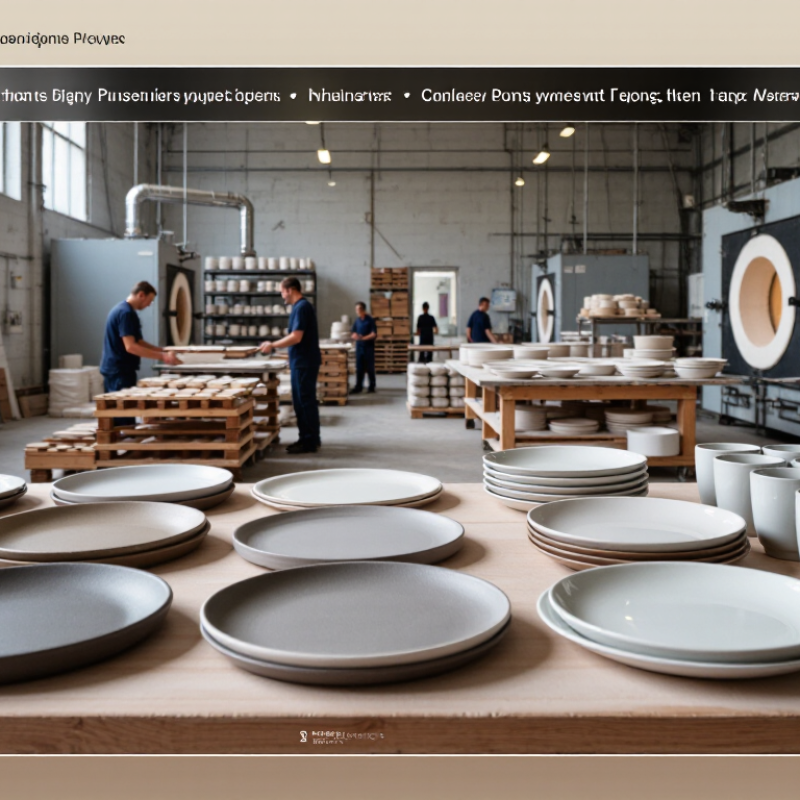
China Top 10 Private Label Stoneware Manufacturers
Defining Private-Label Stoneware by HS 6912 and GB 4806.4 Standards
Private-label stoneware begins with classification, not packaging. HS 6912 generally covers ceramic tableware and kitchenware excluding porcelain and china. Customs treatment depends on product composition, form, and national tariff schedules. A capable manufacturer verifies the code with current documentation. Assumptions can create costly delays.
In factory audits, I check the clay body, glaze, firing records, and supplier traceability. Stoneware should show consistent absorption, dimensions, color, and resistance to thermal shock. These details affect shelf appearance and daily use. They also support repeat production. Not glamorous, but necessary.
For food-contact products entering China, GB 4806.4 sets requirements for ceramic products. Testing commonly examines lead and cadmium migration, labeling, and material safety. The exact test plan depends on glaze, decoration, use conditions, and applicable updates. Ask for Chinese test reports, production records, and a clear sampling method. Documents alone are not enough. An on-site review can reveal uneven kiln loading or informal batch changes. I have seen small process changes alter glaze results. Test before scale.
Anonymous sourcing comparison of common Chinese private-label stoneware manufacturing profiles. Company and brand names are intentionally omitted.
| Rank | Anonymous Manufacturer Profile | Primary Production Strength | Typical Private-Label Output | Decoration & Finishing | HS 6912 Classification Fit | GB 4806.4 Compliance Support | Typical MOQ Range | Best-Fit Buyer |
|---|---|---|---|---|---|---|---|---|
| 1 | Profile A — Large Integrated Tableware Plant | High-volume stoneware tableware with integrated forming, glazing and kiln operations | Dinner setsPlatesBowlsMugs | Glazed, reactive-style, decal, pad-print and embossed finishes | Generally applicable | Routine test documentation available by project | 3,000–10,000 pieces per SKU | Retail chains and hospitality distributors |
| 2 | Profile B — Export-Oriented Ceramic Specialist | Export-focused production for coordinated Western-style and Asian-style tableware | Coupe platesRimmed platesPasta bowls | Solid colors, underglaze decoration, overglaze decoration and logo application | Generally applicable | Food-contact testing can be arranged | 2,000–8,000 pieces per SKU | Importers and private-label wholesalers |
| 3 | Profile C — Premium Reactive-Glaze Producer | Stoneware bodies and decorative glazes designed for premium lifestyle collections | Statement platesServing bowlsBakeware-style forms | Reactive, speckled, matte, satin and two-tone glazing | Applicable when ceramic tableware is correctly declared | Testing required for each relevant glaze/body combination | 1,000–5,000 pieces per SKU | Premium homeware and design-led retailers |
| 4 | Profile D — OEM Dinnerware Manufacturer | Standardized dinnerware shapes with efficient mold utilization | 4-piece sets16-piece sets20-piece sets | Logo decals, carton customization, color matching and gift-box packing | Generally applicable | Supplier test reports commonly supported | 5,000–20,000 pieces per collection | Supermarkets and volume e-commerce sellers |
| 5 | Profile E — Handmade-Look Stoneware Specialist | Irregular rims, hand-finished surfaces and artisan-style visual effects | MugsSmall bowlsSide plates | Hand-applied color, brushed edges, speckle effects and controlled variation | Generally applicable | Food-contact testing should reflect decorative variation | 1,000–4,000 pieces per SKU | Boutique brands and hospitality concepts |
| 6 | Profile F — Commercial Foodservice Ceramics Plant | Durability-focused stoneware for restaurants, cafés and institutional use | Stackable platesCereal bowlsCups | Reinforced rims, stackable profiles, plain glaze and limited decoration | Generally applicable | Food-contact and durability documentation by order | 5,000–30,000 pieces per SKU | Foodservice distributors and hotel groups |
| 7 | Profile G — Small-Batch Customization Factory | Flexible tooling and short-run development for custom shapes and colors | Custom mugsSauce dishesSmall servingware | Custom Pantone-style color development, decals and simple embossing | Generally applicable | Compliance evidence depends on the final material and glaze | 500–3,000 pieces per SKU | Start-ups and seasonal collections |
| 8 | Profile H — Integrated Giftware and Tableware Producer | Coordinated tableware, gift sets and seasonal packaging programs | Mug setsBreakfast setsGift collections | Gift-box packing, sleeves, decals, metallic-effect accents and set assembly | Generally applicable for ceramic tableware items | Decorative materials require project-specific verification | 2,000–10,000 sets per design | Promotional merchandise and gifting channels |
| 9 | Profile I — Sustainable-Material Development Plant | Development of clay bodies and processes marketed around resource efficiency | Everyday platesBowlsMugs | Natural-color bodies, matte glazes and minimalist decoration | Generally applicable | Claims about recycled or alternative inputs require supporting evidence | 2,000–8,000 pieces per SKU | Eco-positioned retailers and hospitality buyers |
| 10 | Profile J — Coordinated Kitchenware Manufacturer | Stoneware tableware coordinated with broader kitchen and dining collections | Oven-to-table formsServingwareCondiment sets | Glazed surfaces, molded details, decal branding and coordinated colorways | Generally applicable where the product is ceramic tableware | End-use temperature and food-contact claims need product testing | 2,000–12,000 pieces per SKU | Kitchenware importers and department stores |
HS 6912 generally covers ceramic tableware and kitchenware, excluding porcelain and china. Classification depends on composition, shape, and destination-country tariff rules. Check current customs documents. Assumptions cause delays.
Not always. HS 6912 can include several ceramic products besides stoneware. Compare customs data with product specifications and shipment evidence. The code is useful, but imperfect.
Inspect the clay body, glaze, firing records, and supplier traceability. Check absorption, dimensions, color, and thermal-shock resistance. Look closely at kiln loading. Uneven loading matters.
Review glaze pinholes, smooth foot rings, consistent colors, and stable dimensions. Test plates, bowls, mugs, and serving pieces from different batches. Photos are not enough.
GB 4806.4 covers ceramic products used in food contact within China. Testing commonly examines lead and cadmium migration, labeling, and material safety. Requirements may vary with decoration and use conditions.
Request current food-contact reports, production records, sample descriptions, and testing methods. Confirm the laboratory, factory address, batch details, and sampling process. Documents can mislead.
No. A certificate supports process control, but it does not prove every batch is safe. Verify the actual factory, glaze, clay body, and production date. Retest after material changes.
Ask for recent export records, factory audits, production samples, and capacity evidence. Check mold development, glazing control, carton strength, and container-level output. Large volume proves little.
Test samples before mass production and repeat testing after major material or process changes. Compare glaze results from several kiln batches. Small changes can matter.
This guide explains how Private Label Stoneware is defined and evaluated through HS 6912 trade classification and GB 4806.4 food-contact safety requirements. It reviews China’s 2023 stoneware export scale using UN Comtrade data, then compares key manufacturing factors such as firing temperature, glaze consistency, water absorption, thermal performance, and mechanical strength under ASTM C368 testing principles. These indicators help buyers assess product durability, appearance, and suitability for different foodservice and retail applications.
The article also presents a practical ranking framework for China’s top ten private-label stoneware manufacturers, focusing on minimum order quantities, production capacity, customization flexibility, quality-control systems, and lead times. Finally, it outlines how importers can verify documentation and factory compliance, including FDA-related requirements, LFGB testing, ISO 9001 quality management, BSCI social responsibility assessments, and GB 4806.4 conformity. The goal is to support informed sourcing decisions while emphasizing transparent specifications, consistent production, and reliable safety verification.