0%

A Portuguese Stoneware Manufacturer is more than a factory producing attractive plates and bowls. It is a specialist that transforms selected clay, water, minerals, and controlled heat into durable ceramic products. The work often begins with material testing in a quiet laboratory. Technicians check shrinkage, absorption, glaze behavior, and firing strength before production starts.

According to João Nunes, a Portuguese ceramic production consultant, “A manufacturer turns local clay, measured heat, and patient testing into dependable tableware.” This idea explains the industry clearly. Dependability matters. A restaurant needs plates that resist daily washing, sudden temperature changes, and repeated handling. A retailer also expects consistent dimensions, colors, packaging, and delivery schedules.

The word “Portuguese” adds cultural and industrial meaning. Portugal has a long ceramic tradition, supported by skilled makers and established production regions. However, tradition alone does not prove quality. Modern manufacturers must combine craftsmanship with documented testing, responsible sourcing, efficient kilns, and careful quality control. A beautiful glaze can still hide uneven thickness. Small defects matter.

Manufacturing is never perfectly simple.

A reliable Portuguese Stoneware Manufacturer usually offers more than finished products. It may provide custom shapes, private-label development, sample approval, decoration, and export support. Buyers should ask about firing temperatures, food-contact testing, production capacity, and replacement policies. These details reveal more than polished photographs.

There is also room for honest reflection. Not every Portuguese factory uses identical methods, materials, or environmental practices. Therefore, buyers should verify certifications and production claims directly. Understanding these differences helps importers, designers, and hospitality companies choose stoneware with confidence, rather than relying only on national reputation.
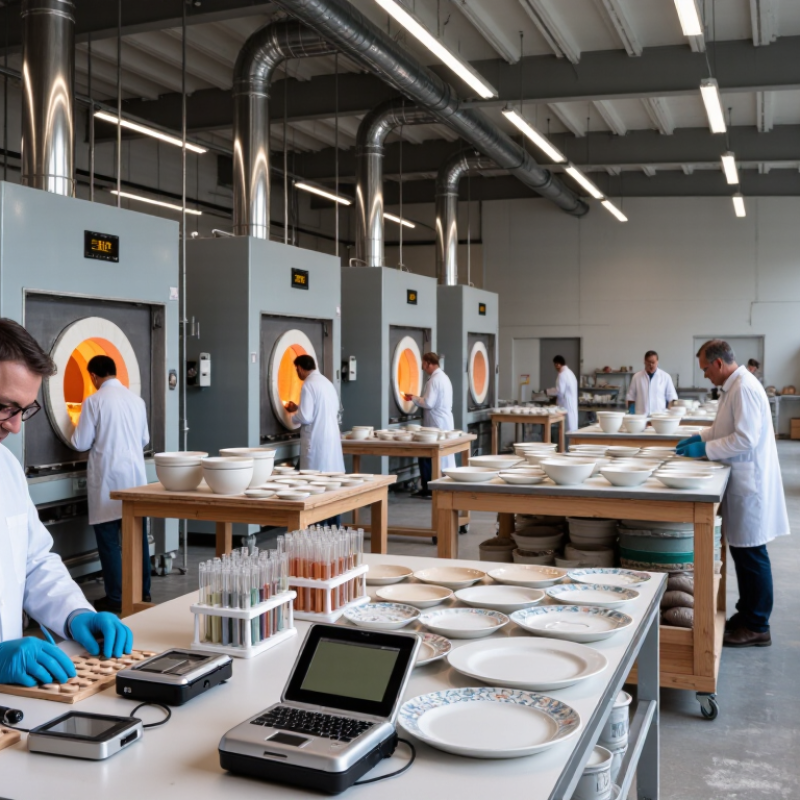
What Is a Portuguese Stoneware Manufacturer?

Definition and Role of a Portuguese Stoneware Manufacturer

A Portuguese stoneware manufacturer is a company that designs, produces, and supplies durable ceramic tableware from Portugal. Its role extends beyond shaping clay into plates, mugs, bowls, and serving pieces. Manufacturers manage material selection, forming, glazing, firing, quality checks, and packaging. In practice, they convert mineral-based materials into products for restaurants, retailers, hotels, and homes. That process requires technical control. Stoneware is fired at high temperatures, creating a dense body with practical resistance to daily use. Still, resistance is not invulnerability. Careful testing remains necessary.

Tips: Ask for clear specifications before ordering. Request details about clay composition, firing temperature, glaze performance, dimensions, packaging, and acceptable variation. Review physical samples before placing a large order. Check whether the supplier can explain testing methods and production traceability. These details reveal more than polished product photographs. Do not ignore small defects. A minor rim issue may become a serious problem across thousands of pieces.

An experienced Portuguese stoneware manufacturer should provide consistent production data and realistic delivery information. However, handmade or semi-automated processes may create slight differences in color, weight, or shape. Those differences can add character, but they may complicate matching future batches. A reliable supplier explains these limits honestly and documents quality expectations. I would also compare sample performance after washing, stacking, and repeated heating. Product descriptions can sound precise, yet real use sometimes exposes weaknesses that factory samples do not. That is where careful judgment matters.

What Is a Portuguese Stoneware Manufacturer?

A Portuguese stoneware manufacturer produces durable ceramic products by shaping refined clay, drying it, glazing it, and firing it at high temperatures. The chart shows representative firing temperatures commonly used in stoneware production.

Stoneware is typically fired above 1,100°C, which gives it low porosity, strength, and resistance to everyday use. A manufacturer manages these stages to achieve consistent dimensions, surface finish, and durability.

Origins and Development of Portuguese Stoneware Production

What Is a Portuguese Stoneware Manufacturer?

A Portuguese stoneware manufacturer produces dense ceramic tableware, cookware, tiles, or decorative objects. Its work begins with carefully blended clay, feldspar, and silica. The mixture is shaped, dried, glazed, and fired at high temperatures. The result is a strong, low-porosity material with a warm, natural appearance.

Portuguese stoneware production developed from regional pottery traditions, especially around Alcobaça, Caldas da Rainha, and Aveiro. Small workshops once relied on hand throwing and wood-fired kilns. During the nineteenth and twentieth centuries, mechanised presses, electric kilns, and mould production increased consistency. Modern factories still retain visible craft details, including irregular edges and subtle glaze variation. This balance is not always perfect. That is part of its character.

APICER sector data indicates that Portugal’s broader ceramic industry generates more than €1.7 billion in annual turnover, with exports representing roughly 80% of production. Eurostat trade classifications also show strong European demand for ceramic tableware and household products from Portugal. However, these reports often combine stoneware with porcelain and other ceramics. Exact stoneware figures remain difficult to isolate. Manufacturers now monitor firing temperatures, water use, and material waste more closely. Some facilities use digital quality controls, while skilled workers still inspect rims, handles, and glaze surfaces by hand. A minor firing difference can change the final colour.

Materials, Techniques, and Manufacturing Processes

What Is a Portuguese Stoneware Manufacturer?

Materials, Techniques, and Manufacturing Processes

A Portuguese stoneware manufacturer produces durable ceramic ware from carefully blended mineral materials. Typical formulas include refined clay, feldspar, quartz, and kaolin. Each ingredient affects plasticity, strength, color, and firing behavior. Local clay may add character, but it can also create variation. That variation needs careful testing.

Production usually begins with mixing and de-airing the clay. The prepared body may be shaped by wheel throwing, pressing, or slip casting. Pressing suits consistent plates and tiles. Casting works better for detailed or hollow forms. After shaping, pieces dry slowly in controlled rooms. Fast drying can cause cracks or warping. It sounds simple. It is not.

The first firing hardens the body and prepares it for glazing. Some factories use a second firing, while others combine stages to save energy. Kilns commonly reach about 1,200 to 1,280°C, depending on the clay body and glaze. Technicians monitor temperature curves, kiln atmosphere, and cooling speed. They also check water absorption, glaze fit, thermal shock, and food-contact safety. A visible pinhole or slight shade difference may indicate a process issue, not a decorative choice. Still, handmade variation is not always a defect. The difficult part is deciding where craftsmanship ends and inconsistency begins. Reliable manufacturers record batch data and inspect samples before shipment. Even then, no ceramic process is perfectly uniform.

What Is a Portuguese Stoneware Manufacturer? - Materials, Techniques, and Manufacturing Processes

Manufacturing Dimension Typical Material or Technique How It Is Used Typical Parameters Expected Result and Quality Considerations
Primary clay body Stoneware clay blended with ball clay, kaolin, feldspar and silica or quartz Creates the ceramic body and balances plasticity, strength, shrinkage and firing behavior. Formulations vary by product; stoneware is commonly fired at approximately 1,180–1,300°C. A dense, durable body with relatively low water absorption. The exact color may range from white and cream to gray or warm red.
Plasticity and preparation Milling, sieving, mixing, de-airing and moisture conditioning Removes coarse particles and trapped air while producing a consistent, workable clay body. Vacuum de-airing is commonly used for plastic clay; moisture content is controlled according to the forming method. Improves dimensional consistency and reduces lamination, cracking and warping during forming and firing.
Slip preparation Liquid clay slip containing clay, water and controlled deflocculants Used for slip casting, surface coating and selected decorating processes. Viscosity and density are adjusted for the mold, wall thickness and casting time. Supports detailed shapes and repeatable production; poor control can cause uneven walls or casting defects.
Forming method Wheel throwing, hand-building, jiggering, pressing, extrusion or slip casting Selected according to the product shape, production volume, wall thickness and level of surface detail. Manual methods suit small batches; molds and mechanical forming improve repeatability for larger runs. Determines the product’s geometry, texture, production speed and degree of visible craftsmanship.
Drying Controlled air drying on shelves, boards or drying racks Reduces free water before the first firing and prepares the piece for finishing. Drying speed depends on wall thickness, humidity, airflow and shape; gradual drying is preferred for uneven forms. Uniform drying minimizes cracking, distortion and joins separating before firing.
Greenware finishing Trimming, fettling, seam removal, handle attachment and surface smoothing Refines edges, removes mold lines and prepares the piece for decoration or bisque firing. Performed while the clay is leather-hard or dry, depending on the operation. Improves fit, comfort and appearance while exposing defects before the more costly firing stages.
Bisque firing Unglazed dried ceramic fired in an electric or gas kiln Hardens the body and leaves enough porosity for glaze application. Often approximately 900–1,050°C, depending on the clay body and production specification. Produces a firm, porous ceramic that can be handled and glazed with lower risk of damage.
Surface decoration Underglaze, colored slips, oxide washes, transfers, carving, stamping or brushwork Adds color, pattern and texture before or during the glazing sequence. The compatibility of pigments and decoration with the glaze and firing temperature must be tested. Creates visual differentiation; color shifts and bleeding are controlled through test tiles and process records.
Glazing Silica-based glaze containing glass-forming materials, fluxes and stabilizers Applied by dipping, pouring, spraying or brushing to create a vitreous surface. Glaze thickness, drying time and application method are controlled to prevent crawling, pinholes and runs. Provides color, gloss or matte texture, easier cleaning and an additional barrier against moisture.
Final firing Glazed stoneware firing in a kiln with programmed heating and cooling Matures the clay body and melts the glaze into a durable glass-like coating. Common stoneware firing range: approximately 1,180–1,300°C; firing atmosphere may be oxidation or reduction. Determines strength, color, glaze fit, shrinkage and water absorption. Controlled cooling helps reduce thermal stress.
Quality control Visual inspection, dimensional checks, glaze inspection and functional testing Identifies cracks, warping, pinholes, glaze defects, sharp edges and inconsistent dimensions. Testing may include water absorption, thermal-shock checks and food-contact compliance where relevant. Helps confirm durability, safety, consistency and suitability for tableware, decorative objects or architectural applications.
What defines the manufacturer Integration of ceramic materials, forming, decoration, kiln firing and inspection A Portuguese stoneware manufacturer converts prepared mineral materials into fired ceramic products through controlled craft or industrial processes. The production model may range from small-batch handmade work to automated, high-volume manufacturing. The defining characteristics are a mature stoneware body, high-temperature firing, controlled glazing and repeatable quality—not the use of a specific brand or company.

Product Categories and Distinctive Design Features

What Is a Portuguese Stoneware Manufacturer?

Product Categories and Distinctive Design Features

A Portuguese stoneware manufacturer produces durable ceramic goods from refined clay, fired at high temperatures. The process creates strength, density, and useful heat resistance. In practice, product quality depends on clay preparation, kiln control, and careful glaze application.

Common categories include dinner plates, cereal bowls, mugs, serving platters, and baking dishes. Many manufacturers also make vases, soap dishes, and small decorative objects. These products often suit everyday dining, hospitality spaces, and carefully styled kitchens. I look for balanced weight, smooth rims, stable bases, and consistent glaze coverage during evaluation. Food-contact items should also have reliable safety documentation and controlled production records.

Distinctive design features often include calm colors, tactile surfaces, and simple silhouettes. Soft white, sand, blue, and muted green glazes appear frequently. Some pieces show subtle brush marks, speckles, or uneven edges from hand-finishing. These details can make a table feel warmer and less manufactured. They can also complicate stacking and cleaning. Not every irregularity deserves praise. A charming variation should remain functional, hygienic, and structurally sound. Certain forms reflect local craft traditions, yet modern proportions keep them practical for contemporary homes. Surface texture matters. A shallow bowl, for example, can frame food better than a perfectly smooth one. Personally, I prefer designs that reveal skilled making without demanding constant care.

Quality Standards, Markets, and Industry Significance

A Portuguese stoneware manufacturer produces vitrified ceramic pieces from refined clay, feldspar, and silica. The material is fired at high temperatures, creating dense plates, bowls, tiles, and hospitality ware. In practice, quality depends on more than appearance. Factory teams check water absorption, thermal shock, glaze adhesion, dimensions, and resistance to repeated washing. ISO 6486 testing also measures lead and cadmium release from food-contact ceramics. Small defects still matter. A pinhole can become a customer complaint.

Quality systems usually follow ISO 9001, while environmental controls may align with ISO 14001. European Regulation (EC) No. 1935/2004 requires food-contact articles to remain safe under normal use. APICER sector data has placed Portuguese ceramic exports at roughly €1 billion annually in recent years, with overseas sales representing most production. Eurostat Comext records also show strong trade in ceramic tableware under HS 6912, particularly across European markets. These figures explain why traceability, export documentation, and consistent packing are commercially important.

The market extends beyond household dining. Portuguese stoneware serves hotels, restaurants, retailers, architects, and private-label distributors. Demand is shaped by durability, design flexibility, responsible production, and delivery reliability. However, trade statistics combine different ceramic products, so they cannot describe stoneware alone. That limitation deserves attention. A manufacturer may report strong export growth while facing energy costs, skilled-labor shortages, and fragile margins. Real expertise appears in the details: stable glaze color, even foot rings, safe surfaces, and cartons that survive a long journey.

FAQS

What does a Portuguese stoneware manufacturer produce?

It designs and makes plates, bowls, mugs, platters, and baking dishes. It may also produce vases, soap dishes, and decorative objects. These products serve homes, restaurants, hotels, and retailers.

Which materials are commonly used in Portuguese stoneware?

Typical formulas include refined clay, feldspar, quartz, and kaolin. Each material affects strength, color, plasticity, and firing behavior. Local clay may add character. It may also increase variation.

How is stoneware shaped and fired?

Manufacturers mix and remove air from the clay before forming it. They may use pressing, wheel throwing, or slip casting. Pieces dry slowly before firing at roughly 1,200–1,280°C. Kiln controls matter.

What quality checks should buyers request?

Ask for water absorption, thermal shock, glaze, and food-contact testing details. Request dimensions, firing information, packaging standards, and acceptable variation. Production records can reveal repeated process problems. Photographs are not enough.

Can handmade stoneware pieces look different from one another?

Yes. Color, weight, shape, and glaze coverage may vary slightly. Hand-finishing can create brush marks, speckles, or uneven edges. Some variation feels attractive. Too much variation can harm stacking and cleaning.

What design features are common in Portuguese stoneware?

Common features include calm colors, tactile surfaces, and simple silhouettes. Soft white, sand, blue, and muted green glazes appear frequently. A shallow bowl can frame food beautifully. Beauty still needs function.

How should buyers evaluate samples before a large order?

Review physical samples before approving a large production run. Wash, stack, and repeatedly heat the pieces during testing. Inspect rims, bases, glaze coverage, and visible pinholes. Small defects can multiply across thousands of items.

What delivery and production information should a reliable manufacturer provide?

A reliable supplier should provide realistic delivery estimates and consistent production data. It should explain testing methods and production traceability clearly. Future batches may not match perfectly. I would question overly polished promises.

Is stoneware completely resistant to daily damage?

No. High-temperature firing creates a dense and durable ceramic body. However, resistance is not invulnerability. Cracks, warping, glaze faults, or thermal stress can still occur. Careful handling remains necessary.

Conclusion

A Portuguese Stoneware Manufacturer is a specialized producer that creates durable ceramic tableware and functional stoneware products through a combination of traditional knowledge and modern manufacturing methods. Portuguese stoneware production has developed from local craft traditions into a structured industry recognized for its practical quality, reliable performance, and strong design identity. Manufacturers typically use carefully prepared clay, mineral materials, glazes, and controlled firing processes to achieve strength, heat resistance, balanced forms, and consistent surface finishes.

Their product range may include plates, bowls, mugs, serving pieces, cookware, and decorative objects. Distinctive features often include simple yet elegant shapes, natural colors, textured surfaces, hand-finished details, and designs inspired by Portugal’s landscapes and cultural heritage. Quality control covers material selection, shaping, glazing, firing, durability, and food-contact safety. Serving both domestic and international markets, the industry supports skilled employment, preserves ceramic expertise, and contributes to Portugal’s manufacturing and design reputation.


Ethan

Ethan

Ethan is a professional marketing specialist dedicated to helping businesses understand practical solutions, emerging market trends, and the value of reliable products and services. With a strong knowledge of the company’s product portfolio, industry applications, and customer needs, he creates......