Sourcing Sustainable Stoneware Ceramics takes more than choosing a natural-looking glaze or earthy color. Buyers need to understand how the clay is sourced, how products are fired, and how suppliers support long-term use. A sturdy plate that survives frequent washing may create less waste than a fragile piece replaced after a few months. Still, durability claims deserve evidence, not just attractive product photography.
Ask suppliers about clay origins, kiln energy, production waste, and packaging materials. Request current documentation for glaze composition and relevant food-contact testing. Check whether product specifications explain care, repair options, and expected use. A supplier’s sustainability statement is useful, but it should connect to measurable practices. Look for clear answers. When details are missing, ask again. Some workshops may not track every impact, and that limitation should be acknowledged rather than glossed over. Samples can reveal uneven rims, rough foot rings, or glaze variations that catalog images hide. These may be harmless signs of handmade production, but buyers should decide whether they meet their quality needs. Compare suppliers using the same questions, and keep records of their responses. There is rarely a perfect option; trade-offs between local production, energy use, price, and durability can be difficult to weigh. Stay curious, and verify what matters.
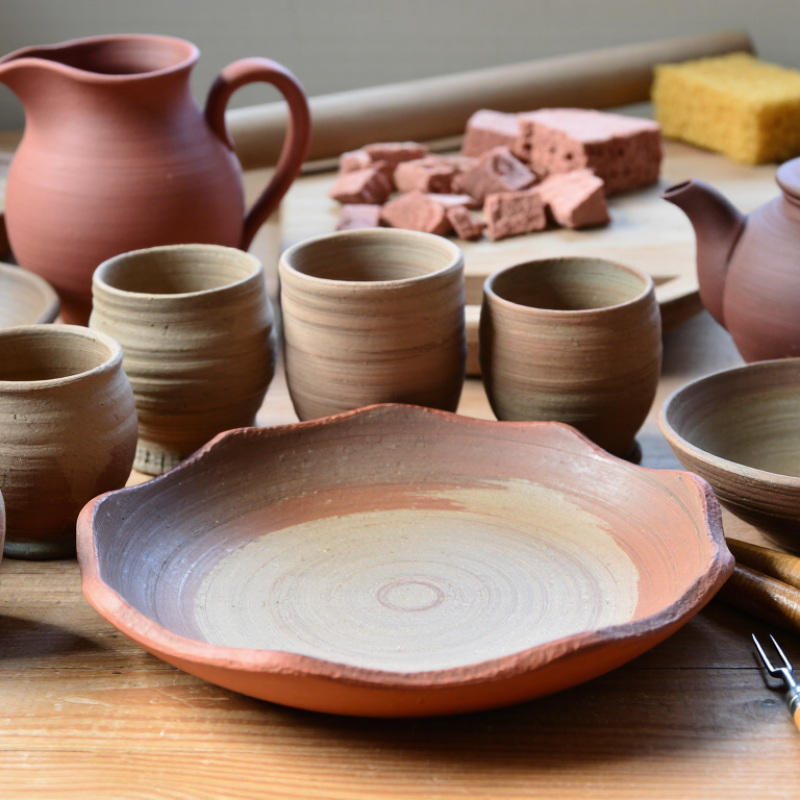
Stoneware is a high-fired ceramic, commonly fired between 1,200°C and 1,300°C. Its body usually combines clay with silica and feldspar, though recipes vary. The clay gives the piece form; silica helps create a stable structure, while feldspar can act as a flux during firing. Exact proportions matter. So does kiln control.
At these temperatures, parts of the body vitrify, becoming denser and less porous. That does not automatically make every stoneware piece fully waterproof. Check whether the maker specifies absorption, glaze coverage, and suitability for its intended use. A mug’s foot ring, for example, may remain unglazed, while its inner surface is sealed with glaze. Small differences matter.
For responsible sourcing, ask where the clay and other minerals come from, and whether suppliers can document their origins. Look for clear production details, not just the word “natural.” Kiln firing uses substantial heat, so energy sources, firing efficiency, and breakage rates also affect a product’s footprint. Recycled mineral content may help, but only when it performs reliably in the body. I would not treat a sustainability claim as proof by itself. Ask for evidence, and allow room for uncertainty.
| Sourcing dimension | What to specify or measure | Evidence to request from the supplier | Why it matters |
|---|---|---|---|
| Stoneware definition | Confirm the body is fired in the stoneware range, commonly about 1,200–1,300°C. Actual firing temperature depends on the clay body, glaze, kiln, and firing schedule. | Product technical sheet stating the firing range and the production firing schedule. | “Stoneware” is not a single standardized recipe. A documented firing process helps distinguish the product from lower-fired ceramic bodies. |
| Body composition | Request the material categories and batch-specific composition. Stoneware bodies commonly contain clay minerals, silica or quartz, and fluxing materials such as feldspar; proportions vary by formulation. | Material declaration or batch specification identifying ingredients and any recycled or secondary raw materials. | Composition affects firing behavior, durability, resource use, and the suitability of recycled inputs. Avoid treating one recipe as universal. |
| Recycled content | Record the percentage of recycled material by weight and clarify whether it is pre-consumer or post-consumer material. | Documented calculation method, supplier declarations, and traceability for the recycled input. | Verified recycled content can reduce demand for virgin materials, but its impact depends on processing, transport, and product performance. |
| Kiln energy | Track energy consumed per kilogram of saleable fired ware, in kWh/kg. Compare products made at the same facility and with a consistent measurement boundary. | Recent kiln energy records, production output data, and an explanation of whether the figure includes drying or only firing. | High-temperature firing is energy-intensive. A consistent unit and boundary make supplier comparisons more meaningful. |
| Fuel and emissions | Identify kiln fuel or electricity source and request emissions data with a stated reporting period and calculation method. | Fuel and electricity records; emissions inventory or other documented calculation, where available. | Firing emissions depend on energy source, kiln efficiency, loading, and production conditions—not temperature alone. |
| Water and process waste | Ask how process water, clay scraps, and unfired or fired rejects are measured, reused, or disposed of. | Facility procedures and records showing water reuse and material recovery, if claimed. | Reclaiming suitable process materials can reduce waste, while reuse practices should be supported by records rather than general claims. |
| Glaze and food-contact safety | For food-use products, specify compliance with the food-contact requirements applicable in the destination market. Ask about lead and cadmium migration testing where required. | Current test reports for the relevant product or representative glaze and documentation identifying the applicable regulation or standard. | Food-contact requirements vary by market and product. A test report should match the product, glaze, and intended use. |
| Durability and usable life | Specify intended use and request relevant performance information, such as water absorption, thermal-shock performance, or resistance to chipping, when applicable. | Test methods and results, plus care instructions covering dishwasher, microwave, or oven use where those uses are claimed. | Longer-lasting ware may reduce replacement demand. Performance claims should be tied to defined tests and intended use. |
| Packaging and transport | Record packaging material, packaging mass per shipped product, recycled content where verified, and shipment mode or route. | Packaging specification and shipment information; evidence for any recycled-content claim. | Packaging and freight contribute to product impacts. Clear data helps identify practical opportunities to reduce material and transport burdens. |
| Traceability and claims | Link each product specification to its production site, material declaration, and reporting period. Define the scope of any environmental claim. | Documented product records, supplier declarations, and third-party verification where a certification or audited claim is stated. | Traceable, specific claims are easier to verify and less likely to imply environmental benefits that the available evidence does not support. |
Stoneware is commonly fired between 1,200°C and 1,300°C. Kiln control still matters.
Its body often combines clay, silica, and feldspar. Recipes vary, so ask for a material declaration.
No. Vitrification makes parts denser, but does not guarantee full waterproofing. Check the glaze and intended use.
Look at the inside surface and the foot ring. The foot may be unglazed. Small details matter.
Ask for mine locations, origin records, and environmental assessments. Worker protections and land restoration plans matter too.
Request the recycled share for the specific production batch, plus records showing how it was measured. Claims can be unclear.
Ask for kWh per kilogram of fired ware across several ordinary production runs. Include batch weights, accepted pieces, and rejects.
Compare CO₂e per kilogram using the same output boundary. Check fuel, electricity factors, and whether the figure covers saleable ware only. One neat test run proves little.
Sourcing Sustainable Stoneware Ceramics begins with understanding what the material is: a durable clay-based body, typically fired at approximately 1,200–1,300°C. Responsible sourcing means tracing clay, feldspar, and silica to their origins, checking how they are extracted, and considering recycled inputs where they meet quality and safety requirements.
A thorough supplier review should compare kiln performance using energy consumed per kilogram of fired ware and associated CO₂e emissions. It should also confirm that finished products meet applicable EU limits for lead and cadmium migration in food-contact use. To support these checks, request verifiable environmental management information, product Environmental Product Declarations, and batch records that connect materials and production data to each shipment. Together, these steps help buyers assess durability, resource use, emissions, safety, and the credibility of supplier claims.