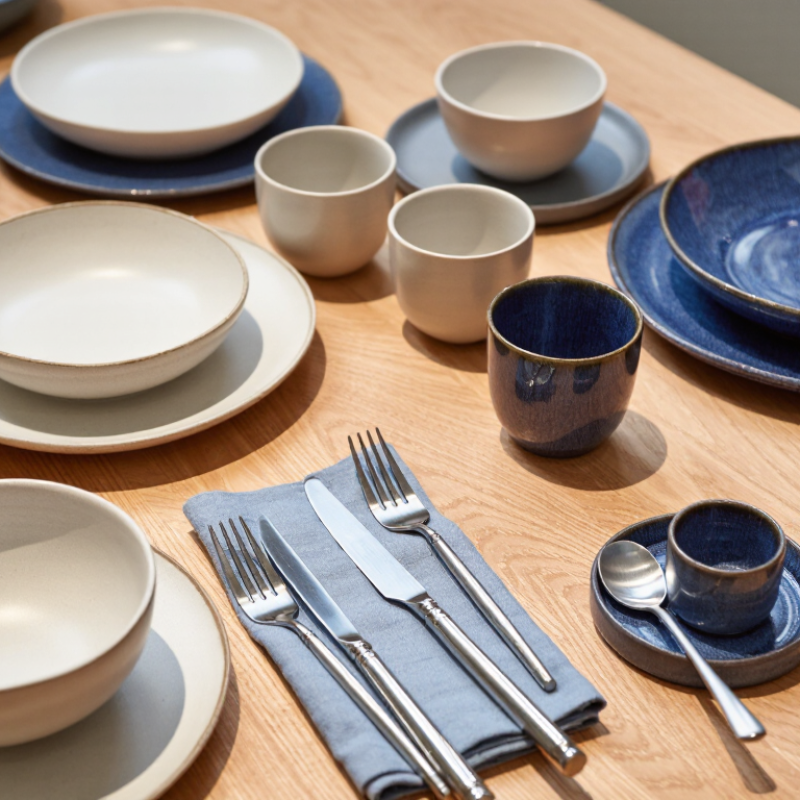
Choosing Custom Ceramic Dinnerware for your brand is not merely a matter of selecting attractive plates. It is a practical decision about identity, function, production, and customer experience. A matte ivory bowl can make a breakfast brand feel calm and handmade. A deep cobalt glaze can create a stronger, more dramatic table presence. However, photographs can be misleading. Glaze may appear warmer under restaurant lighting, while a refined rim may feel fragile during daily service.
Ceramic artist and educator Simon Leach expresses an important production truth: “You have to make pots to learn how to make pots.” His point applies to brands, too. Sample the actual pieces before approving a large order. Hold the cup. Stack the plates. Test the glaze with your menu, tableware, and washing process. Small details matter.
A reliable supplier should explain clay bodies, firing temperatures, glaze variation, dimensions, packaging, and replacement policies. Ask for production samples, not only digital renderings. Confirm whether the design can be repeated consistently across batches. Some variation may support an artisanal story, but excessive variation can weaken brand recognition. That balance is easy to underestimate.
Your dinnerware should also match real operating conditions. A beautiful plate that chips quickly is not a successful brand asset. Consider weight, storage space, heat resistance, cleaning routines, and minimum order quantities. Budget matters, but the lowest quotation may hide costly replacements. The right choice connects visual character with dependable performance, even when the first version is imperfect and needs revision.
Define Your Brand’s Tableware Needs and Target Market
Choosing custom ceramic dinnerware begins with a clear tableware brief. Define where each piece will be used. A busy café may need stackable plates, strong rims, and quick replacement. A boutique restaurant may value unusual shapes and hand-finished surfaces. Know your target guests. Families often prefer practical sizes. Fine-dining customers may notice weight, glaze depth, and presentation space. Record serving portions, dishwasher temperature, storage limits, and expected daily volume. These details prevent attractive but unusable designs.
Your target market should guide color, texture, and price. Soft neutral glazes can suit calm dining rooms, while deeper tones may support a dramatic menu. However, color can shift under warm lighting. Request fired samples, not only digital drawings. Test them with sauces, oils, and common cutlery. Check stack height and edge comfort. Ask the supplier for food-contact test documents, firing information, and quality tolerances. Reliable suppliers explain variation instead of hiding it. Handmade character is valuable, but uncontrolled defects are not.
Plan the collection around real service routines. A dinner plate, side plate, bowl, and cup may cover most needs before specialty pieces are added. Keep replacement quantities realistic. Breakage happens. It is easy to overdesign a collection before measuring demand. I have seen elegant prototypes crowd small shelves and slow table clearing. That lesson matters. Leave room for revision after staff testing and customer feedback. Your strongest choice may be less dramatic, easier to replenish, and better suited to daily use.
How to Choose Custom Ceramic Dinnerware for Your Brand?
Define your tableware needs by comparing the priorities of different target markets. Scores are planning benchmarks on a 1–10 scale and can be adjusted to match your positioning, price range, and service environment.
Premium hospitality places greater emphasis on design and durability, while event catering typically prioritizes cost efficiency and break resistance. Use these differences to select ceramic specifications, glazing, shapes, decoration, and order quantities.
Select Ceramic Materials, Shapes, Sizes, and Functional Features
Custom ceramic dinnerware should begin with material selection, not decoration. According to Allied Market Research’s 2023 report, the global ceramic tableware market was valued at about USD 10 billion and is expected to grow steadily through 2031. That growth reflects demand for durable, visually distinctive dining products.
Porcelain offers a bright white surface, low water absorption, and a refined feel. Stoneware creates a warmer, handmade appearance, but it usually needs greater attention to weight and edge strength. Test samples for chipping, glaze consistency, thermal shock, and repeated washing. ISO 6486 provides a useful reference for testing ceramic tableware’s resistance to lead and cadmium release. Safety should never be treated as a visual detail.
Shape changes the dining experience. A wide-rim plate frames food clearly, while a deeper bowl supports sauces and grain-based dishes. Measure cabinet space, stacking height, and serving portions before approving a mold. A 10-inch plate may look balanced in a studio but feel oversized on a compact table. Small details matter.
Functional features can strengthen a brand’s daily usability. Consider stackable bases, reinforced rims, comfortable cup handles, and matte areas that resist fingerprints. However, textured glazes may collect residue. That is easy to overlook. Use a prototype in a real service setting, not only under showroom lighting. Ask staff to carry it, wash it, stack it, and serve on it. Feedback may challenge the original concept, which is often useful.
Develop Custom Designs, Colors, Patterns, and Brand Details
Custom ceramic dinnerware should make your brand recognizable before food arrives. Start with the setting, not a logo. Sketch the plate shape, rim height, cup handle, and serving flow. A wide matte rim may feel modern, but it can show fingerprints easily. Test the design with real hands and typical portions. Our first sample looked elegant, yet the shallow bowl spilled sauce during service. That mistake changed the profile.
Colors need equal care. Ceramic pigments can shift during firing, especially soft greens, dark blues, and warm neutrals. Request fired color tiles, not digital images. Place them beside your menu, napkins, and dining-room lighting. Patterns should support the food, not compete with it. Fine lines may blur under a clear glaze. Large motifs usually remain clearer after repeated washing. Keep a written color code and approve a physical sample.
Brand details can stay subtle. A mark on the underside, an embossed rim, or a small interior symbol can feel intentional. Check its scale from normal dining distance. Confirm glaze safety, firing temperature, edge strength, and dishwasher testing with the manufacturer. Ask for production samples from different batches. One approved piece is not enough evidence. Recheck dimensions, color, and logo placement before full production. Some revisions feel inconvenient, but replacing a mismatched set costs more.
Evaluate Suppliers, Craftsmanship, Safety Standards, and Costs
Choosing custom ceramic dinnerware requires more than attractive samples. Supplier evaluation should begin with factory experience, kiln capacity, quality records, and production consistency. Request recent inspection reports, material specifications, and batch-traceability documents. A polished sample can still hide uneven glazing or weak edges.
Craftsmanship needs practical testing. Check rim smoothness, base stability, glaze coverage, and resistance to repeated washing. Ask for lead and cadmium migration results under ISO 6486 or applicable food-contact rules.
The U.S. FDA Food Code 2022 emphasizes safe food-contact surfaces, while WHO estimates that contaminated food causes 600 million illnesses annually. Safety cannot be treated as decoration.
Sustainability also affects supplier value. UNEP’s 2024 Global Waste Management Outlook estimates municipal waste could reach 3.8 billion tonnes by 2050. Durable ceramics may reduce replacement waste, but only when breakage rates stay low.
Compare clay, glazing, firing, packaging, tooling, inspection, freight, and replacement costs separately. Industry forecasts, including Fortune Business Insights’ 2024 tableware report, indicate continued market growth, yet projected demand does not guarantee your margins.
Negotiate sampling and defect allowances before production. My imperfect lesson: the cheapest quotation often becomes expensive after rework, delays, and inconsistent color. Leave room for testing.
Order Samples, Test Performance, and Plan Production Quantities
Choosing custom ceramic dinnerware should begin with samples, not a large purchase order. Grand View Research valued the global ceramic tableware market at approximately USD 10 billion in 2023, reflecting strong demand but intense competition. Your dinnerware must survive real service conditions. Test the boring details.
Order several samples from the same proposed production method. Check rim symmetry, foot-ring stability, glaze pinholes, color variation, and actual weight. Test hot soup, cold desserts, stacking, dishwasher cycles, and repeated handling. ISO 6486-1 provides a recognized method for testing lead and cadmium release from ceramic food-contact articles. Use an accredited laboratory for migration testing in your target market. Looks are not enough.
A sample may perform well once and still fail after weeks of use. That is an uncomfortable possibility. Record chips, crazing, staining, and gloss changes after repeated testing. Then calculate quantities from realistic sales forecasts, replacement rates, seasonal demand, and production lead time. Grand View Research forecasts continued growth for ceramic tableware through 2030, but growth does not remove inventory risk. Start with a controlled production run when demand is uncertain. Add a practical buffer for breakage and quality rejects, commonly around 5% to 10%, after discussing factory yield data. Recheck the calculation before approving the final quantity.
How to Choose Custom Ceramic Dinnerware for Your Brand? - Order Samples, Test Performance, and Plan Production Quantities
| Product Type |
Recommended Sample Quantity |
Typical Size |
Common Ceramic Body |
Key Performance Checks |
Suggested Acceptance Criteria |
Estimated Sample Lead Time |
Pilot Order Quantity |
Production Planning Notes |
| Dinner Plate |
3–5 pieces |
25–28 cm diameter |
Stoneware or porcelain |
Flatness, glaze coverage, rim strength, dishwasher and microwave use |
No visible cracks, pinholes, sharp edges, or unstable wobble; decoration remains intact after testing |
10–20 working days |
300–1,000 pieces |
Confirm diameter, stacking height, packaging separators, and carton drop-test requirements |
| Side Plate |
3–5 pieces |
18–22 cm diameter |
Stoneware or porcelain |
Chipping resistance, print alignment, surface staining, stackability |
Consistent color and print position; no edge chips after repeated handling and washing |
10–20 working days |
300–1,000 pieces |
Use the approved master sample to control color, dimensions, and logo placement |
| Soup Bowl |
3–5 pieces |
18–23 cm diameter; 4–6 cm depth |
Stoneware or porcelain |
Thermal shock, liquid retention, base stability, glaze durability |
No leaking, cracking, glaze blistering, or excessive temperature-related damage during normal use |
10–20 working days |
300–800 pieces |
Test with hot liquids and verify that the foot ring does not scratch tabletop surfaces |
| Mug |
4–6 pieces |
250–400 ml capacity |
Stoneware or porcelain |
Handle strength, heat retention, rim comfort, leakage, dishwasher and microwave use |
Handle remains secure; mug sits level; no leakage or visible glaze damage after repeated use |
12–22 working days |
300–800 pieces |
Measure usable capacity, handle clearance, and nested packing efficiency before approval |
| Serving Platter |
2–4 pieces |
30–38 cm length |
Stoneware or porcelain |
Warping, carrying strength, glaze uniformity, storage space |
Lies stable on a flat surface; no visible warping, cracks, or uneven glaze pooling |
12–22 working days |
200–600 pieces |
Allow additional packaging volume and confirm maximum carton weight for handling |
| Saucer |
3–5 pieces |
14–17 cm diameter |
Porcelain or stoneware |
Cup fit, base stability, surface staining, edge durability |
Cup sits securely without sliding; no staining, sharp edges, or significant color variation |
10–20 working days |
300–800 pieces |
Approve the cup-and-saucer combination together to verify fit and visual consistency |
|
Production Planning Reference: Use the approved sample as the quality standard, reserve 3–8% additional units for breakage and inspection, and confirm final quantities after packaging validation.
|
Note: Lead times and quantities are practical planning ranges. Final values depend on the ceramic body, decoration process, mold development, factory capacity, testing requirements, and shipping schedule.
FAQS
Porcelain offers a bright surface, low water absorption, and a refined feel. Stoneware feels warmer and more handmade. Choose based on use, weight, edge strength, and appearance.
Test samples for chipping, glaze consistency, thermal shock, and repeated washing. Also check food-contact safety and harmful substance migration. Visual quality alone is not enough.
Wide-rim plates frame food clearly. Deeper bowls support sauces and grain-based dishes. Measure table space, cabinet height, stacking height, and serving portions before approving molds.
Stackable bases save storage space. Reinforced rims may reduce damage. Comfortable handles improve carrying. Matte surfaces can resist fingerprints, but textured glazes may collect residue.
Review factory experience, kiln capacity, quality records, and production consistency. Request inspection reports, material specifications, and batch-traceability documents. A polished sample can still hide weak edges.
Ask for recent food-contact safety test results. Check glaze coverage, rim smoothness, base stability, and washing resistance. Safety must remain practical, not decorative.
Calculate clay, glazing, firing, packaging, tooling, inspection, freight, and replacement costs separately. Include sampling and defect allowances. Cheap quotes can become expensive after rework.
Staff should carry, wash, stack, and serve with the prototype. Showroom lighting cannot reveal every problem. Feedback may challenge the original idea. That can be useful.
Conclusion
Choosing Custom Ceramic Dinnerware begins with a clear understanding of your brand’s dining concept, target customers, serving environment, and expected usage. Consider the right ceramic material, plate and bowl shapes, dimensions, weight, stacking requirements, and functional features such as durability, heat resistance, and ease of cleaning. These choices should balance visual appeal with practical performance and customer expectations.
Next, create a distinctive design through carefully selected colors, patterns, textures, finishes, and subtle brand details. When comparing suppliers, review their craftsmanship, production capabilities, quality control procedures, safety standards, lead times, and pricing structure. Request samples before placing a large order, then test the dinnerware for strength, stability, surface quality, usability, and resistance to repeated washing or heating. Based on test results and projected demand, determine suitable production quantities, allowing reasonable flexibility for future growth while controlling inventory costs.