0%

Wholesale buyers entering the 2026 bakeware market need more than attractive product photos. They need dependable Stoneware Baking Dishes that perform across restaurants, bakeries, retailers, and home kitchens. A dish may look premium on a catalog page, yet fail when thermal shock, repeated washing, or uneven oven temperatures expose weak materials. Practical testing matters.

Ceramic materials specialist Linda Bloomfield explains, “Stoneware performance depends on the body, glaze, and firing process, not appearance alone.” Her point deserves attention. Buyers should examine clay composition, glaze coverage, wall thickness, heat tolerance, and documented quality controls. Ask suppliers for sample testing. Bake casseroles, fruit crumbles, and covered gratins. Check browning, edge strength, odor retention, and cleaning results. Small details become expensive problems at wholesale volume.

This guide evaluates the 2026 best Stoneware Baking Dishes through a buyer’s lens. It considers capacity, nesting efficiency, packaging protection, private-label options, minimum order quantities, and supplier consistency. A 9-by-13-inch dish may suit family meals, while smaller ramekins can support portion-controlled service. Handles should feel secure, even with hot food inside. Packaging should protect corners, not merely look attractive.

No ranking is flawless. Preferences vary.

Some comparisons may change after larger production runs or updated supplier specifications. That uncertainty deserves honesty. The strongest wholesale choice balances durability, usable design, landed cost, and customer expectations. It should survive real kitchens, not only a showroom demonstration.
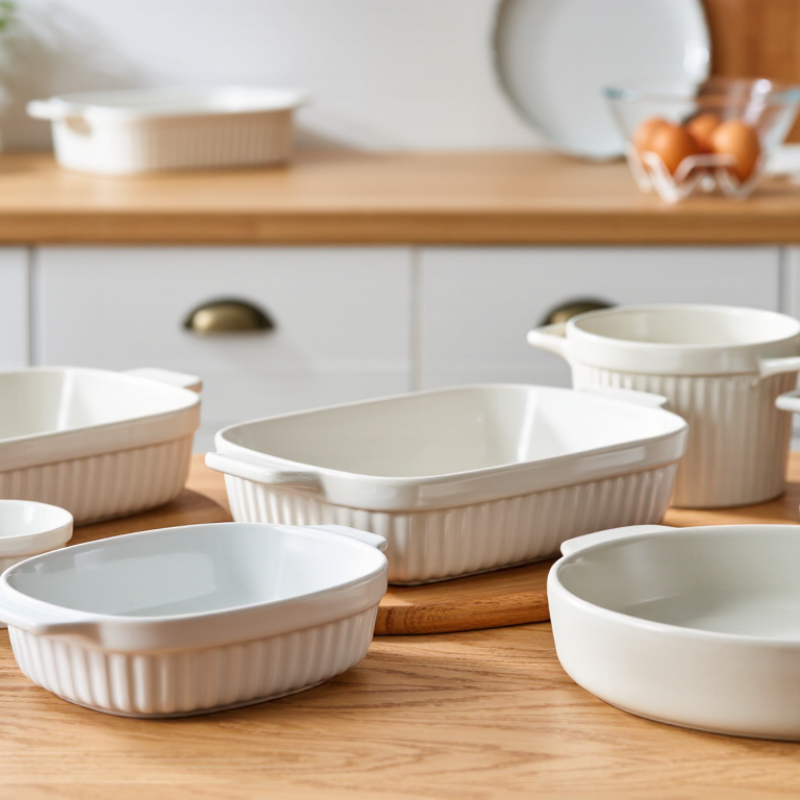
2026 Best Stoneware Baking Dishes for Wholesale Buyers?

Stoneware Baking Dishes: Materials, Features, and Wholesale Value

For wholesale buyers planning 2026 assortments, stoneware baking dishes deserve a material-focused review. Stoneware is fired clay with a dense, heat-retaining body. Its weight feels substantial on a retail shelf. That impression can support premium positioning, but it also raises freight costs. Not every piece performs equally. Body density, firing temperature, and glaze quality influence durability and heating behavior. Buyers should request technical data, sample lots, and independent food-contact test reports before placing volume orders.

Useful features include even wall thickness, smooth interior glazing, stable handles, and a broad base. These details support portion baking, serving, and repeated cleaning. A scratch-resistant glaze is valuable, yet this phrase needs a defined test standard. Oven compatibility should state temperature limits and thermal-shock guidance. Sudden changes from freezer to hot oven can damage stoneware. Clear carton protection matters too. A chipped rim becomes a customer complaint quickly.

Wholesale value comes from more than unit price. Practical sourcing experience shows the need to calculate capacity, breakage allowance, packaging volume, defect rates, and reorder consistency. Neutral shapes may serve casseroles, gratins, and small desserts across several markets. Seasonal colors can sell well, though they may leave slower inventory. I would avoid judging value from appearance alone. A beautiful glaze cannot repair weak packaging or inconsistent sizing. Review samples from different production batches. Small variations are normal, but uncontrolled variation is not. Ask for written specifications and keep inspection records.

How to Evaluate Size, Shape, and Heat Performance

For 2026 wholesale assortments, evaluate stoneware baking dishes by usable capacity, not exterior size. Start with internal length, width, and depth. A 9 x 13 inch dish may hold less than expected if its walls are unusually thick. Measure carefully.

Depth affects both presentation and heat circulation. Shallow rectangular dishes suit gratins, roasted vegetables, and quick service. Deeper oval dishes hold casseroles with generous layers, but their centers may cook more slowly. This tradeoff is easy to overlook. Select shapes that match common recipes and storage shelves. Handles should feel secure without wasting too much oven space. Stackability also matters when purchasing large quantities.

Heat performance requires evidence, not attractive glaze alone. Ask suppliers for tested oven limits, thermal shock guidance, and manufacturing quality records. Look for consistent wall thickness and a smooth, stable base. These details can reduce hot spots and wobbling on racks. Never assume an oven-safe dish is suitable for direct stovetop heat. Avoid sudden temperature changes, such as moving a chilled dish into a hot oven, unless testing confirms it. In sample inspections, I would heat identical pieces with food inside, then compare browning, cracking, and cooling behavior. One test is not enough. Production results can still vary. Allow room for that uncomfortable possibility when setting wholesale specifications.

Best Stoneware Dish Types for Different Baking Applications

Stoneware dish types should match the baking task, not just the kitchen’s appearance. For wholesale buyers, rectangular casserole dishes suit lasagna, roasted vegetables, and family-sized pies. A 9-by-13-inch format is practical for foodservice kitchens and retail bundles. Its broad handles also improve movement when the dish is hot.

Round stoneware pie dishes provide steady heat for fruit pies, quiches, and savory tarts. Smaller ramekins work well for crème brûlée, baked dips, and individual desserts. Loaf dishes support bread, meatloaf, and compact gratins. For portion control, buyers can consider two-piece or four-piece sets with consistent capacities. Small details matter.

I have found that deeper dishes reduce splashing, but they may slow browning at the center. Shallow gratin dishes encourage a crisp surface and easier serving. That trade-off is often overlooked. Check wall thickness, glaze coverage, rim strength, and resistance to ordinary temperature changes before placing a large order. Stoneware can crack when moved directly from extreme cold to high heat. I once prioritized attractive glazing over stackability, and the storage plan became inefficient. Wholesale evaluation should include sample testing, carton protection, nesting space, and clear care instructions. A beautiful dish that arrives chipped is not a reliable product.

2026 Best Stoneware Baking Dishes for Wholesale Buyers?

Best Stoneware Dish Types for Different Baking Applications

Stoneware Dish Type Typical Wholesale Size Approximate Capacity Recommended Baking Applications Key Performance Advantages Common Temperature Guidance Retail Channel Fit Buyer Priority
Rectangular Casserole Dish Approximately 33 × 23 cm; 13 × 9 in 2.5–3.5 L Lasagna, baked pasta, casseroles, roasted vegetables, enchiladas and layered desserts Large surface area, even heat distribution and strong family-meal versatility Often suitable for conventional ovens up to approximately 230–260°C; confirm the supplier specification Kitchen, grocery, homeware and gift retailers High
Square Baking Dish Approximately 20 × 20 cm or 23 × 23 cm; 8 × 8 in or 9 × 9 in 1.5–2.5 L Brownies, bars, small casseroles, baked macaroni and square cakes Compact footprint, easy portioning and strong demand for everyday baking Typically oven-safe within the maker's stated range; avoid sudden temperature changes General homeware and baking-focused stores High
Round Pie Dish Approximately 23–26 cm diameter; 9–10 in 1.0–1.5 L Fruit pies, quiches, pot pies, tarts and savory egg bakes Supports even crust browning and presents well for table service Usually designed for standard baking temperatures; thermal-shock instructions are essential Bakeware, seasonal gifting and specialty food retailers High
Loaf Pan Approximately 23 × 13 cm; 9 × 5 in 1.3–1.8 L Sandwich bread, banana bread, pound cake, meatloaf and terrines Deep side walls support loaf shape and retain heat during longer bakes Commonly used around 175–220°C; actual limits depend on glaze and clay formulation Kitchen, baking specialty and seasonal gift channels Medium–High
Ramekin Approximately 8–12 cm diameter 150–300 ml each Crème brûlée, soufflés, molten cakes, dips, custards and individual cobblers Individual portion control, strong presentation value and convenient batch merchandising Often suitable for oven use, but rapid transfer from refrigerator or freezer to a hot oven should be avoided unless approved Foodservice, hospitality, gifting and premium kitchen retail Medium–High
Mini Cocotte or Covered Baker Approximately 10–15 cm diameter 400–750 ml Individual pot pies, baked eggs, gratins, side dishes and slow-baked desserts Cover helps retain moisture; compact format supports portioned foodservice and gifting Use only within the stated oven-safe range; lids and knobs may have different limits Hospitality, cookware, gourmet food and gift retailers Medium
Gratin or Oval Baking Dish Approximately 28–35 cm length 1.5–2.5 L Potato gratin, scalloped vegetables, baked fish, roasted side dishes and fruit crisps Wide, shallow profile encourages browning and makes food easy to serve Generally used at moderate to high baking temperatures; verify maximum heat and broiler suitability Homeware, tableware and foodservice suppliers Medium–High
Deep Roasting or Rectangular Baker Approximately 35 × 25 cm; 14 × 10 in 3.5–5.0 L Large roasts, poultry portions, family casseroles, stuffed vegetables and holiday dishes Deep walls reduce spills and accommodate larger portions for group dining Confirm maximum oven temperature, weight tolerance and whether the product is broiler-safe Large-format kitchen, foodservice and holiday merchandising Medium
Stoneware Pizza or Flat Baking Plate Approximately 30–36 cm diameter; 12–14 in Not normally rated by liquid capacity Pizza, flatbreads, focaccia, cookies and reheating baked goods Broad baking surface and thermal mass help maintain heat during loading Preheating and gradual cooling are commonly recommended; confirm whether direct flame or broiler use is allowed Pizza accessories, kitchen and specialty food retailers Medium

Wholesale specification note: Stoneware performance varies by clay body, glaze, wall thickness and manufacturing process. Buyers should verify oven, microwave, freezer, dishwasher, broiler and thermal-shock ratings with the supplier before placing a production order.

Wholesale Quality Standards, Certifications, and Supplier Checks

For wholesale buyers, stoneware baking dishes should meet clear quality standards before price becomes the deciding factor. Inspect the clay body for even thickness, stable weight, and a smooth, pinhole-free glaze. Uneven rims can affect stacking, packing, and customer safety. Check oven, microwave, freezer, and dishwasher claims against documented test results, not printed labels alone.

Food-contact compliance depends on the destination market. Ask suppliers for recent lead and cadmium migration reports from an independent laboratory. Request documentation showing compliance with applicable food-contact ceramic rules in your target country. An ISO 9001 certificate can indicate process control, but it does not prove product safety. Confirm the certificate number, issuing body, scope, and expiration date.

Small detail, major difference.

Supplier checks should include factory audits, production samples, and batch records. Test several dishes for thermal shock, glaze adhesion, water absorption, and dimensional consistency. Review carton strength and inner protection after a drop test. Ask how rejected pieces are separated and recorded. A polished sample may hide uneven mass production. I have seen buyers rely too heavily on paperwork and overlook packaging damage. That mistake is easy to repeat. Require corrective-action records, traceability codes, and pre-shipment inspection photos before approving a wholesale order.

Pricing, Customization, Packaging, and Bulk Order Planning

2026 Best Stoneware Baking Dishes for Wholesale Buyers?

Pricing should begin with landed cost, not factory price. Grand View Research estimates the global ceramic tableware market will keep expanding through 2030, with demand supported by durable, reusable products. Buyers should compare clay body, glaze, firing temperature, labor, freight, duty, and breakage allowance. A dish priced at $2.40 may reach $3.35 after packing and transport. That difference can damage margins quickly. Request three quotations with identical specifications. Small details matter.

Customization needs a practical limit. Wholesale buyers can select shape, glaze color, logo placement, capacity, and handle design. However, every change may require new molds or test firing. Ask for a pre-production sample and a written color standard. The International Trade Centre recommends using detailed product classifications and shipment data when assessing import costs. I would also check seasonal demand before approving a large mold investment. Forecasts are useful, but never perfect.

Packaging deserves equal attention. Smithers reports continued growth in protective and e-commerce packaging, reflecting higher expectations for safe delivery. Use molded pulp inserts, corner protection, and a five-layer carton for heavy stoneware. Request drop-test records, carton dimensions, and a packing count per pallet. A pilot order of 5–10% of the planned volume can expose glaze scratches, loose handles, or weak dividers. It costs more initially. It may prevent a much larger replacement claim.

2026 Best Stoneware Baking Dishes for Wholesale Buyers

Typical planning benchmarks for pricing discussions, customization, packaging approval, and bulk order scheduling.

The chart shows common planning ranges in calendar days for wholesale stoneware baking dish projects. Sample development and packaging approval are usually shorter than production and ocean transportation. Actual timing and unit pricing vary according to size, clay body, glaze, decoration, carton protection, order quantity, origin, and shipping lane.

FAQS

What makes stoneware baking dishes suitable for wholesale assortments?

Stoneware has a dense, heat-retaining body and feels substantial on retail shelves. That weight may support premium pricing. However, freight costs can rise quickly. Review durability, firing temperature, glaze quality, and body density before ordering.

Which features should buyers inspect in a stoneware baking dish?

Look for even walls, smooth interior glazing, stable handles, and a broad base. A secure handle improves serving and carrying. A smooth glaze supports repeated cleaning. Define “scratch-resistant” with a documented test standard.

How should buyers evaluate dish size and usable capacity?

Measure the internal length, width, and depth. Exterior dimensions can be misleading. Thick walls may reduce usable capacity inside a 9 x 13 inch dish. Measure twice.

How do shape and depth affect cooking performance?

Shallow rectangular dishes suit gratins, roasted vegetables, and quick service. Deep oval dishes hold layered casseroles but may cook more slowly at the center. Choose shapes that fit common recipes and storage shelves. The tradeoff is easy to miss.

What heat-performance evidence should wholesale buyers request?

Request tested oven limits, thermal-shock guidance, and manufacturing quality records. Check wall thickness, base stability, browning, cracking, and cooling behavior. Do not assume oven-safe products suit direct stovetop heat. One sample test cannot represent every production batch.

How can buyers reduce damage from sudden temperature changes?

Avoid moving a chilled dish directly into a hot oven. Ask for written thermal-shock instructions. Test identical dishes with food inside. Results may still vary. Plan for that uncomfortable possibility.

What costs should be included when comparing wholesale prices?

Calculate clay, glaze, firing, labor, freight, duty, packaging, and breakage allowance. A dish priced at $2.40 may reach $3.35 after packing and transport. Compare quotations using identical specifications. Factory price alone is not enough.

Which packaging details help prevent breakage during shipment?

Use molded pulp inserts, corner protection, and strong multi-layer cartons. Request drop-test records, carton dimensions, and pallet packing counts. A chipped rim can create a customer complaint quickly. Packaging may cost more initially. It may prevent larger replacement claims.

Is customization always valuable for large orders?

Buyers can customize shape, glaze color, capacity, handles, and logo placement. Each change may require a new mold or test firing. Request a pre-production sample and written color standard. Seasonal colors may sell well, but slow inventory remains possible.

Why should buyers order a pilot batch before committing fully?

A pilot order can reveal glaze scratches, loose handles, weak dividers, and sizing differences. Use roughly 5–10% of the planned volume for testing. Review samples from different production batches. Small variation is normal. Uncontrolled variation is not.

Conclusion

Choosing the right Stoneware Baking Dishes for wholesale requires more than comparing appearance and price. Buyers should understand stoneware’s material properties, including its heat retention, durability, glaze quality, and suitability for oven-to-table use. Evaluating size, shape, wall thickness, and heat performance helps ensure each dish meets the needs of different baking applications, such as casseroles, pies, bread, roasting, and portion-sized desserts.

A reliable wholesale purchase also depends on consistent quality standards, food-contact safety documentation, production inspections, and supplier verification. Buyers should review pricing structures, minimum order quantities, customization options, branding requirements, and lead times before placing an order. Protective packaging is equally important to reduce breakage during transportation, while accurate demand forecasts and bulk order planning can improve cost control. By balancing performance, compliance, design flexibility, and supply reliability, wholesale buyers can select Stoneware Baking Dishes that provide lasting value for commercial kitchens, retailers, and foodservice customers.


Oliver

Oliver

Oliver is a dedicated marketing professional with extensive knowledge of the company’s products, services, and industry landscape. Through a practical, customer-focused approach, he transforms complex product features into clear, useful information that helps readers make informed decisions. His......